IRB Infrastructure Developers has signed a share purchase agreement to shift Solapur Yedeshi Tollway and CG Tollway out of its GIC-backed private InvI


insghits
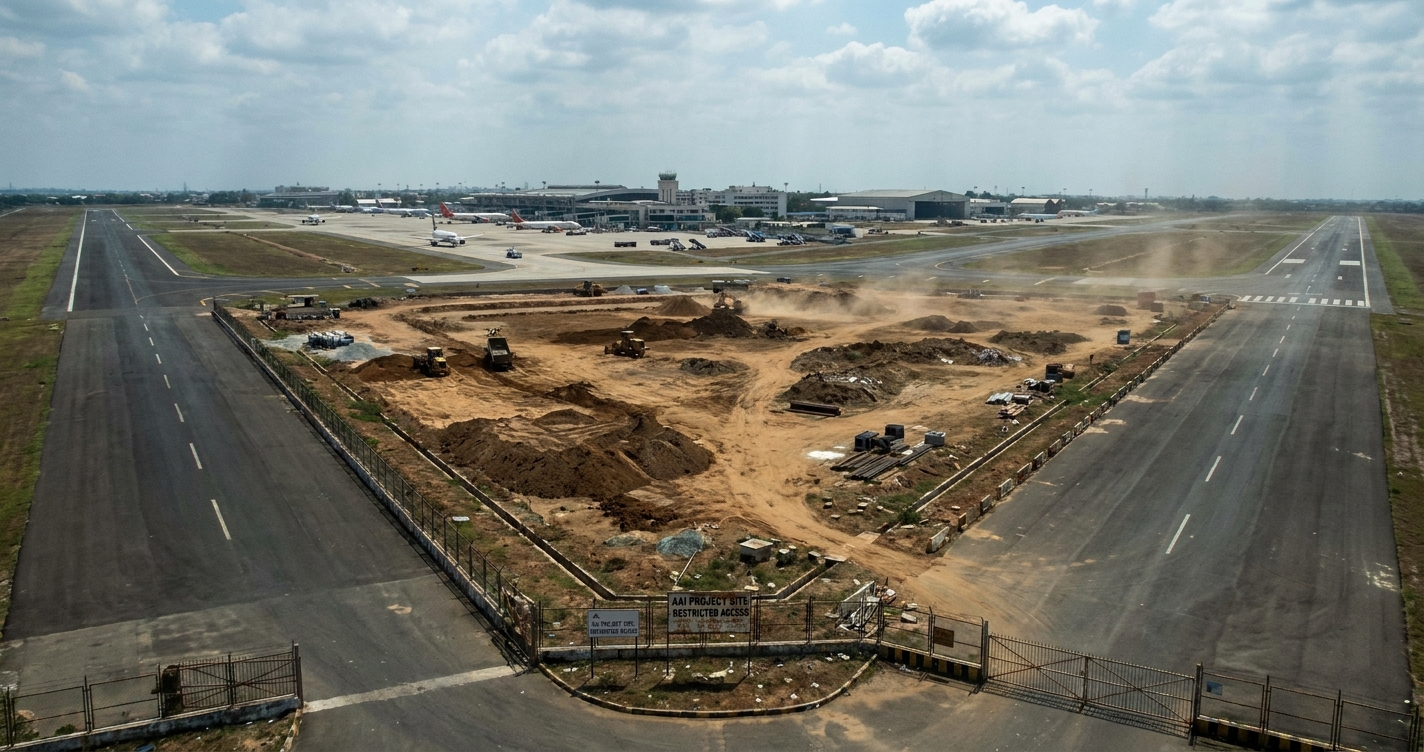
The Airports Authority of India (AAI) has moved Chennai International Airport onto a constrained-footprint trajectory, presenting a concept for a fifth terminal with 20 million passengers per annum (MMPA) capacity inside the ‘V’ between the airport’s two runways.
The move, disclosed after Tamil Nadu Chief Minister C Joseph Vijay scrapped the long-mooted Parandur greenfield airport, would lift combined handling capacity to 55 MMPA — but only if AAI resolves movement, hydrology and access dependencies that remain open at concept stage.
That is the central execution risk. No technical or traffic study has been commissioned, and AAI has not determined how passengers will cross an active runway to reach the inter-runway terminal; automated people movers are only under consideration.
A senior AAI official confirmed the concept includes 10 rapid-exit taxiways and perimeter road widening — airside interventions that improve runway throughput but do not by themselves de-risk terminal access.
The commercial shift is unmistakable: capital is being redirected from greenfield land acquisition toward intensifying a small, politically sensitive land parcel. Chennai would rank among the largest airports operating on a constrained footprint.
That compresses upfront land cost but transfers risk to phasing, construction sequencing and live airside operations.
AAI is backing CUMTA's proposed 5.2 km cargo corridor from the Chennai Bypass/Outer Ring Road and an elevated highway linking to National Highway 32.
AAI says it presented a master plan aligned with this corridor to the Tamil Nadu chief secretary in 2024 and has guided ongoing development work.
On the Adyar river, a Centre for Water Resources report has concluded the elevated road structure and pillars will have no considerable hydrological impact — a clearance risk that appears pre-empted on paper.
For contractors and suppliers, the near-term opportunity is not the terminal itself. It is enabling works:
- Rapid-exit taxiways
- Perimeter road widening
- The elevated access highway
- The CUMTA cargo corridor
A parallel rear-side cargo hub remains at an even earlier stage, with no tonne-per-annum capacity planned; the existing GST Road cargo terminal would be downgraded to belly-cargo warehousing.
The signal for infrastructure professionals is that AAI is treating constrained land as a design parameter rather than a constraint to be abandoned. That favours brownfield sequencing, airside-first packages and access-infrastructure awards ahead of terminal construction.
The counterparty risk sits with whoever must build and integrate an inter-runway terminal without disrupting Chennai's live operations.
Insights
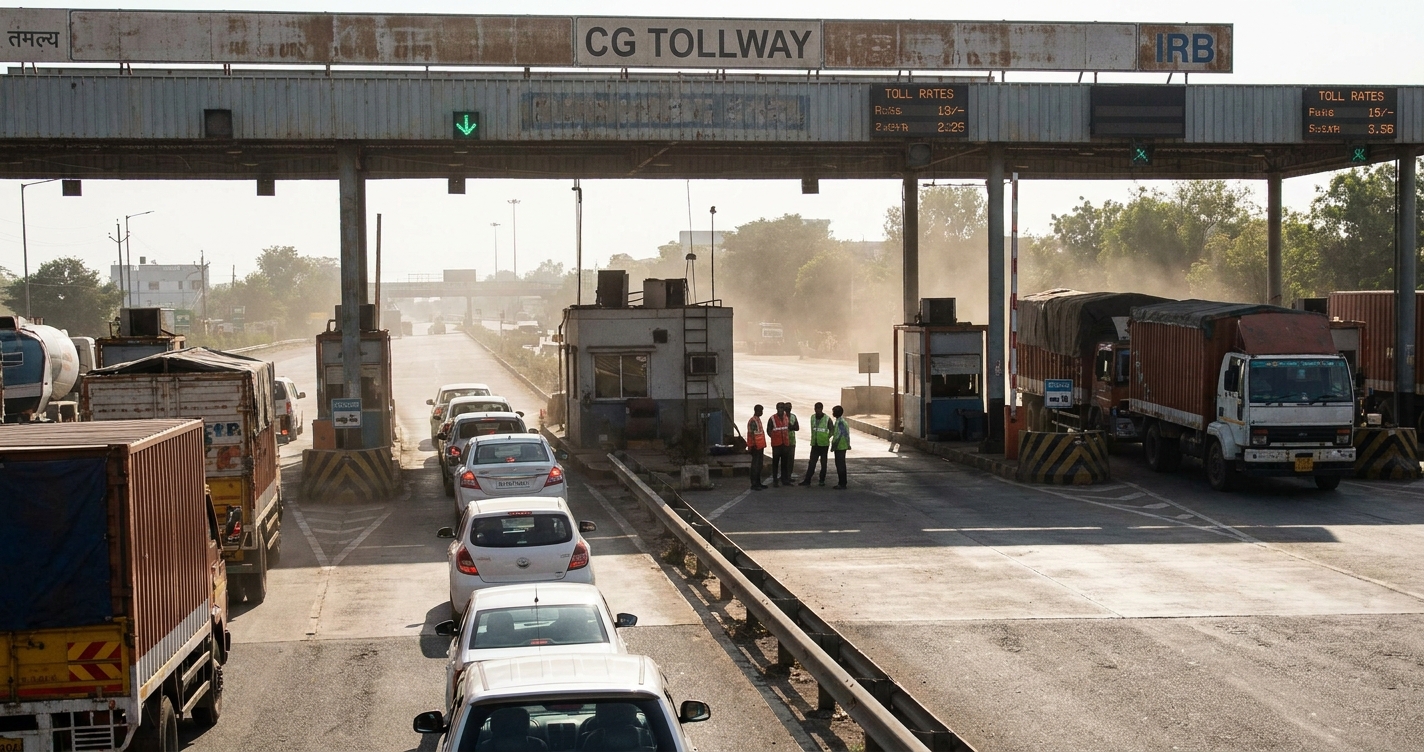
IRB Infrastructure Developers has signed a share purchase agreement to shift Solapur Yedeshi Tollway and CG Tollway out of its GIC-backed private InvI
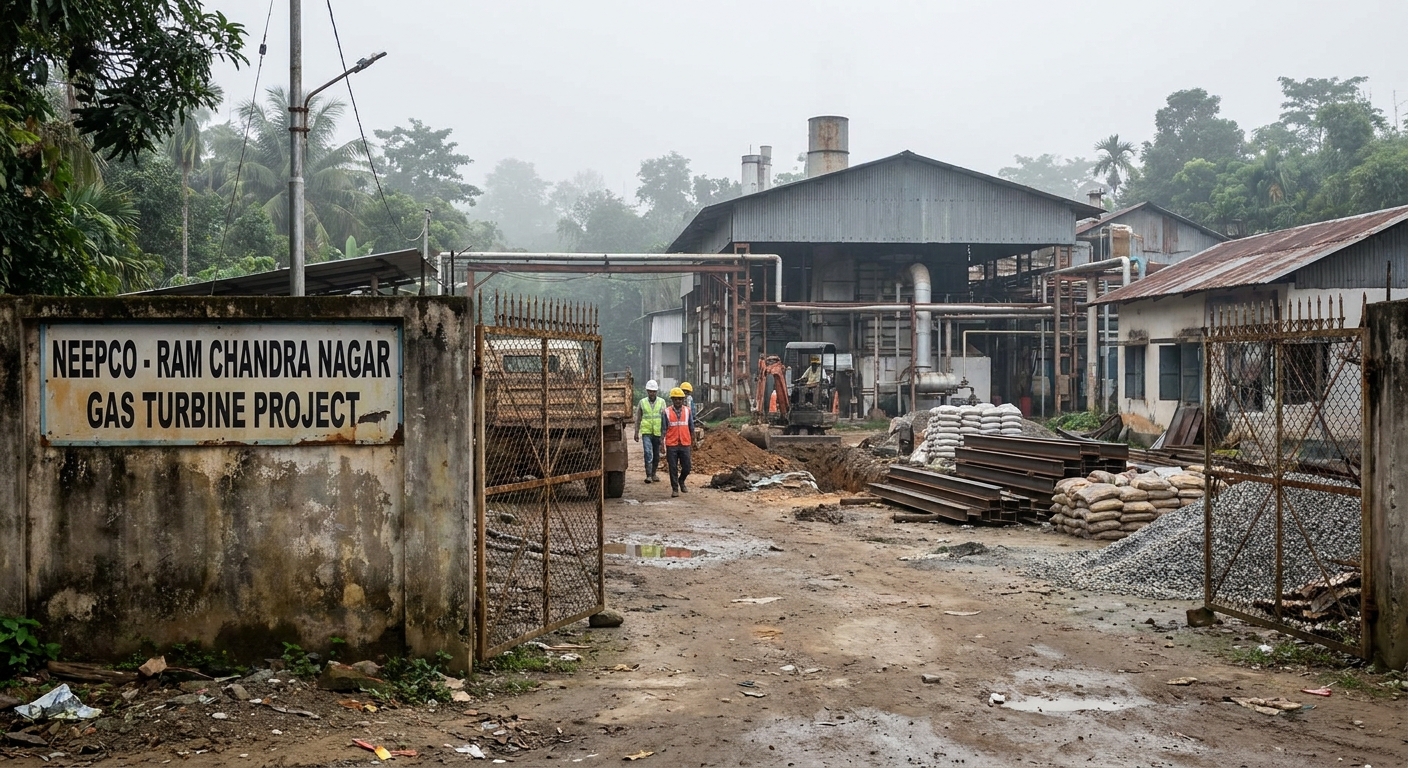
The Supreme Court's NEEPCO v Astra Construction ruling confirms a contractual interest bar can strip pre-reference interest from arbitral awards, turn
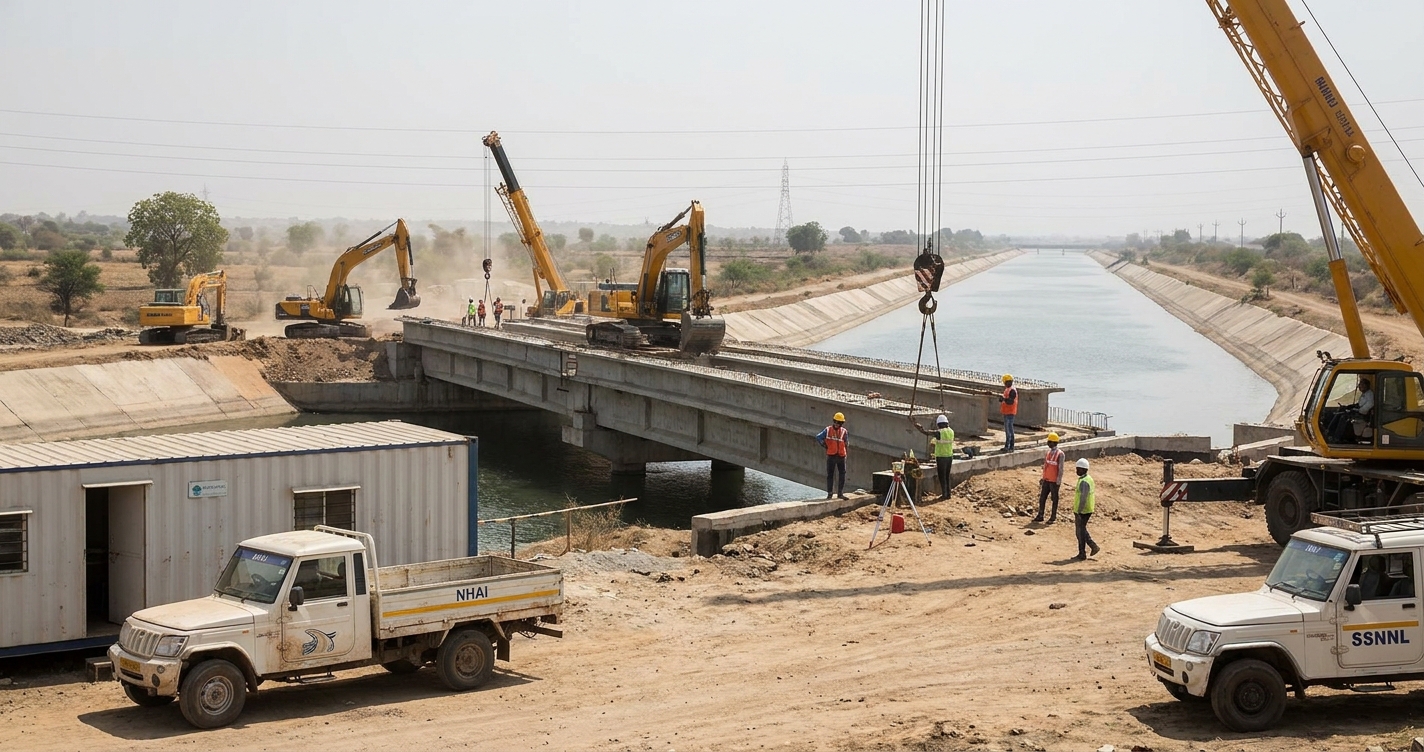
NHAI and Sardar Sarovar Narmada Nigam Limited have signed a time-bound framework for National Highway, canal and pipeline crossings in Gujarat, waivin


Powered by

© Tuskus 2025 - All Rights Reserved by Teamic Creative Lab Pvt. Ltd.
