The Supreme Court's NEEPCO v Astra Construction ruling confirms a contractual interest bar can strip pre-reference interest from arbitral awards, turn


insghits
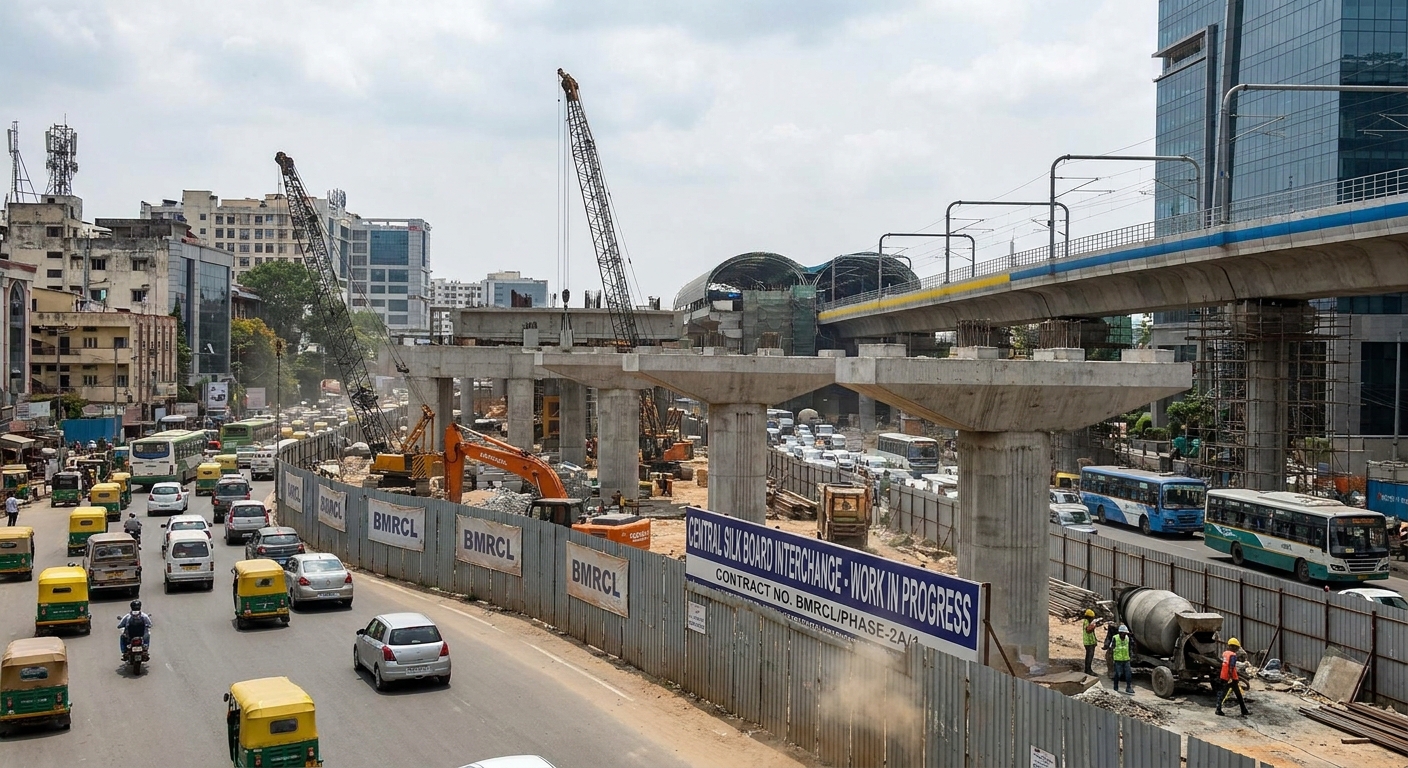
The Rs 55.48 crore contract Bengaluru Metro Rail Corporation (BMRCL) awarded on August 18, 2026 is easy to misread as routine station furniture. It is not.
It is a remedial network-integration package that closes a physical and operational gap between the Yellow Line’s Central Silk Board station and the Blue Line’s ORR Central Silk Board station — two separately procured corridors meeting at one of Bengaluru’s most congested nodes.
The scope is civil and structural:
- Foundations
- Support structures
- Architectural finishes
- Drainage interfaces
- Passenger access for a covered travellator and walkway
BMRCL priced the work at a Rs 59 crore estimate. Five bidders competed and the lowest qualified bidder took it at Rs 55.48 crore, roughly 6 percent below estimate, against a 274-day completion window.
What this reveals about BMRCL’s procurement logic matters more than the contract size. Interchange access has been carved out as a standalone work package under Phase-2A, rather than absorbed into either corridor’s main EPC envelope.
That suggests the original corridor contracts left the station-to-station connection undefined or de-scoped, forcing a remedial tender once Yellow Line and Blue Line commissioning timelines converged. For contractors, this is a category signal: metro owners are now procuring interchange and passenger-movement infrastructure as distinct, competitively bid packages.
The delivery risk is in integration, not civils. A 274-day programme at a live, heavily trafficked junction means working around active station operations, Outer Ring Road traffic, utilities and drainage interfaces — coordination risk that a lowest-bidder award does not eliminate.
BMRCL’s supervision of the interface points between the travellator package and the two corridor contractors will determine whether the interchange opens as a seamless transfer or a constrained handover.
Commercially, the beneficiaries are clear:
- BMRCL captures network-effect value: a grade-separated, mechanised transfer at Central Silk Board makes metro-to-metro journeys viable and protects ridership on both corridors.
- Commuters gain a covered, accessibility-compliant link that removes the walking penalty suppressing interchange use.
- The unnamed contractor gains a small, fast-turnover urban order with fixed duration, while the losing bidders absorb the cost of a competitive field.
The wider lesson is that expanding rail lines does not create a coherent network by default.
Transfer infrastructure is emerging as its own procurement category, and BMRCL’s decision to treat Central Silk Board as a separate package reflects the operational reality that corridor-level EPC contracts rarely optimise for cross-corridor passenger movement. Expect interchange design to feature earlier in future corridor scoping — and more standalone access packages where legacy interfaces fall short.
Insights
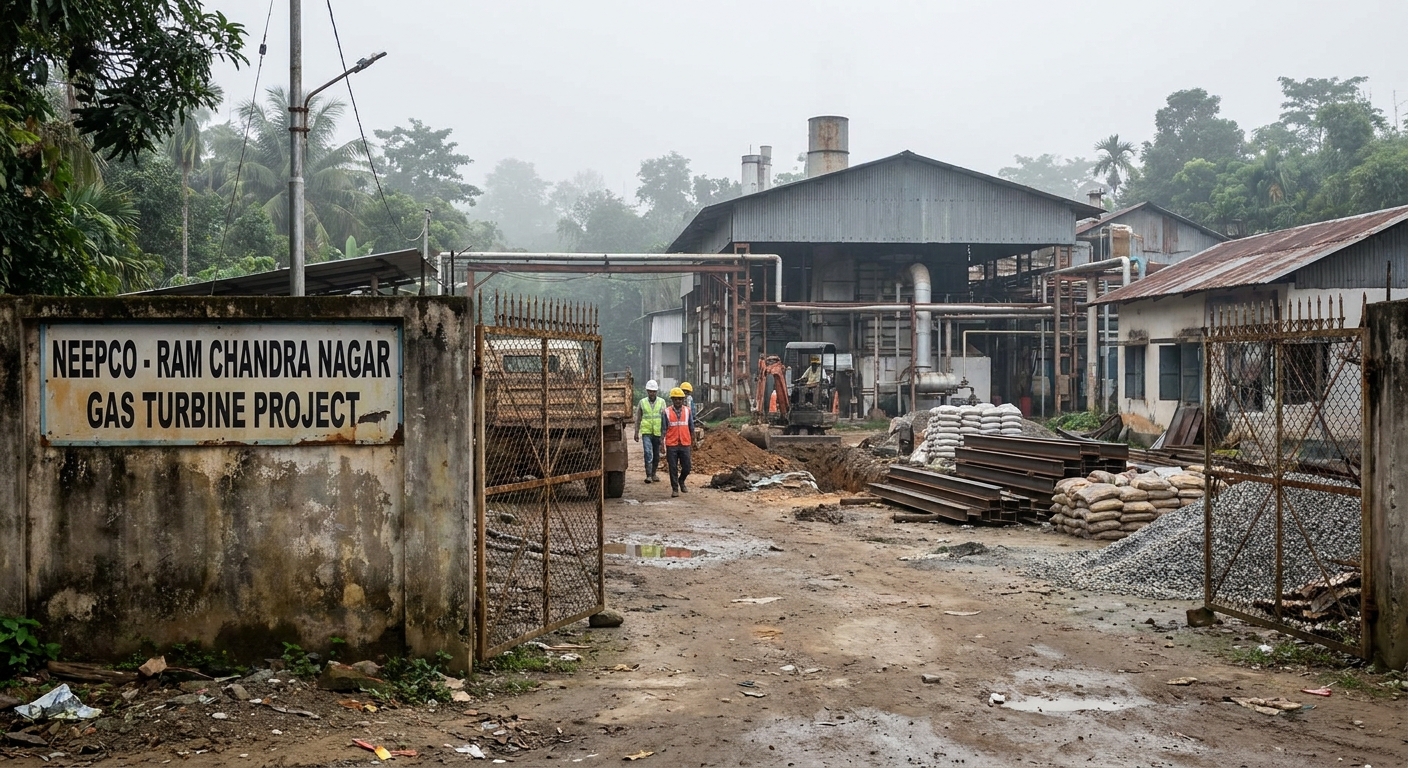
The Supreme Court's NEEPCO v Astra Construction ruling confirms a contractual interest bar can strip pre-reference interest from arbitral awards, turn
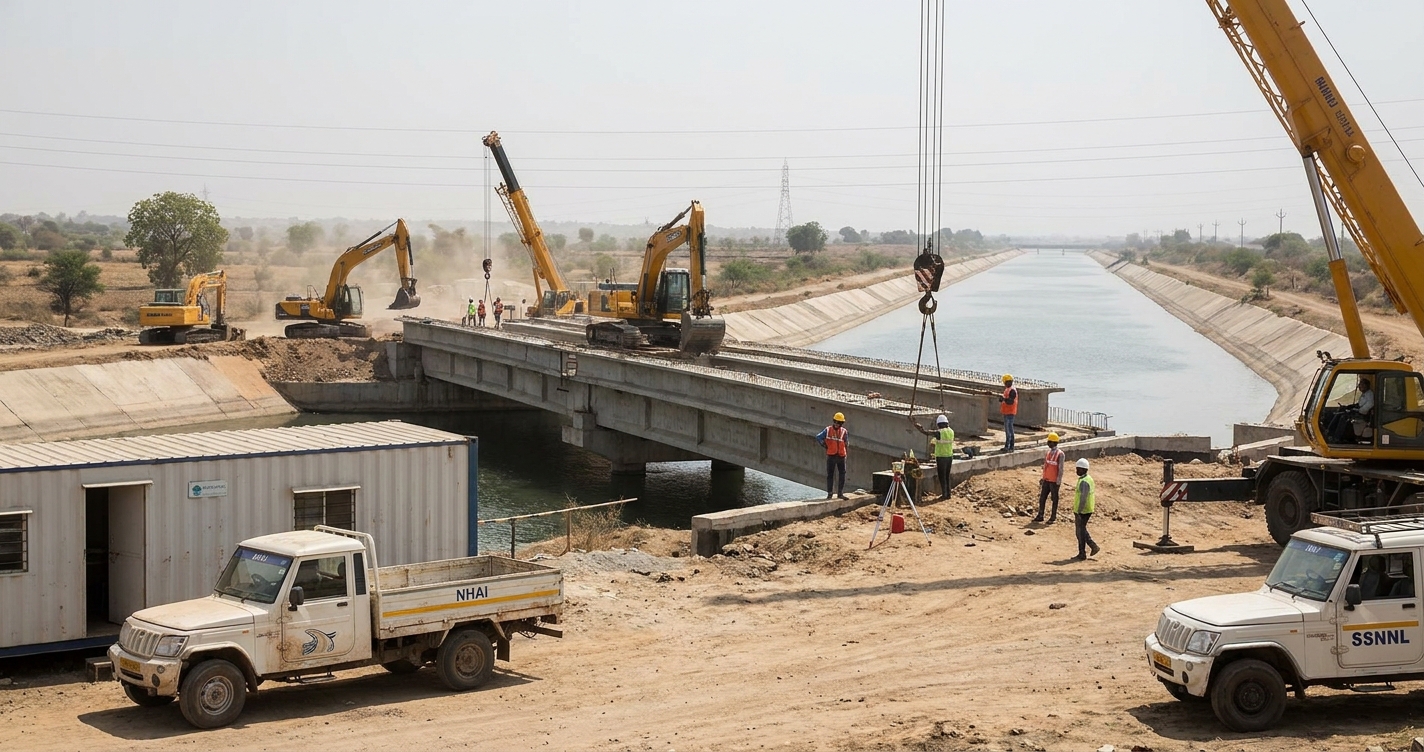
NHAI and Sardar Sarovar Narmada Nigam Limited have signed a time-bound framework for National Highway, canal and pipeline crossings in Gujarat, waivin

A four-day SIB operation near Banaras Locomotive Works has put ₹4.25 crore of GST evasion on record — and turned scrutiny on the composite civil-works


Powered by

© Tuskus 2025 - All Rights Reserved by Teamic Creative Lab Pvt. Ltd.
