Key insights on the implications of the upcoming Mumbai Metro expansions.


insghits
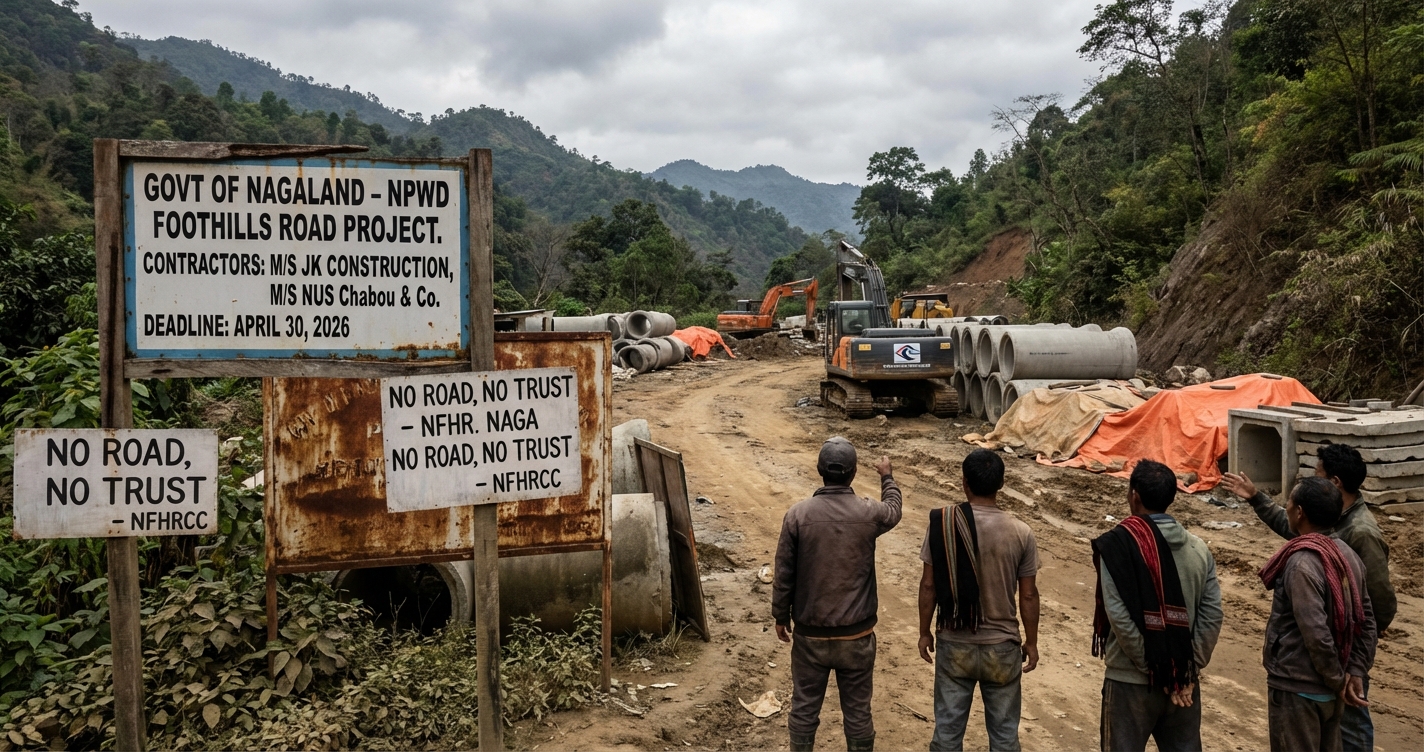
The recent developments surrounding the Nagaland Foothills Road project signal significant execution challenges that could impact both delivery timelines and stakeholder relations.
The Nagaland Foothills Road Coordination Committee (NFHRCC) has taken a firm stance against tribal Hohos deviating from their collective decision to boycott an upcoming government meeting unless their representation is confirmed. This reflects not just internal tribal dynamics but also highlights broader implications for project execution, primarily driven by unresolved stakeholder agreements and ongoing public discontent.
A critical element leading to this standoff is the delay in the project's progress, which has already faced multiple extensions.
Initially set for completion by December 2025 under contracts awarded to M/S JK Construction and M/S NUS Chabou & Co, the deadline has been pushed to April 30, 2026. Such delays raise questions about contractor capacity and the reliability of deliverables.
The NFHRCC has expressed dissatisfaction with this extension, labeling it as unreasonable. If contractors fail to meet the upcoming deadlines, their potential blacklisting could exacerbate delays further, leading to a reassignment of work to more capable firms.
The critical supply chain issues related to Hume pipes and slab culverts further complicate the situation. These deficiencies can stem from poorly developed project plans and lack of stringent oversight, suggesting a potential misalignment between the Detailed Project Report (DPR) and actual ground realities.
Addressing these concerns is paramount not just for the immediate execution of the Foothills Road project but also for future projects under the Nagaland Public Works Department (NPWD).
Moreover, the NFHRCC has criticized the lack of transparency regarding the funding components tied to the project, aggravating feelings of mistrust among stakeholders.
This highlights the need for robust communication strategies from government authorities to ensure transparency and foster a cooperative environment necessary for infrastructure development.
Moving forward, clear communication, stakeholder commitments, and timely supply chain management will be vital for overcoming these challenges.
The NFHRCC's proactive approach to scrutiny indicates a shift towards increased vigilance regarding project governance and contractor performance, setting a precedent for future infrastructure projects within the region.
“The NFHRCC’s firm stance and demand for accountability underscore the importance of transparency and effective project management in infrastructure development.”
Insights

Key insights on the implications of the upcoming Mumbai Metro expansions.

The NCB-DTU partnership signals significant growth for India’s construction sector.

Odisha's ambitious infrastructure plan signals new growth avenues.


Powered by

© Tuskus 2025 - All Rights Reserved by Teamic Creative Lab Pvt. Ltd.
