The Supreme Court's NEEPCO v Astra Construction ruling confirms a contractual interest bar can strip pre-reference interest from arbitral awards, turn


insghits
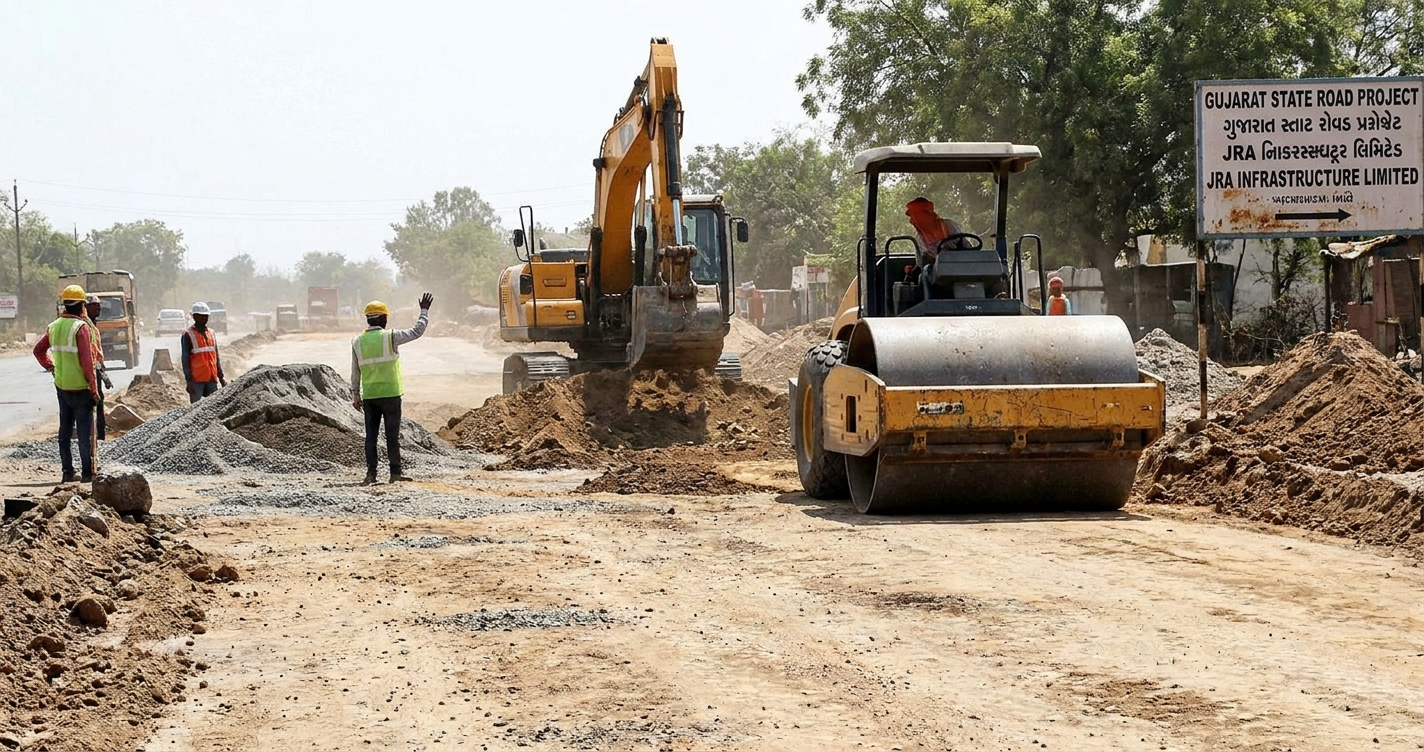
Ravray Construction, a Gujarat road subcontractor working for JRA Infrastructure Limited and PM Construction, has won a procedural reprieve in the Gujarat High Court.
The court quashed a ₹67,00,038 service tax demand, the confirming order-in-original, and downstream appellate orders issued by the Additional Commissioner on the ground that the mandatory pre-show cause notice consultation was skipped.
The dispute traces to FY 2016-17, when Ravray Construction executed construction, renovation, and alteration works on public roads valued at ₹4,46,66,920, with the main contractors deducting TDS under Section 194C.
Ravray Construction claimed an unconditional exemption under Rule 13(a) of Notification No. 25/2012-ST, arguing the public-road exemption applies whether services flow directly to the government or through a main contractor.
Revenue disagreed. A mismatch between the contractor's income tax returns, Form 26AS, and ST-3 returns triggered a show cause notice dated 23 October 2021, invoking the extended limitation period under Section 73(1) of the Finance Act, 1994 with suppression allegations and a demand of ₹67,00,038 plus interest and penalty.
The adjudicating authority confirmed the demand on 7 February 2022, rejecting the exemption because Ravray Construction had not produced the head contractor-government agreement to prove the roads were for public use. A subsequent appeal was dismissed as time-barred.
The High Court’s intervention was procedural, not merits-based.
It held that the pre-show cause notice consultation under Section 73(1A) of the Finance Act, 1994 — mandatory where the demand exceeds ₹50 lakh — cannot be bypassed, and annulled the entire chain of proceedings.
The pre-show cause notice consultation under Section 73(1A) of the Finance Act, 1994 — mandatory where the demand exceeds ₹50 lakh — cannot be bypassed.
For tier-2 and tier-3 road contractors, the ruling cuts both ways.
It confirms that a procedural lapse by revenue can collapse a demand before the substantive exemption question is reached.
But the documentary risk remains untouched: the adjudicator's core objection — the missing head contractor-government agreement — was never tested on merits.
Contractors relying on the public-road exemption should secure, at contract formation, a certified copy of the main contractor's agreement with the road-owning authority.
TDS under Section 194C evidences payment, but it does not prove the public-road character of the works.
JRA Infrastructure Limited and PM Construction sit at the documentary choke point; their underlying agreements determine whether downstream subcontractors can substantiate exemption claims in future audits.
- For revenue authorities, the ruling reinforces that pre-SCN consultation is a jurisdictional discipline, not a formality.
- The wider signal is that tax authorities now routinely cross-match Form 26AS, income tax returns, and service tax and GST filings as a default audit trigger for construction contractors.
- The exemption may be unconditional in law, but it is enforceable only where the subcontract chain keeps a clean documentary trail.
Insights

The Supreme Court's NEEPCO v Astra Construction ruling confirms a contractual interest bar can strip pre-reference interest from arbitral awards, turn
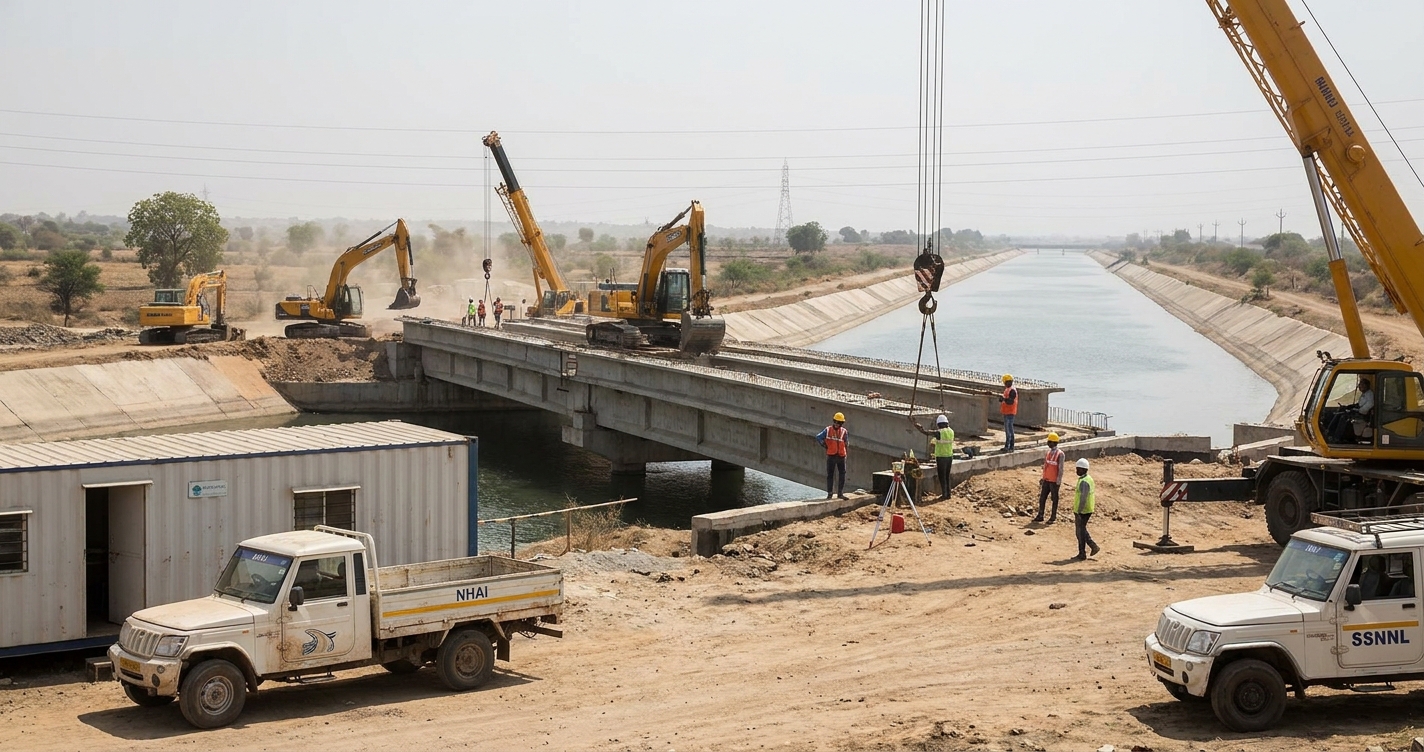
NHAI and Sardar Sarovar Narmada Nigam Limited have signed a time-bound framework for National Highway, canal and pipeline crossings in Gujarat, waivin

A four-day SIB operation near Banaras Locomotive Works has put ₹4.25 crore of GST evasion on record — and turned scrutiny on the composite civil-works


Powered by

© Tuskus 2025 - All Rights Reserved by Teamic Creative Lab Pvt. Ltd.
