IRB Infrastructure Developers has signed a share purchase agreement to shift Solapur Yedeshi Tollway and CG Tollway out of its GIC-backed private InvI


insghits
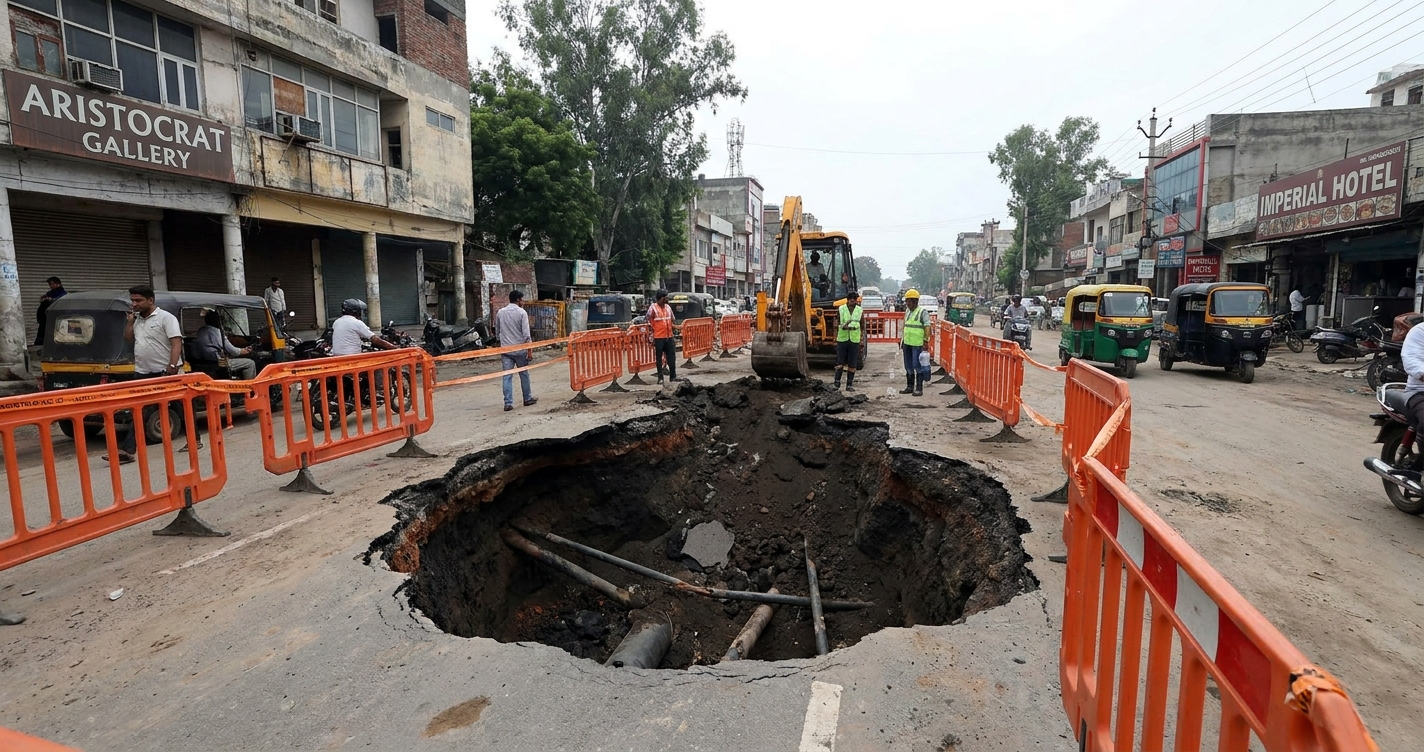
Ludhiana’s Pakhowal Road gave way on August 24, 2026, near Aristocrat Gallery and Imperial Hotel, adding to roughly ten cave-ins reported across the city this year.
The failure stands out for what it was not: with no significant rainfall in the preceding days, the collapse cannot be dismissed as stormwater-induced surface damage.
For the Ludhiana Municipal Corporation, led by Commissioner Ojasvi Alankar, the episode shifts the problem from asphalt quality to the buried utilities and trench reinstatement underneath.
Local activist Arvind Sharma has placed the accountability question directly on record. The stretch had been repaired recently, yet another collapse followed.
He has called for inspection of:
- Sewer lines
- Drainage systems
- Road gullies
- Reinstatement quality
He urged the municipal corporation to act before the next spell of rain.
His escalation carries weight because the corridor is flanked by residential areas and counts several elected representatives, MLAs and councillors among its residents.
From an execution standpoint, the pattern is consistent with subsurface voids created by leaking sewers or poorly compacted utility trenches, not simple potholing.
Ten cave-ins in a single municipal year point to a systemic inspection and reinstatement deficit rather than isolated defects.
Reactive patching closes the surface while the void continues to migrate beneath traffic.
The commercial signal for contractors and utility asset owners is blunt: Ludhiana’s road maintenance and underground utility contracts are now a latent-defect risk zone.
Whoever carried out the recent reinstatement on Pakhowal Road faces commercial exposure, though no delivery partner has been named.
That absence of named accountability is itself a procurement weakness.
Municipal works here appear to lack enforceable:
- Condition assessment
- CCTV sewer surveys
- Trench compaction verification
- Defect-liability triggers tied to specific contractors
The shift to watch is the move from patch-and-respond road repairs toward condition-based maintenance contracts with pre- and post-monsoon sewer inspection, reinstatement testing protocols and longer defect-liability periods.
Until Ludhiana Municipal Corporation binds these obligations to named delivery partners, cave-ins will recur and the city’s maintenance budget will keep paying twice for the same buried failure.
Insights
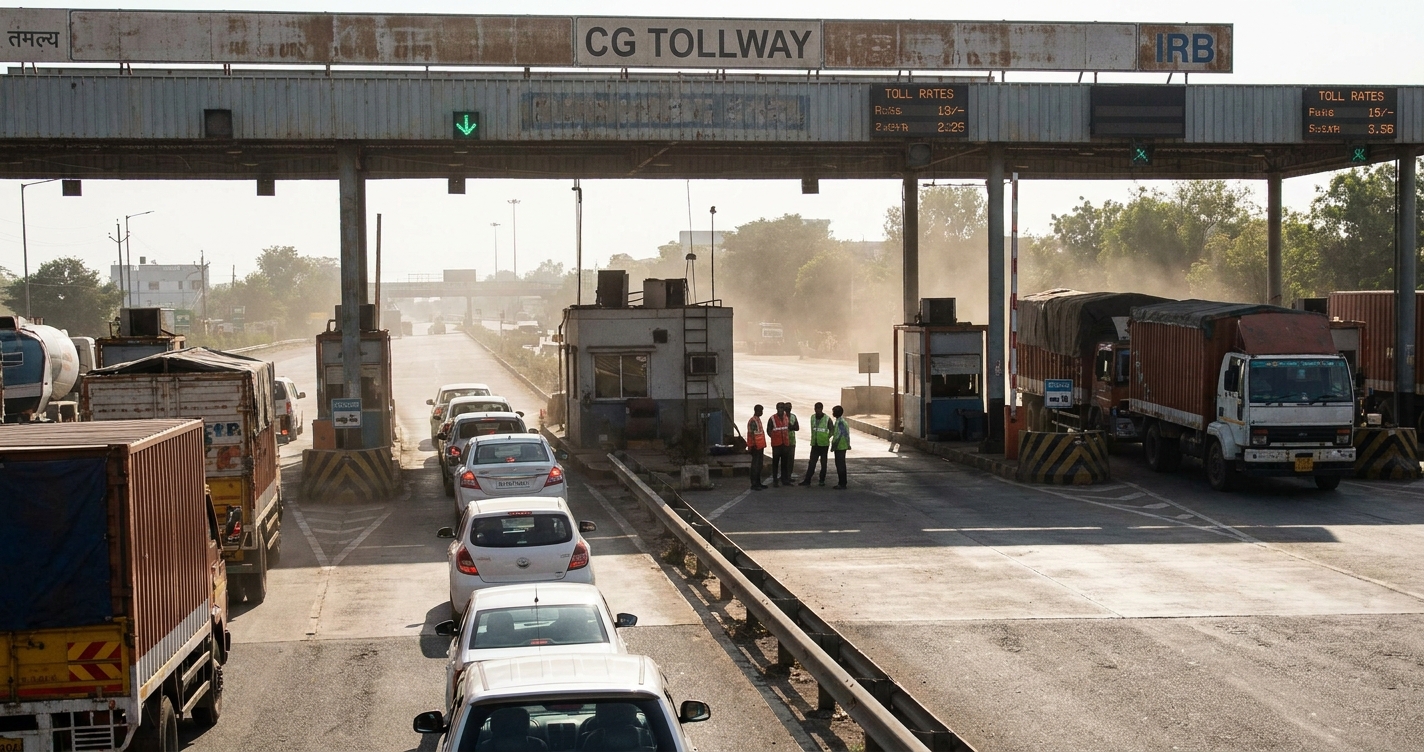
IRB Infrastructure Developers has signed a share purchase agreement to shift Solapur Yedeshi Tollway and CG Tollway out of its GIC-backed private InvI
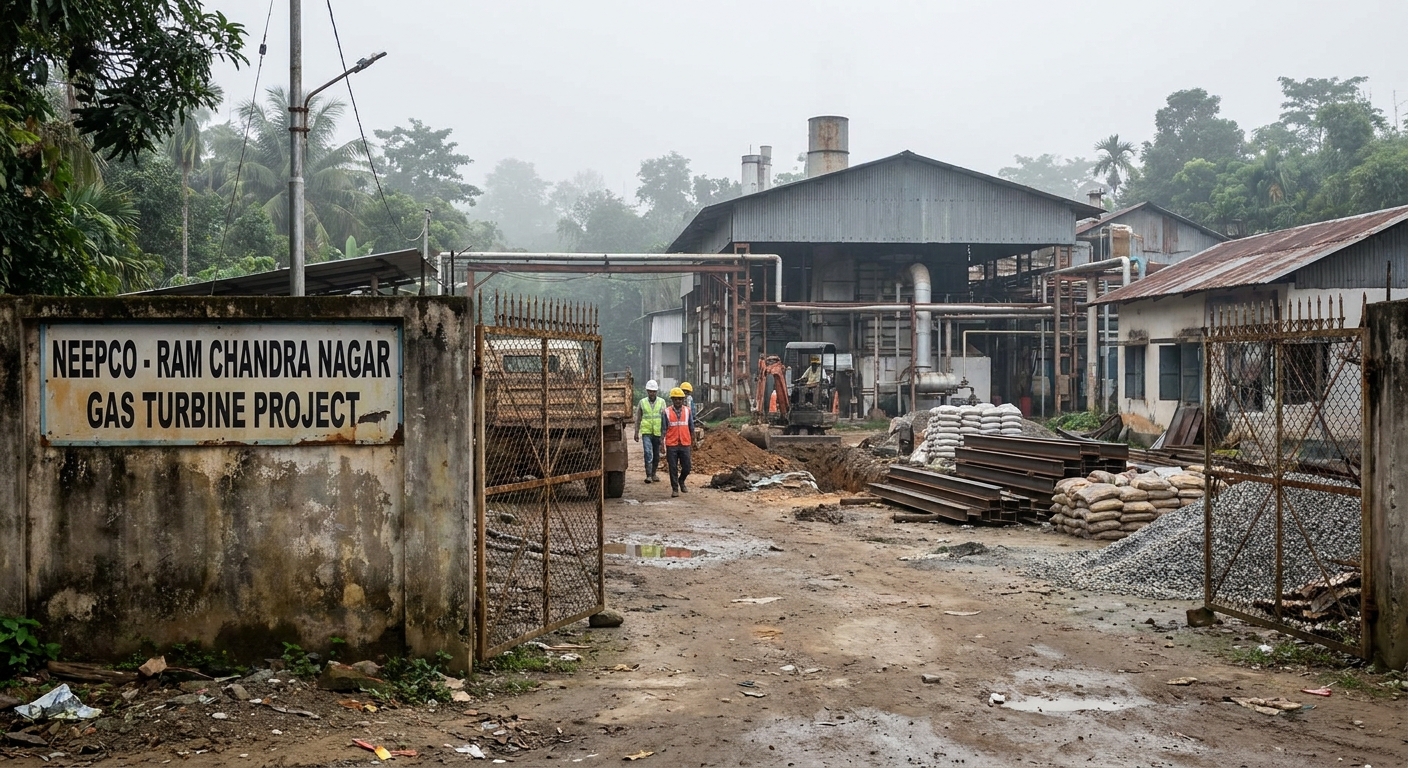
The Supreme Court's NEEPCO v Astra Construction ruling confirms a contractual interest bar can strip pre-reference interest from arbitral awards, turn
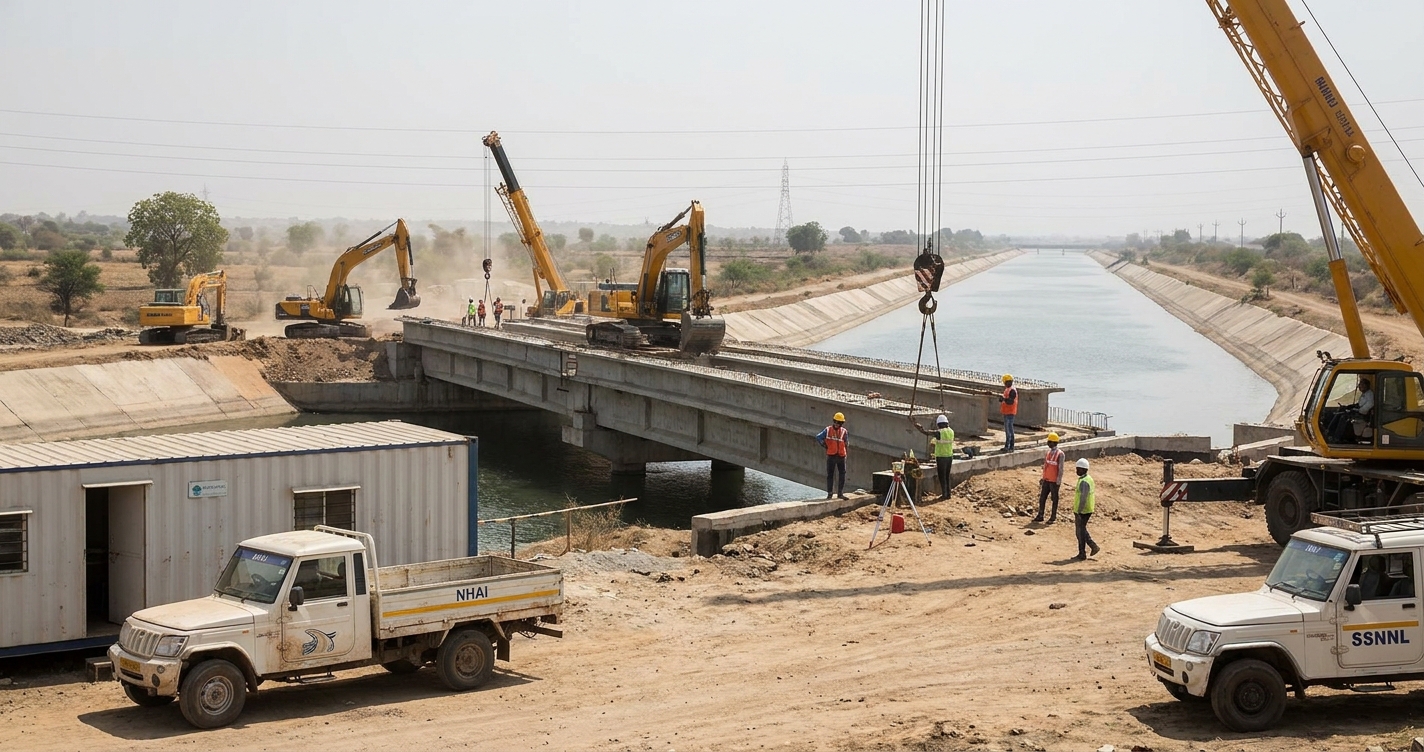
NHAI and Sardar Sarovar Narmada Nigam Limited have signed a time-bound framework for National Highway, canal and pipeline crossings in Gujarat, waivin


Powered by

© Tuskus 2025 - All Rights Reserved by Teamic Creative Lab Pvt. Ltd.
