RITES chairman Rahul Mithal discusses a ₹9,388 crore order book, a ₹10,000 crore target and export orders in Bangladesh and Mozambique.


insghits
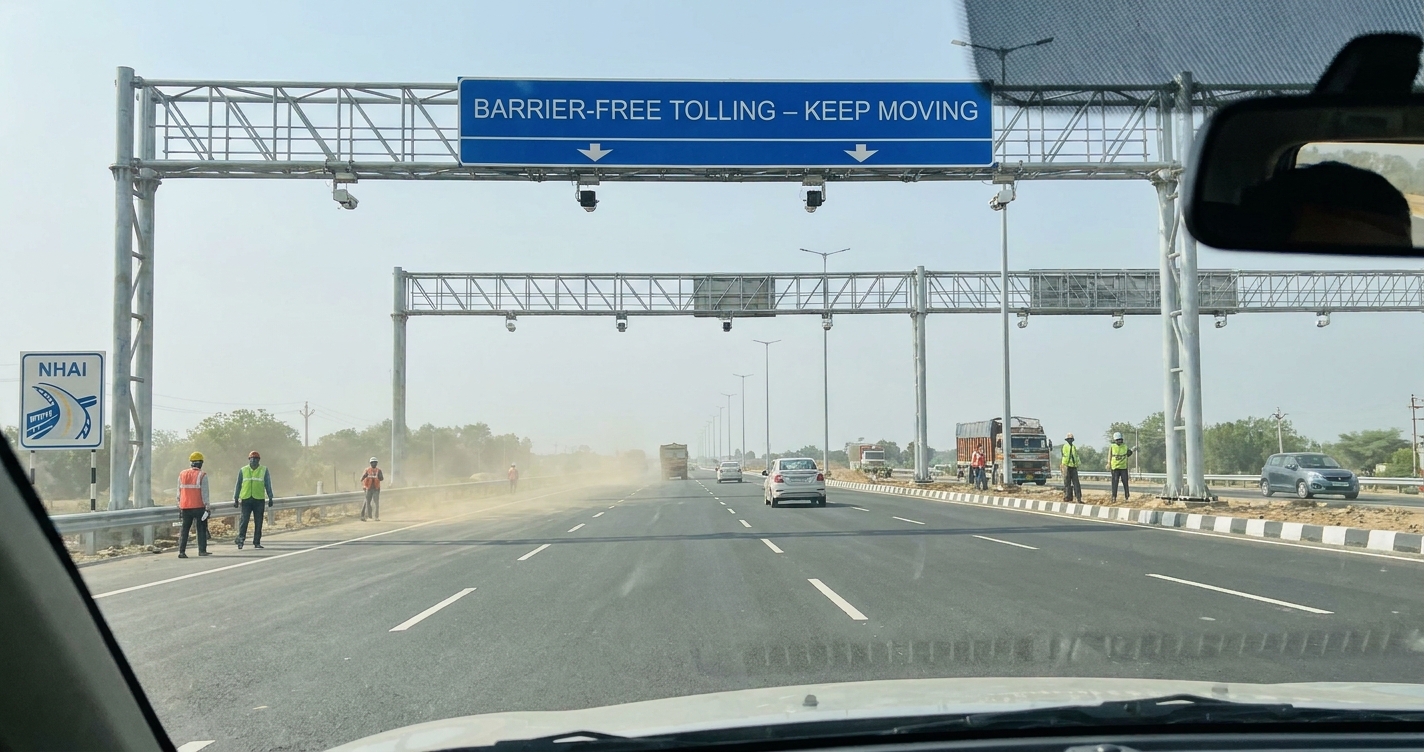
Four lanes and above is the class of National Highway covered by the barrier-free tolling guidelines NHAI issued on 6 November 2026. Two-lane and intermediate-lane corridors sit outside the standard, and the release sets no schedule for bringing them in.
Then comes the part that reads backwards, and it is where the money sits. With no barrier to stop at, NHAI has rationalised the number of tolling lanes downward against conventional plazas: a vehicle that never stops clears the tolling zone faster and takes up less of it. Every lane at a toll plaza was sized for a vehicle that stops. Take the stopping away and the queue storage drops off the drawing, and the deck, the land and the concrete go with it. Nobody has priced that saving.
The circular prescribes the plaza layout, lane configuration, where the gantries go, road safety features, signage, lighting, Electronic Variable Message Signs, and an administrative building-cum-operations and maintenance centre. Publishing it as a policy circular instead of leaving each plaza to its own Detailed Project Report is a procurement move. One gantry detail repeated across the network is one structural review, one supplier catalogue, one set of documents that reads the same in every claim. NHAI has done this once already, for high-speed access-controlled corridors.
The guidelines apply to all future and under-construction projects. The second half is where money moves. A corridor already under construction carries a priced bill of quantities for gantry foundations, ducting, power for lighting and VMS, and the plaza building. Here the release changes verb.
NHAI field offices have been directed to incorporate the prescribed requirements in upcoming projects and facilitate their adoption in ongoing projects.
Directed and facilitated run on different instruments. One has a design review behind it. Retrofit eats the contingency. The ministry's release gives no rupee figure for the retrofit, no completion date, and no line on who absorbs the variation on a contract already awarded.
Barrier-free means the toll is taken by equipment reading a moving vehicle, and the document is quiet about that equipment. It names no sensor standard, sets no accuracy threshold, assigns no agency to reconcile a missed read and no penalty to the operator whose gantry misreads a plate. It prescribes the number of tolling lanes and prints no number. A gantry sends invoices. Collection, recovery and audit are the parts the barrier used to handle, and the guidelines leave them to be settled later, in contracts, by whoever holds the concession.
Field offices have a design to build to. The guidance was issued on 6 November 2026.
Insights
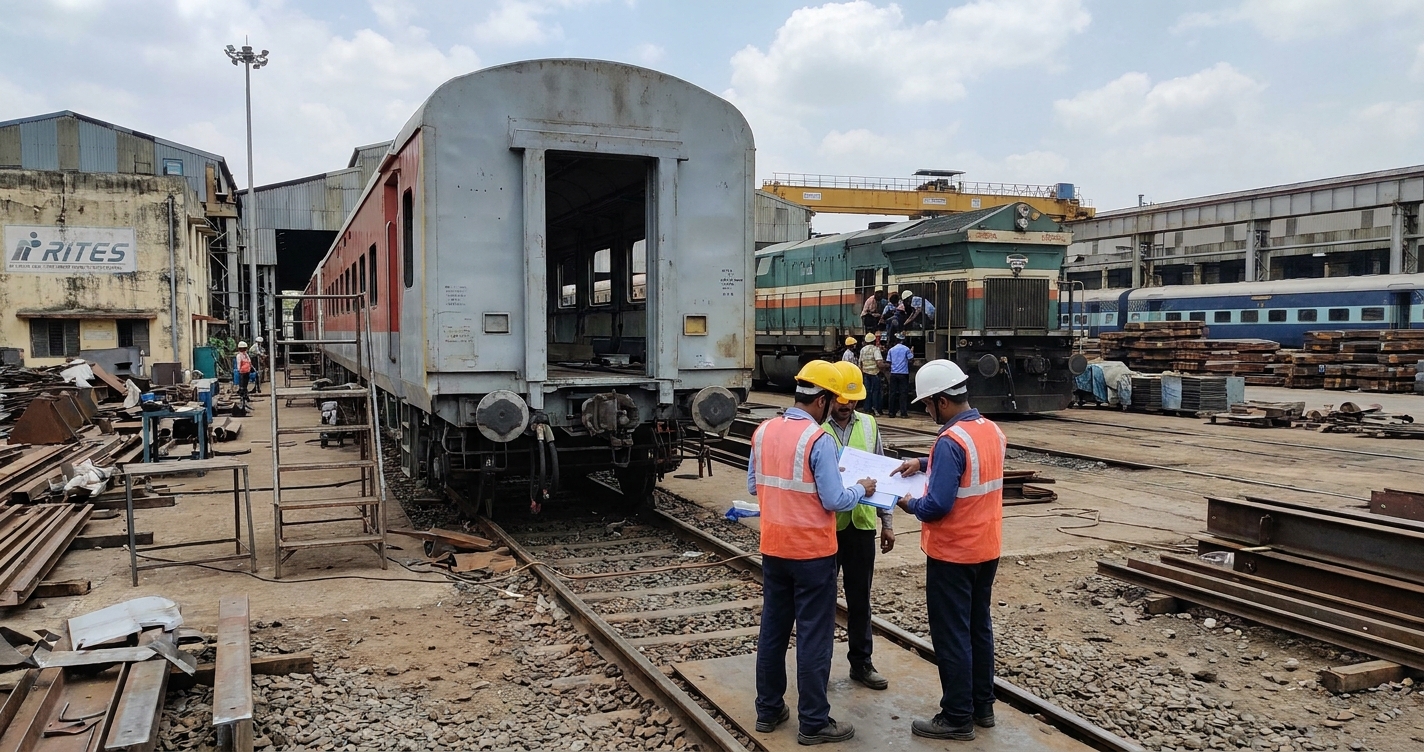
RITES chairman Rahul Mithal discusses a ₹9,388 crore order book, a ₹10,000 crore target and export orders in Bangladesh and Mozambique.
RITES chairman Rahul Mithal discusses a ₹9,388 crore order book, a ₹10,000 crore target and export orders in Bangladesh and Mozambique.
RITES chairman Rahul Mithal discusses a ₹9,388 crore order book, a ₹10,000 crore target and export orders in Bangladesh and Mozambique.


Powered by

© Tuskus 2025 - All Rights Reserved by Teamic Creative Lab Pvt. Ltd.
