IRB Infrastructure Developers' Q2FY27 net profit rose 84.85% to ₹260.15 crore on 15% toll revenue growth and higher InvIT distributions.


insghits
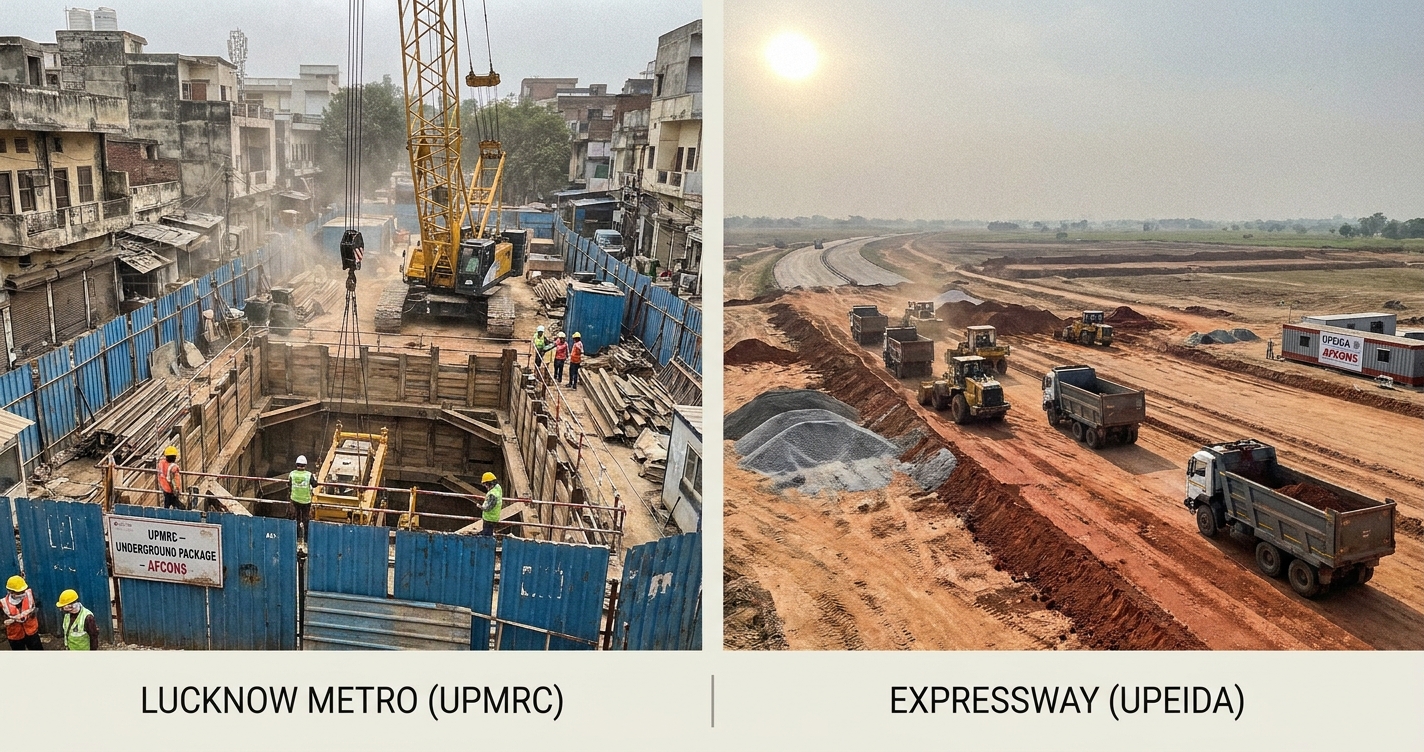
Afcons Infrastructure has taken Rs 34.69 bn of Uttar Pradesh work and published no programme for either job. The omission is the commercially interesting part.
The two awards are structurally opposite.
UPEIDA's Rs 20.86 bn contract buys 24.5 km of six-lane access-controlled greenfield expressway, roughly Rs 850 mn a kilometre, tying Noida International Airport at Jewar into the Yamuna and Ganga expressway spines.
UPMRC's Rs 13.83 bn package buys 6.52 km of underground on Lucknow Metro Phase-1B with seven stations, about Rs 2.1 bn a kilometre.
Seven stations across 6.52 km puts station boxes under a kilometre apart. Station boxes carry most of the underground cost on a corridor that dense.
Inside the number, the Shapoorji Pallonji-owned contractor is holding that density plus:
- mixed-face tunnelling
- utility systems
- fire safety
- the transition structures to elevated sections
Which returns to the absent programme.
A 6.5-km drive will not amortise a tunnel boring machine.
Launch shaft, cutterhead mobilisation, retrieval and demobilisation are largely fixed, and on this length they spread across very few kilometres of segmental lining.
Afcons brings real credentials to the ground risk, having delivered Kolkata's Howrah underwater metro and underground stretches in Delhi and Chennai. Commercial recovery is a different question.
The expressway is the offsetting bet. Greenfield, land largely assembled by UPEIDA, six lanes built for eight.
Quantity risk is moderate and mobility is clean. The exposure is payment, because UPEIDA's programme runs through the state budget and UP expressway works have a record of stretched certification cycles.
Afcons will carry a 24.5-km greenfield build on its own working capital while UPMRC demands TBM deployment in Lucknow.
Both mobilisations land in the same window. That collision is the constraint neither authority wrote into its bid documents, and it sits on one balance sheet.
FY27 order intake is now Rs 194.38 bn.
The signal for anyone pricing UP work: underground packages sliced to six or seven kilometres keep producing awards that cannot carry a machine.
Watch whether UPMRC's next tunnelling tender bundles drive length.
If it does not, the mobilisation premium reappears as claims.
Insights
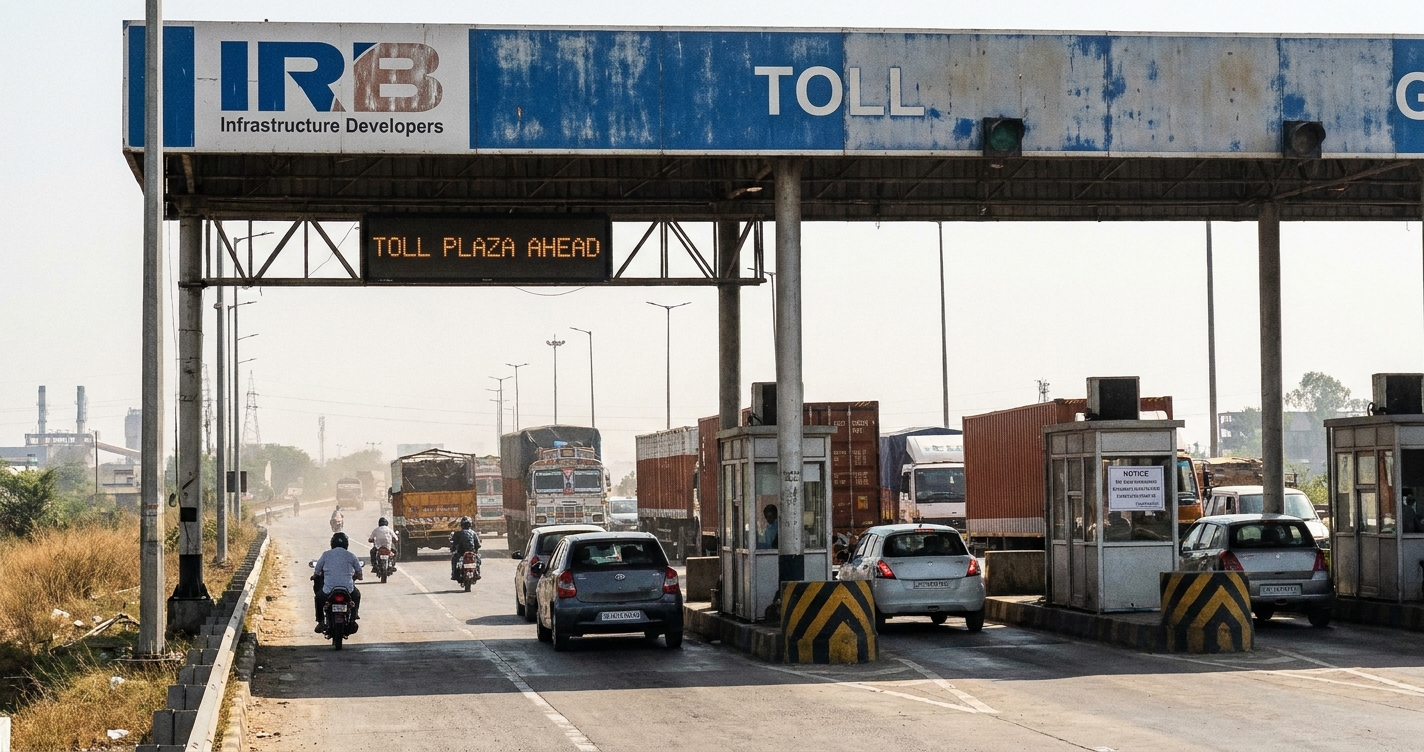
IRB Infrastructure Developers' Q2FY27 net profit rose 84.85% to ₹260.15 crore on 15% toll revenue growth and higher InvIT distributions.
IRB Infrastructure Developers' Q2FY27 net profit rose 84.85% to ₹260.15 crore on 15% toll revenue growth and higher InvIT distributions.
IRB Infrastructure Developers' Q2FY27 net profit rose 84.85% to ₹260.15 crore on 15% toll revenue growth and higher InvIT distributions.


Powered by

© Tuskus 2025 - All Rights Reserved by Teamic Creative Lab Pvt. Ltd.
