IRB Infrastructure Developers' Q2FY27 net profit rose 84.85% to ₹260.15 crore on 15% toll revenue growth and higher InvIT distributions.


insghits
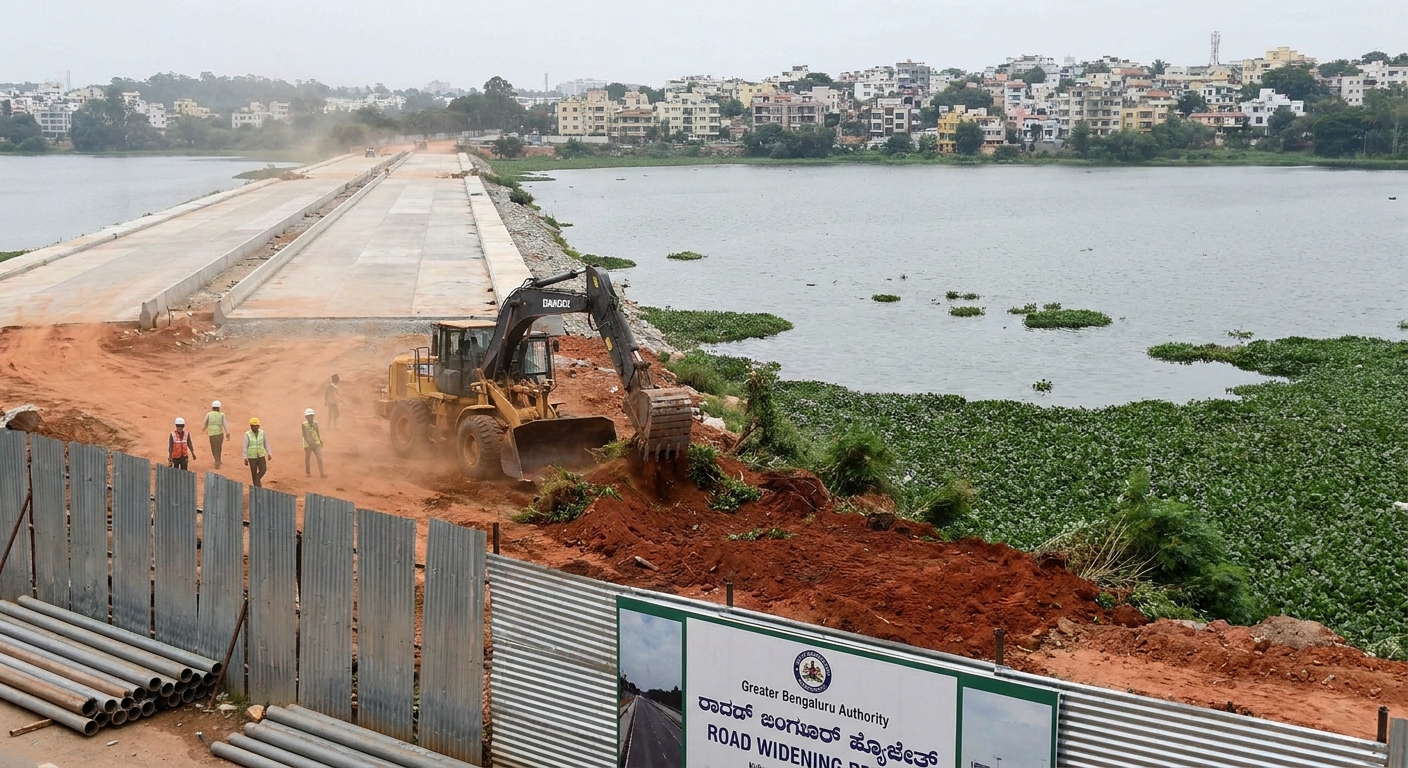
The Greater Bengaluru Authority (GBA) has issued a notice identifying lake areas it proposes to acquire for road expansion.
The Federation of Bengaluru Lakes (FBL) responded on October 29 with a representation to GBA's Climate Action Cell, asking it to halt until ecological and hydrological impacts are assessed.
Bengaluru's arterial congestion is real. The right of way, though, is being assembled in a way that moves risk downstream.
The Karnataka Tank Conservation and Development Authority Amendment Act, 2025 cut statutory buffer protection around tanks. GBA's expansion notice then treated lake land as available corridor.
A conservation statute has become a land-supply instrument.
Tunnel roads, underground drainage and sewage treatment plants sit in the same land envelope. A contractor pricing a tunnel or an STP inside a lake bed is pricing ground conditions it cannot see.
No independent flood-storage study exists. Lake-wise maps are not published. Detailed project reports and traffic studies are not disclosed.
FBL's demands read like a bidder's due diligence list:
- A time-bound audit of existing and planned roads
- Independent assessment of hydrology, groundwater, biodiversity and tree loss
- Public disclosure of DPRs
Absent those, the risk lands in contingency, or returns later as claims against GBA.
The institutional detail carries the load. GBA built a Climate Action Cell, then routed an expansion notice past it.
The cell can receive a representation. It cannot stop a package. Ecological review sits outside the approval chain, so the project proceeds on engineering logic while the objection accumulates as litigation exposure on the eventual contract.
GBA owns the alignment and the land risk. Karnataka's Urban Development Department owns buffer policy through the KTCDA amendment.
The winning contractor inherits unresolved hydrology, monsoon windows and any stay order. FBL carries the cost of proving harm without statutory standing.
The signal is that buffer relaxation now functions as right-of-way policy in Karnataka, not conservation policy.
Every authority in the state with a congested corridor and a tank nearby will read the KTCDA amendment the same way. Bidders should price hydrology as unpriced ground risk until a lake-wise map and an independent flood-storage study are on the table.
Insights
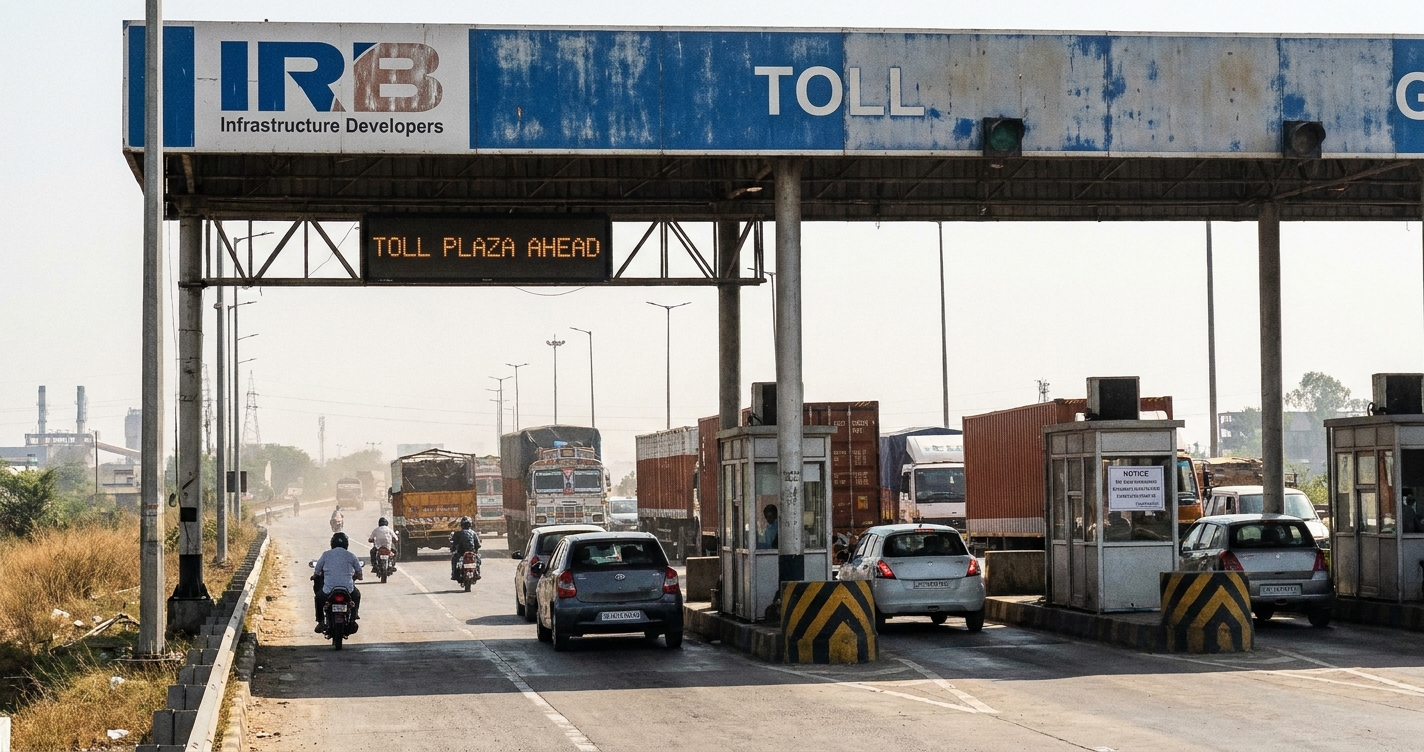
IRB Infrastructure Developers' Q2FY27 net profit rose 84.85% to ₹260.15 crore on 15% toll revenue growth and higher InvIT distributions.
IRB Infrastructure Developers' Q2FY27 net profit rose 84.85% to ₹260.15 crore on 15% toll revenue growth and higher InvIT distributions.
IRB Infrastructure Developers' Q2FY27 net profit rose 84.85% to ₹260.15 crore on 15% toll revenue growth and higher InvIT distributions.


Powered by

© Tuskus 2025 - All Rights Reserved by Teamic Creative Lab Pvt. Ltd.
