RITES' 58% repricing of the Bidar–Kalaburagi electrification mandate shows how cost-plus turnkey contracting shifts escalation risk from consultant to


insghits
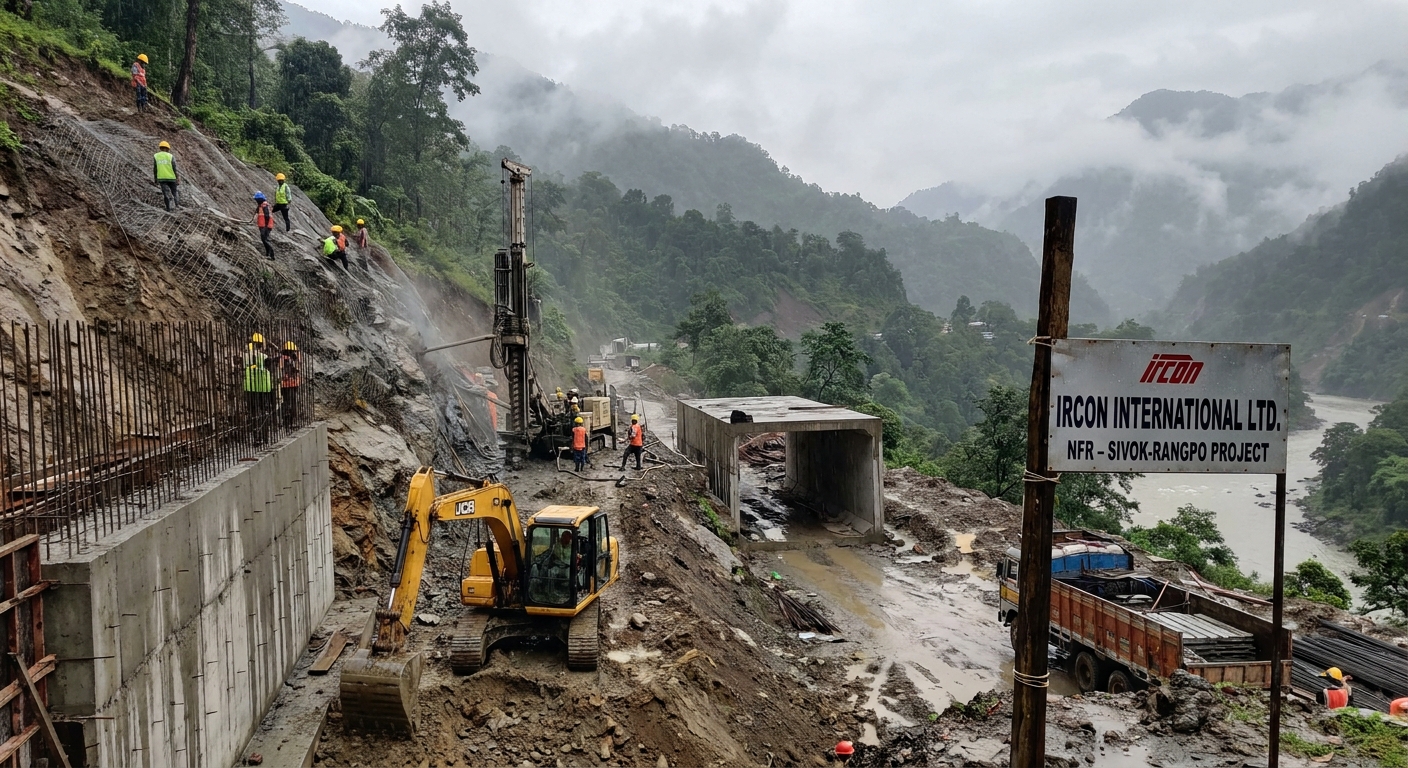
IRCON International Ltd has put a number on Himalayan slope risk.
Its e-procurement notice dated 2 September 2026 invites bids for slope protection and associated works at Melli Yard on the Sivok–Rangpo new broad-gauge line — an estimated ₹483.57 crore, GST inclusive, covering just Km 27+410 to Km 27+540.
The tender is floated on behalf of Northeast Frontier Railway (NFR), the project owner, with a 12-month completion window.
Scope runs beyond slope stabilisation to an approach road, a box culvert and related infrastructure — access, drainage and formation stability treated as one integrated remediation package rather than separate line items.
IRCON, a listed Miniratna PSU under the Ministry of Railways, is the corridor's principal implementing agency.
That it is procuring a specialised slope-protection package at this stage shows the Sivok–Rangpo line has moved into the formation-hardening phase, where yard readiness now depends on securing the ground itself.
At roughly ₹3.72 crore per metre, this is not routine earthwork.
It prices weak Himalayan geology into a single 130-metre front:
- Monsoonal saturation
- Weathered rock
- Seismic loading
Melli Yard sits on the final approach into Sikkim, and the corridor, the state's first broad-gauge rail link, is tunnel-dominated, leaving open-yard sections as concentrated points of geotechnical exposure.
The commercial structure matters. IRCON procures the capability while NFR retains ownership, funding and ultimate delivery accountability.
Execution risk transfers to the awarded contractor, but interface risk — sequencing slope work against track, signalling and yard commissioning — stays inside the IRCON–NFR relationship.
For bidders, the opportunity is attractive but unforgiving: high-value, short-duration, monsoon-sensitive work with limited working fronts and constrained logistics to Melli.
Specialised geotechnical and slope-stabilisation contractors, along with retaining-structure and drainage specialists, stand to gain.
The exposure is a compressed 12-month schedule colliding with Sikkim's weather window.
The broader signal: slope stabilisation is becoming a distinct, high-value contracting category on Himalayan rail corridors, absorbing capital that once sat inside general civil packages.
IRCON carving out ₹483.57 crore for 130 metres shows where the real cost and technical risk of the Sivok–Rangpo project now sit — not in track, but in keeping the ground beneath it stable.
Insights
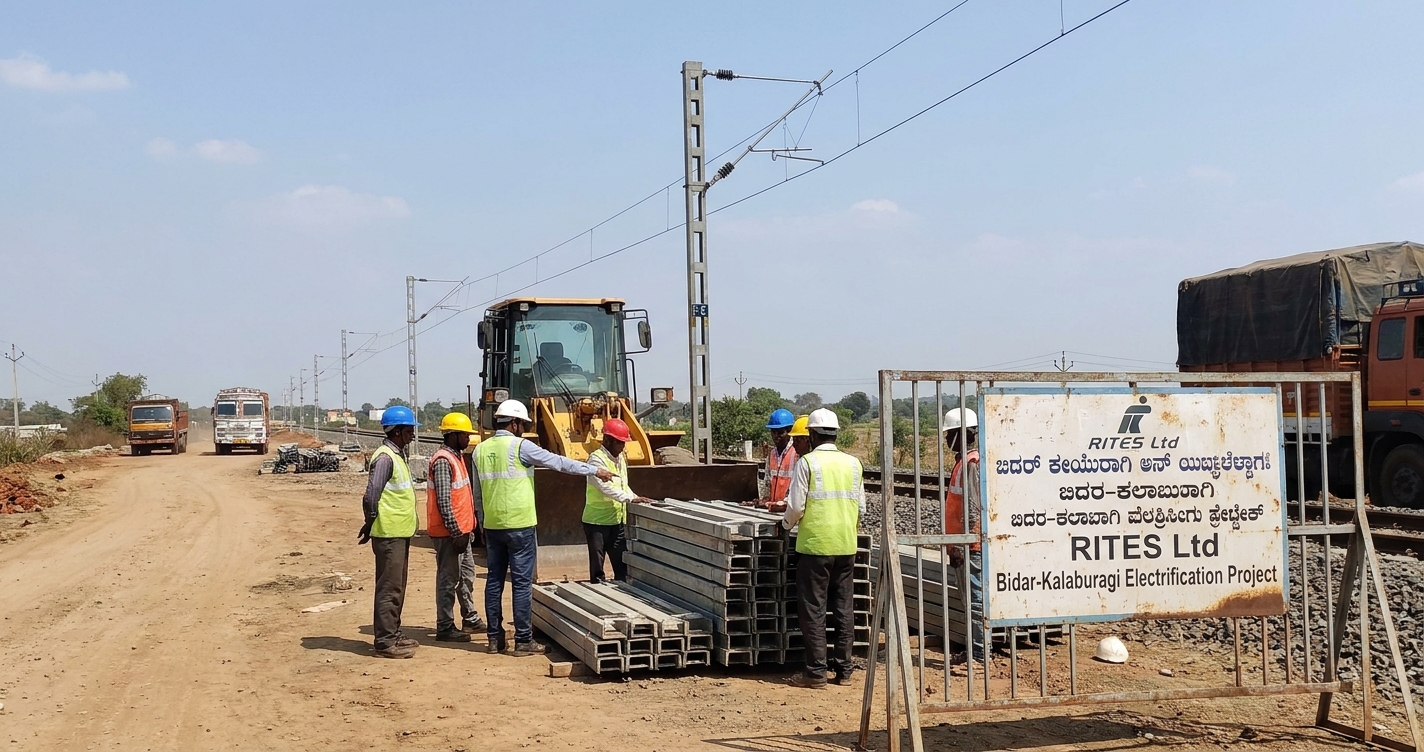
RITES' 58% repricing of the Bidar–Kalaburagi electrification mandate shows how cost-plus turnkey contracting shifts escalation risk from consultant to
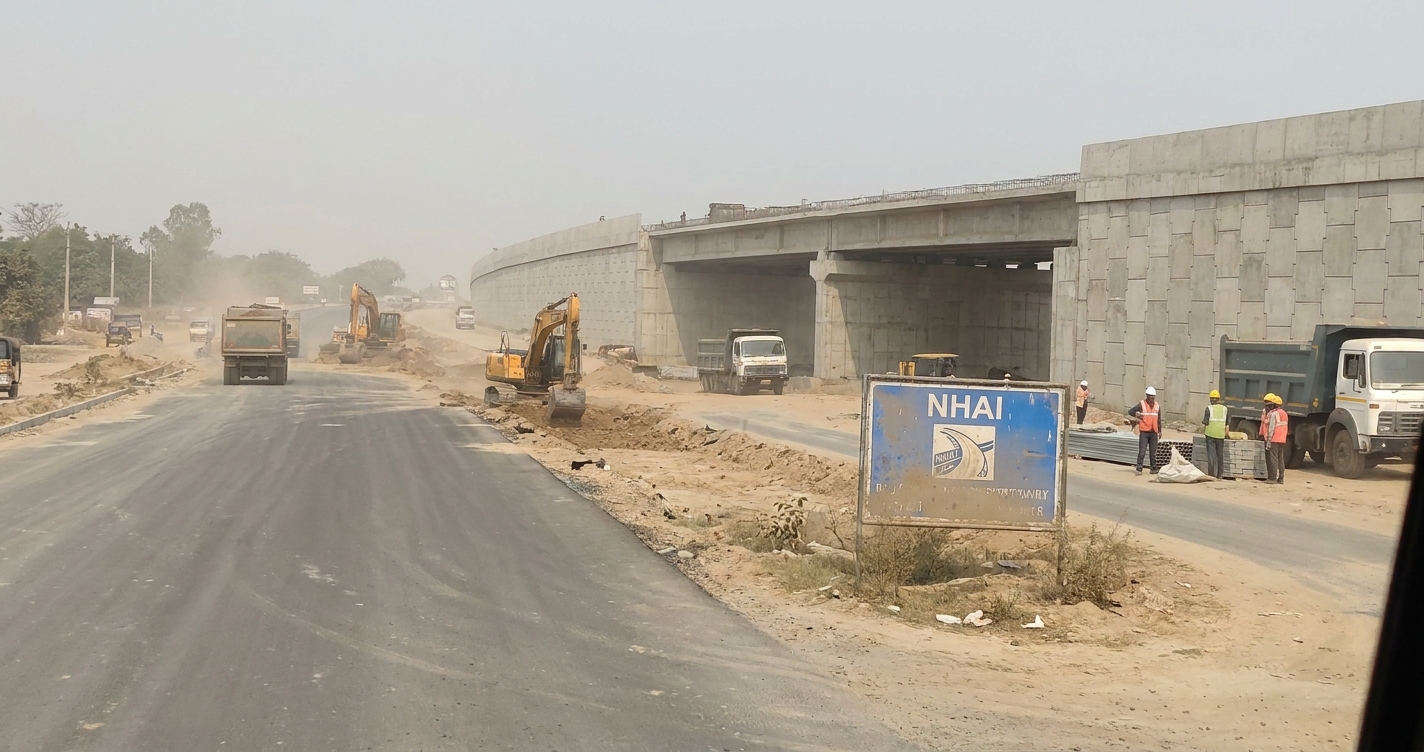
NHAI's 21 September 2026 design guidelines lock uniform 60-70m right-of-way and structure standards for 4-lane and 6-lane high-speed corridors, reshap
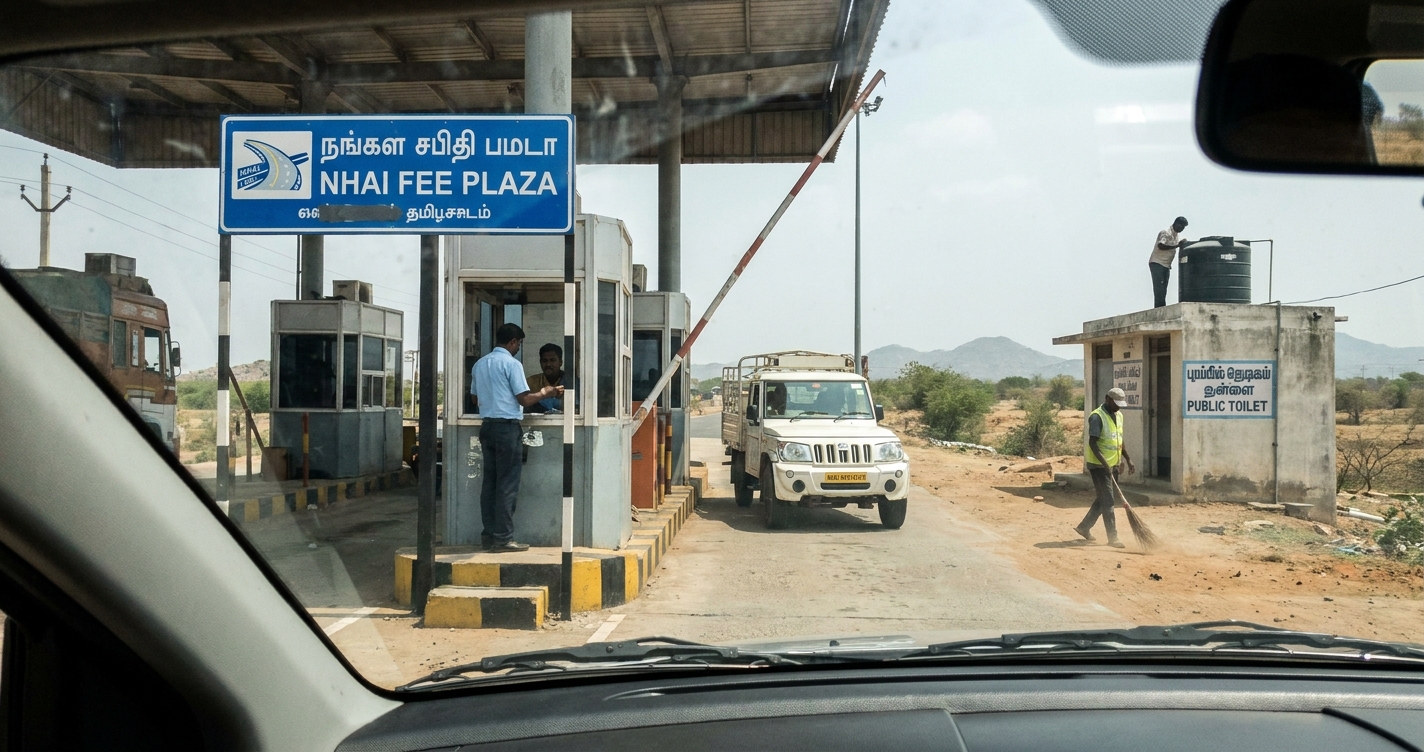
Hazoor Multi Projects' Rs 200-crore NHAI award in Tamil Nadu is a user fee collection and maintenance mandate, not a construction order — and that dis


Powered by

© Tuskus 2025 - All Rights Reserved by Teamic Creative Lab Pvt. Ltd.
