RITES' 58% repricing of the Bidar–Kalaburagi electrification mandate shows how cost-plus turnkey contracting shifts escalation risk from consultant to


insghits
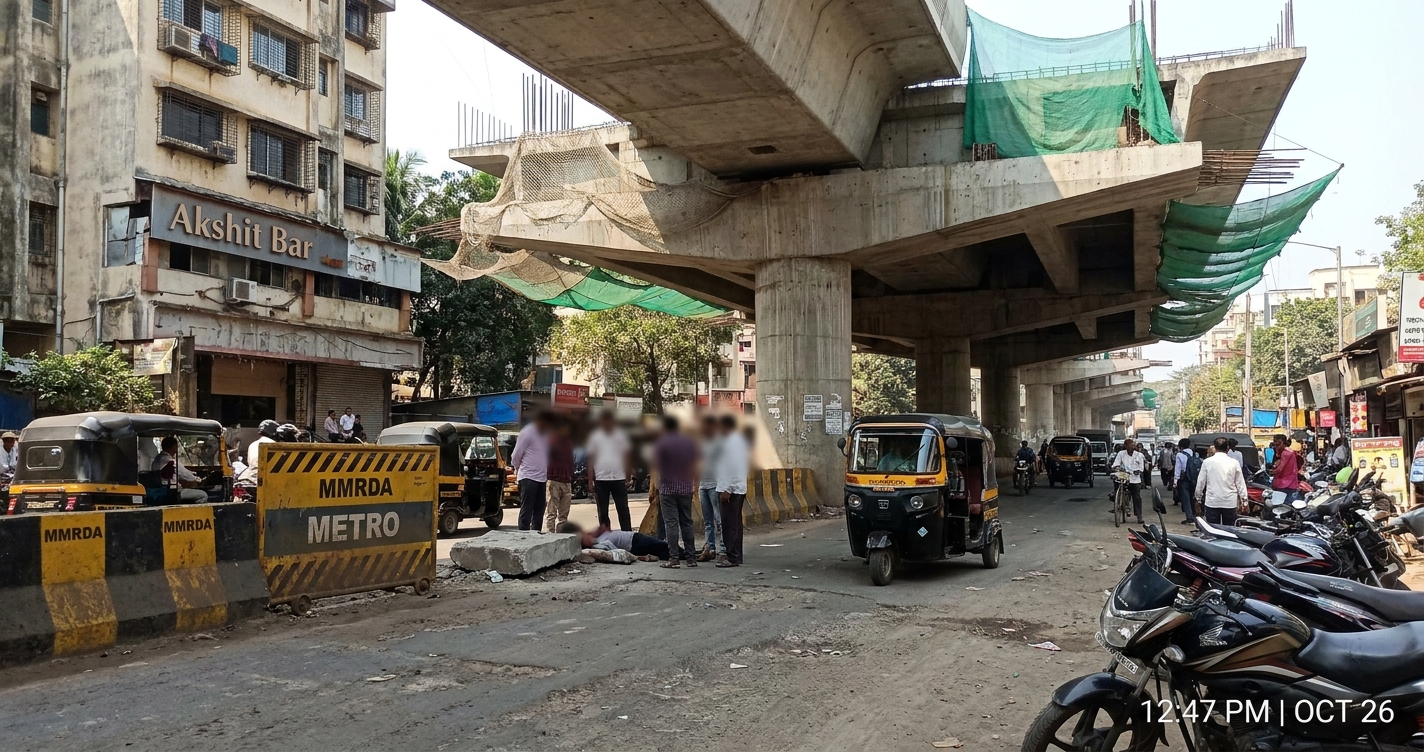
A 23-year-old pedestrian, identified as Shadab, was struck on the head by a falling cement block while standing on a live traffic corridor beneath an elevated Metro viaduct in the Kashimira area of Mira Road.
The Free Press Journal places the site near Akshit Bar. He is undergoing surgery at Wockhardt Hospital.
The corridor sits under the Mumbai Metropolitan Region Development Authority (MMRDA), the state-level agency delivering the Mumbai Metro network, including the Dahisar–Mira Bhayandar (Line 9) elevated alignment through Kashimira.
The Mira Bhayandar Municipal Corporation governs the road-level jurisdiction.
What the initial report does not name is the EPC contractor responsible for the span.
That omission is not incidental — it is how site-level liability is often recorded as a local accident rather than a contract-level failure, even though both the authority and the executing firm carry the delivery and safety obligations.
Elevated viaduct construction over live roads requires three controls at every working bay:
- Debris netting
- Edge protection
- Catch platforms
A cement block reaching road level points to a containment failure at the deck edge or a material-handling lapse.
The second failure is response: Shadab reportedly lay on the road for nearly an hour, obscured by parked vehicles, before being shifted in an autorickshaw. That signals weak site-level incident management and traffic control at the road interface.
For the executing contractor and MMRDA, immediate exposure runs through police action, possible stoppage at the affected span, and safety audits.
The larger exposure is regulatory and reputational: a serious pedestrian injury on an active corridor invites scrutiny of traffic management plans, barricading, debris containment, and insurance.
Suppliers of formwork, netting, and scaffolding, plus safety consultants, stand to gain as specifications tighten.
As elevated metro construction accelerates across Indian cities, road-level interface safety — pedestrian protection, debris containment, and incident response — is becoming a priced, contract-level risk.
Authorities and EPC firms that treat it as peripheral will face stoppages, claims, and liability that dwarf the direct safety investment.
Insights
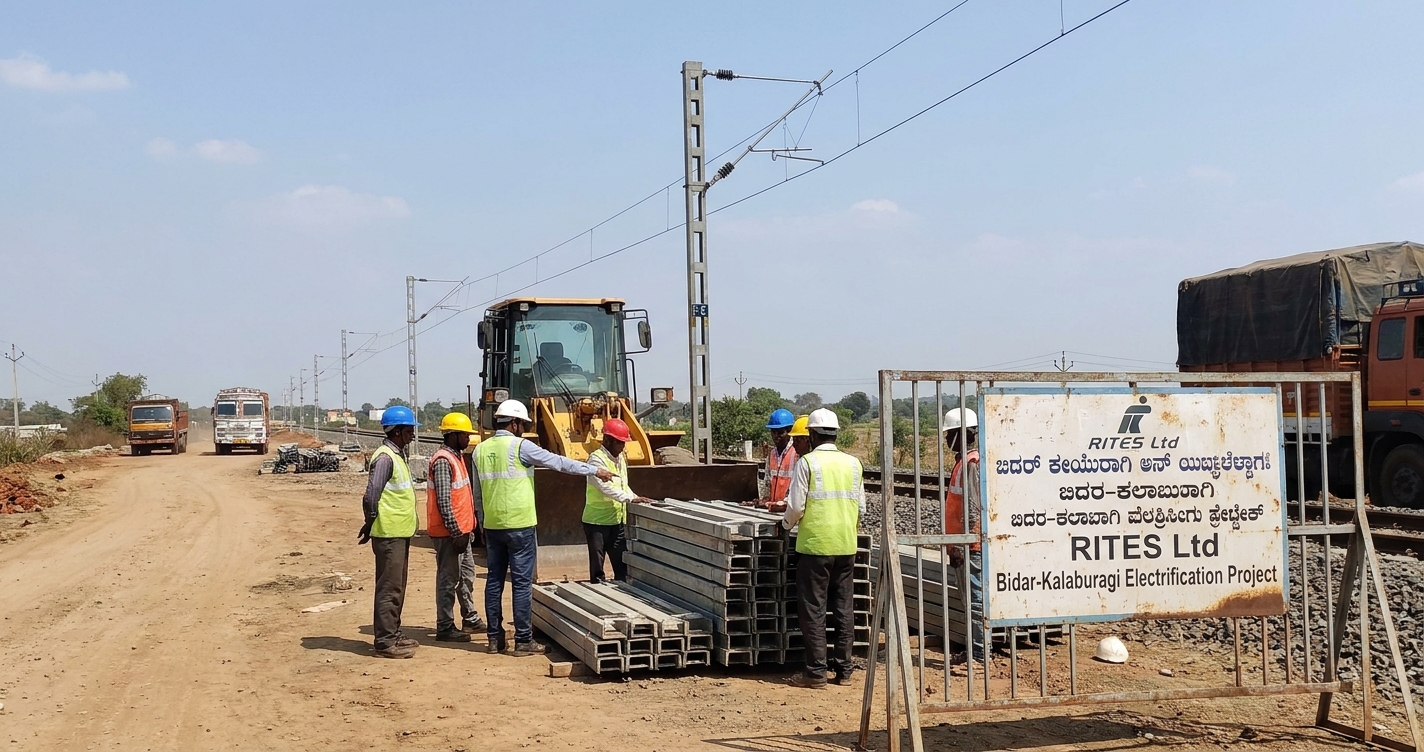
RITES' 58% repricing of the Bidar–Kalaburagi electrification mandate shows how cost-plus turnkey contracting shifts escalation risk from consultant to
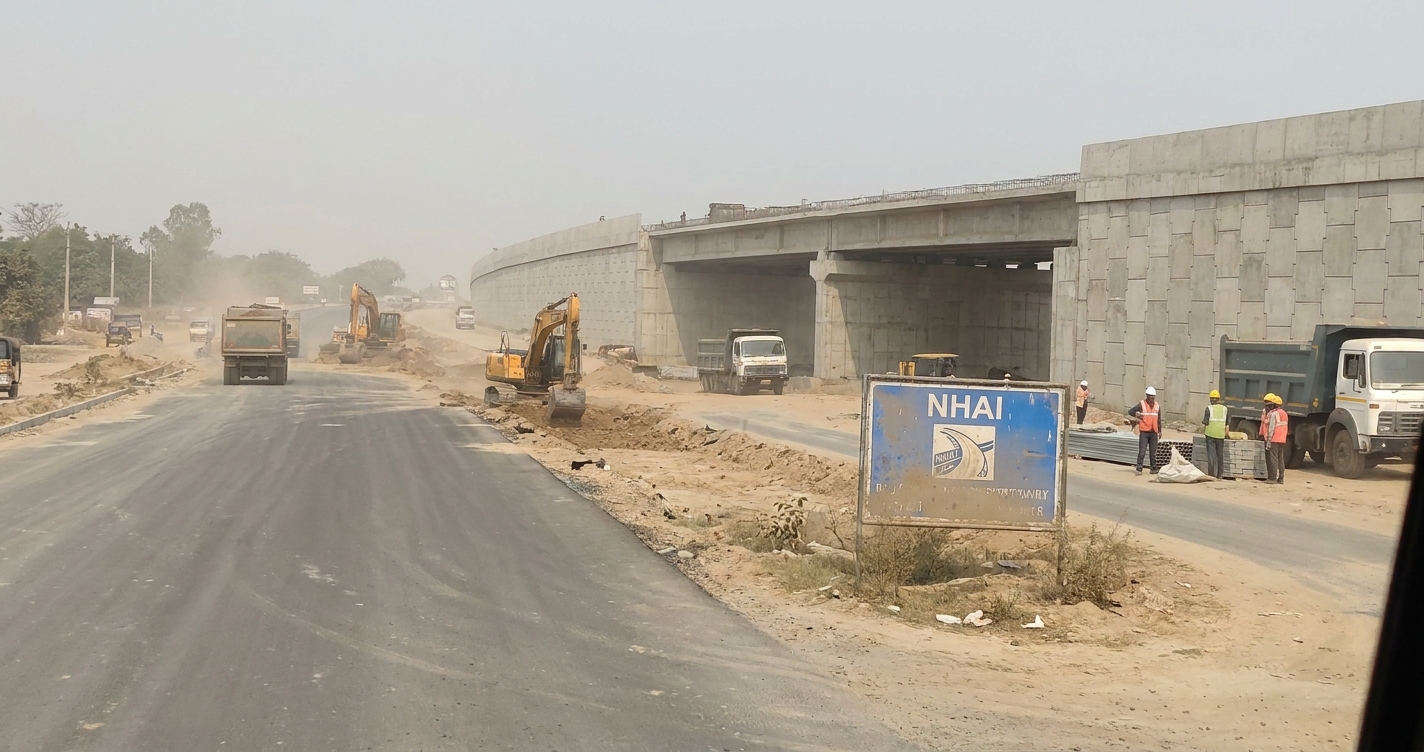
NHAI's 21 September 2026 design guidelines lock uniform 60-70m right-of-way and structure standards for 4-lane and 6-lane high-speed corridors, reshap
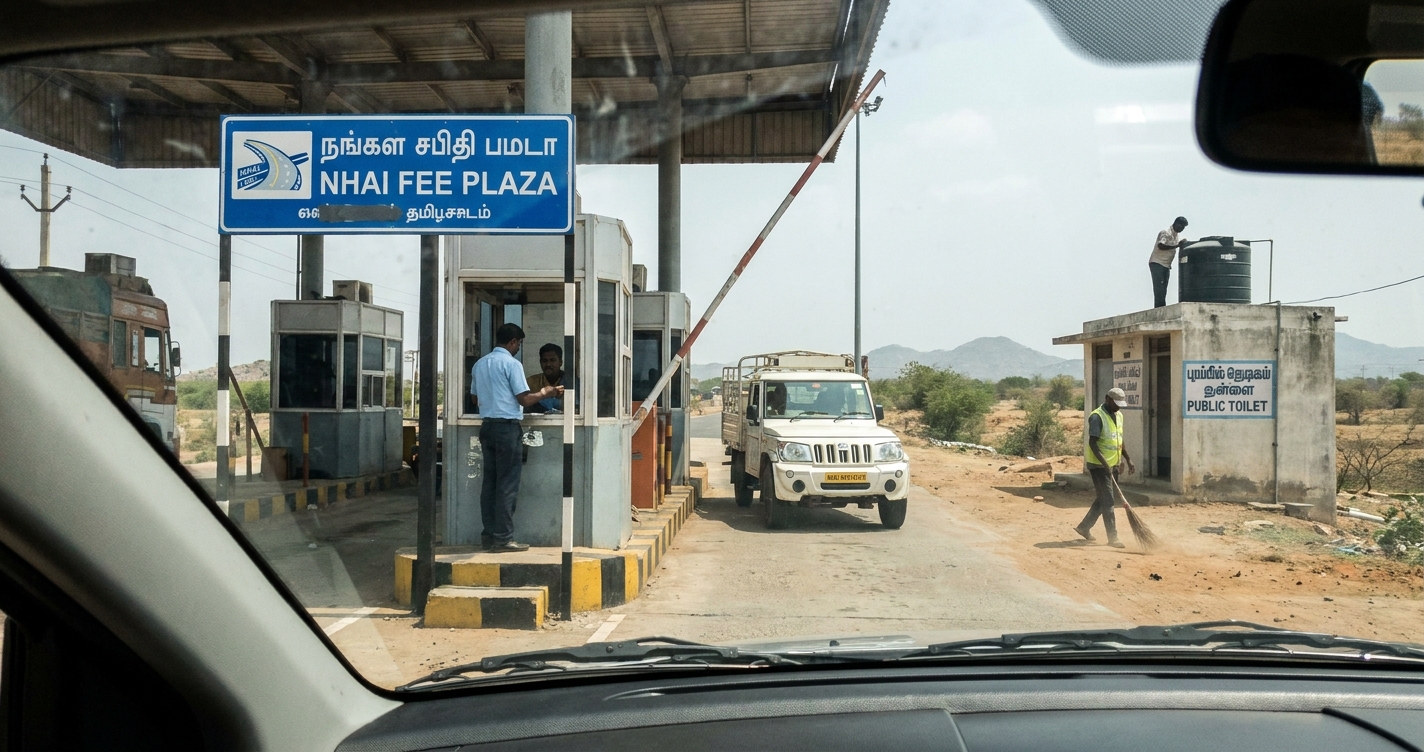
Hazoor Multi Projects' Rs 200-crore NHAI award in Tamil Nadu is a user fee collection and maintenance mandate, not a construction order — and that dis


Powered by

© Tuskus 2025 - All Rights Reserved by Teamic Creative Lab Pvt. Ltd.
