IRB Infrastructure Developers' Q2FY27 net profit rose 84.85% to ₹260.15 crore on 15% toll revenue growth and higher InvIT distributions.


insghits

The National Highways Authority of India has put deposit works on a cash-first footing.
Any government department, public sector undertaking or agency that asks NHAI to build for it must now fund 100 per cent of the cost, in advance or in agreed tranches, with separate financial and administrative approvals layered on top of the construction approval.
NHAI's circular presents this as procedure. It is a balance-sheet boundary.
The consequence is a transfer of working-capital risk.
Who signs the contract does not change.
Deposit works have historically stalled at estimate revisions and escalation claims, and each of those arguments used to land on NHAI's desk with a sovereign-backed chequebook behind it.
Under this circular the payer is the principal agency, and that agency's cash flow becomes the payment security.
A tender can still carry NHAI's letterhead while the money behind it belongs to a state public works department or a port authority.
NHAI is carrying a debt book above Rs 3 lakh crore and has been told repeatedly that fresh capital must come from monetisation rather than budgetary support.
Every deposit work executed without upfront money is NHAI borrowing on behalf of another department.
The circular closes that channel.
Read the pipeline accordingly.
- Principal agencies losing access to NHAI's borrowing capacity face a plain choice: fund from their own capital heads, or go to market.
- Contractors should pull the clause on tranche timing before pricing anything.
- A 30-day payment cycle written against an agency that receives funds quarterly is an unsecured credit line dressed as a highway contract, and it belongs in the cost of capital, not the overhead.
The signal is structural. NHAI is being repositioned from builder of last resort to fee-for-service executor.
Expect fewer NHAI-tendered packages in agency-sponsored corridors, and expect those agencies to start drafting their own EPC and concession structures with thinner institutional backing.
Payment security, not margin, is where the next round of bid risk sits.
Insights
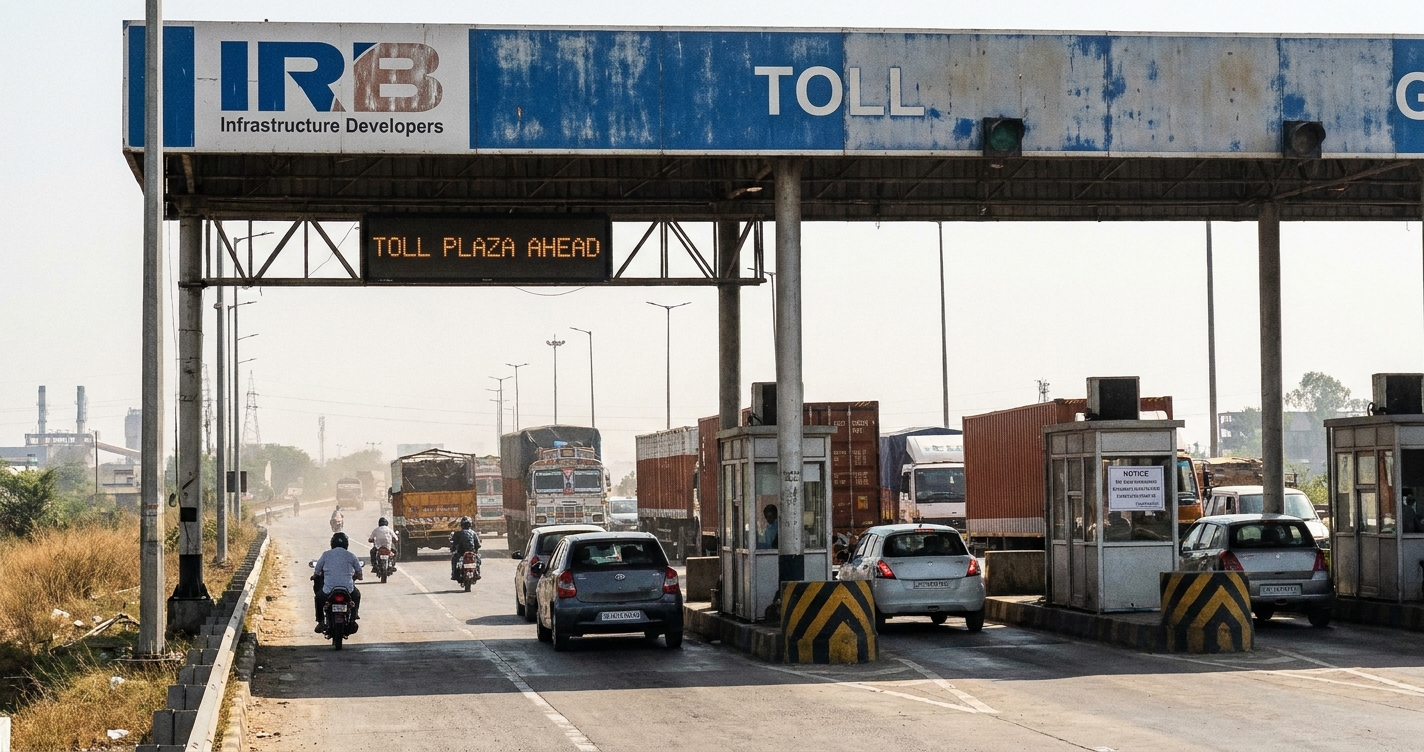
IRB Infrastructure Developers' Q2FY27 net profit rose 84.85% to ₹260.15 crore on 15% toll revenue growth and higher InvIT distributions.
IRB Infrastructure Developers' Q2FY27 net profit rose 84.85% to ₹260.15 crore on 15% toll revenue growth and higher InvIT distributions.
IRB Infrastructure Developers' Q2FY27 net profit rose 84.85% to ₹260.15 crore on 15% toll revenue growth and higher InvIT distributions.


Powered by

© Tuskus 2025 - All Rights Reserved by Teamic Creative Lab Pvt. Ltd.
