PWD-BTC has tendered a ₹47.58 lakh road package in Baksa District under a 2019-20 technical reference, with a 180-day clock and an EMD that squeezes s


insghits
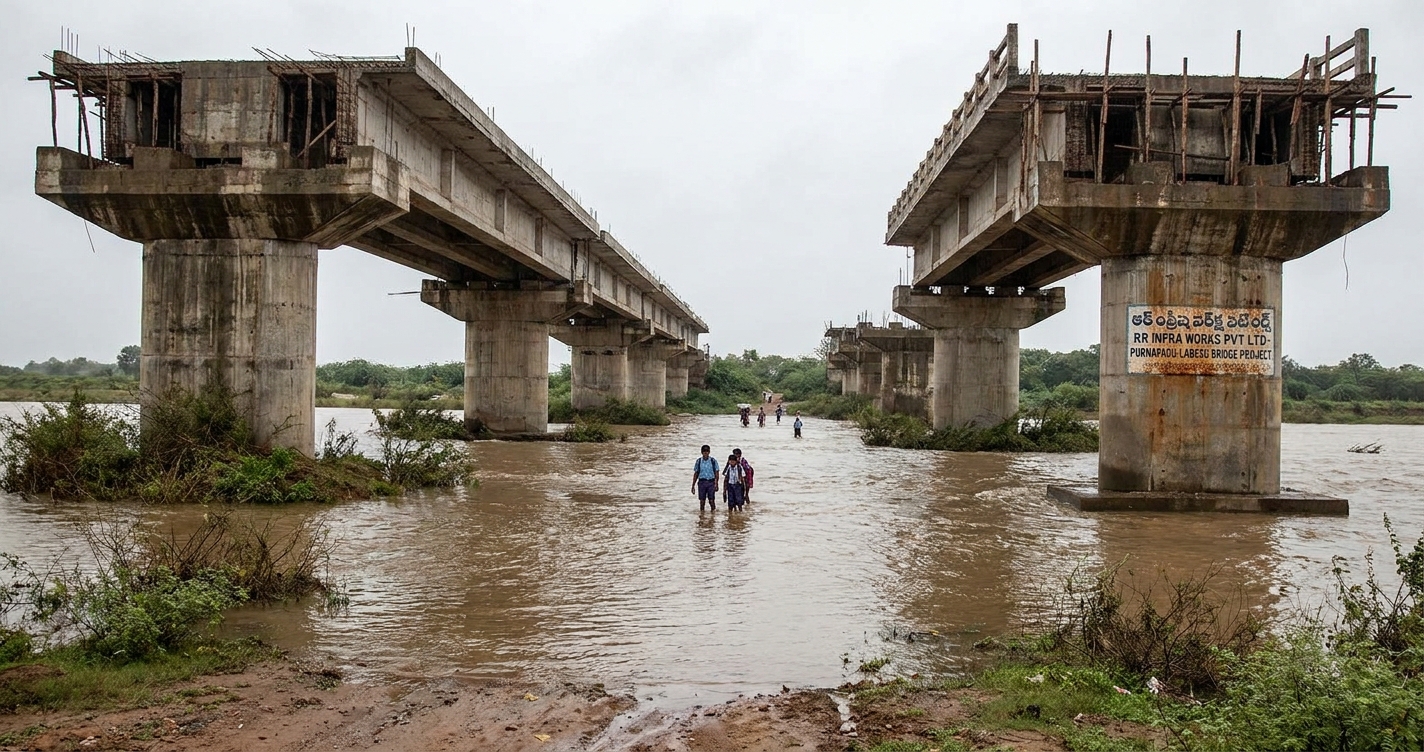
When students from Komarada mandal in Andhra Pradesh's Parvathipuram Manyam district were photographed wading through the swollen Nagavali River to reach school, the images reignited a two-decade-old infrastructure failure.
But the real story is why even a 125% cost escalation — from ₹7 crore to ₹15.8 crore — has failed to attract a single contractor willing to complete a bridge already 65% built.
The Purnapadu–Labesu high-level bridge, connecting over 40 villages and 12,000 people to Komarada mandal headquarters, has been under construction since 2006.
In 2015, the Andhra Pradesh Panchayat Raj Engineering Department awarded the balance work to RR Infra Works Pvt Ltd at ₹7 crore. The contractor abandoned the project midway, leaving the structure at roughly 65% completion.
In August 2025, the state government sanctioned ₹15.8 crore — more than double the original contract. Tenders were floated. No bids came.
Panchayat Raj officials confirmed the tenders "failed to attract bidders because of concerns over the project's financial viability."
That admission is the signal. When a partially built bridge in a remote location cannot find takers at ₹15.8 crore, the market is delivering an unambiguous verdict: government cost estimates are divorced from delivery economics.
Several factors drive this rejection:
- Hidden liabilities: unknown structural defects, deteriorated sections, unpredictable river hydrology, and approach land complications not covered in tender documents.
- Remote location premiums: high mobilisation, logistics, and labour costs unique to such terrain.
- Thin margins on sub-₹20 crore contracts: these risks quickly make projects financially unviable.
- Contractor gap: large firms avoid small remote projects; small regional players like RR Infra Works lack the financial resilience to absorb unforeseen costs.
The Panchayat Raj Engineering Department now faces a procurement dead-end. Standard tendering has failed. Options are narrowing: restructure the contract to de-risk completion through provisional sums for unknown site conditions, or raise the sanction further. The former requires procurement sophistication unlikely at the departmental level; the latter triggers political friction.
For India's infrastructure sector, Nagavali is not isolated. Rural connectivity programmes depend on a thin ecosystem of small contractors. When they fail or refuse to bid, the delivery pipeline seizes up. The gap between sanctioned amounts and on-ground costs is widening — and the market is no longer absorbing it silently.
Until procurement models price risk honestly, or until small works are consolidated into packages large enough to attract mid-tier contractors, bridges like Purnapadu–Labesu will stay 65% complete, and students will keep wading across rivers.
Insights
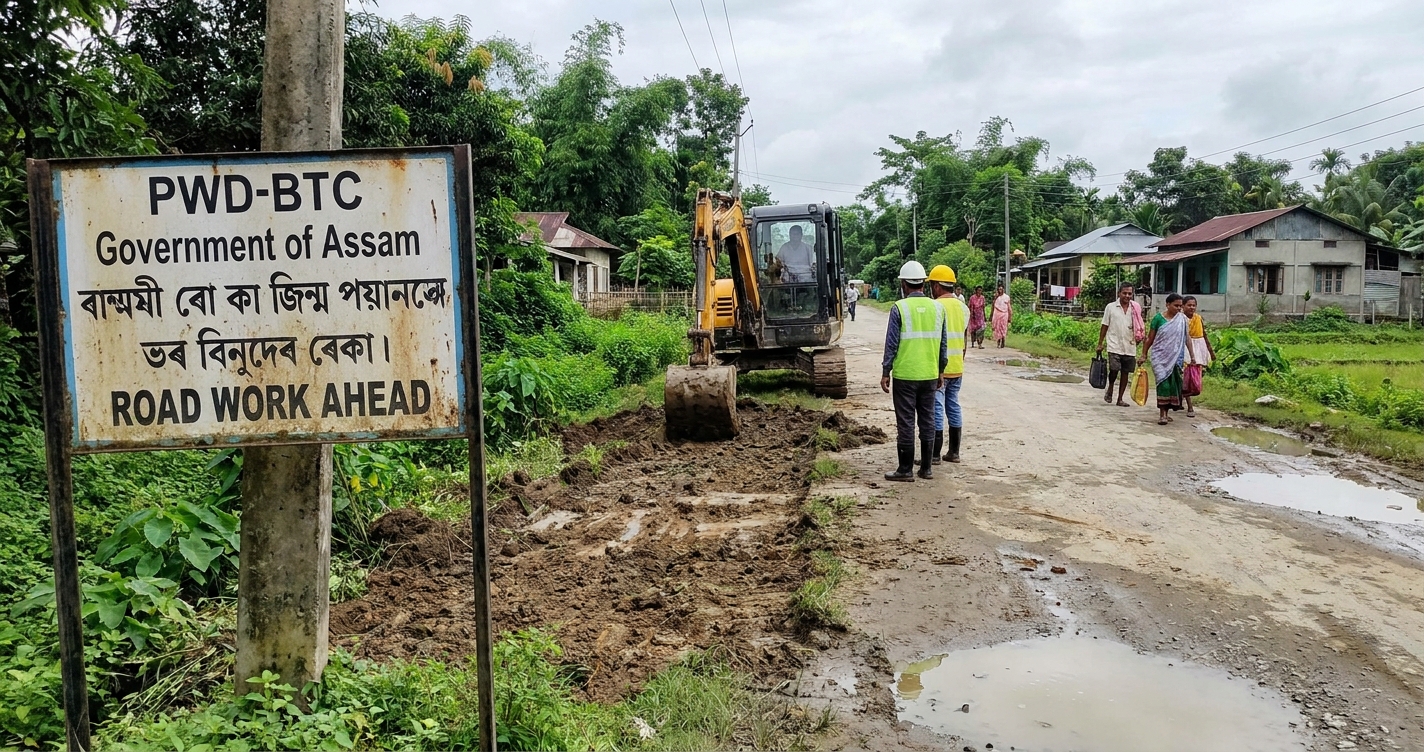
PWD-BTC has tendered a ₹47.58 lakh road package in Baksa District under a 2019-20 technical reference, with a 180-day clock and an EMD that squeezes s
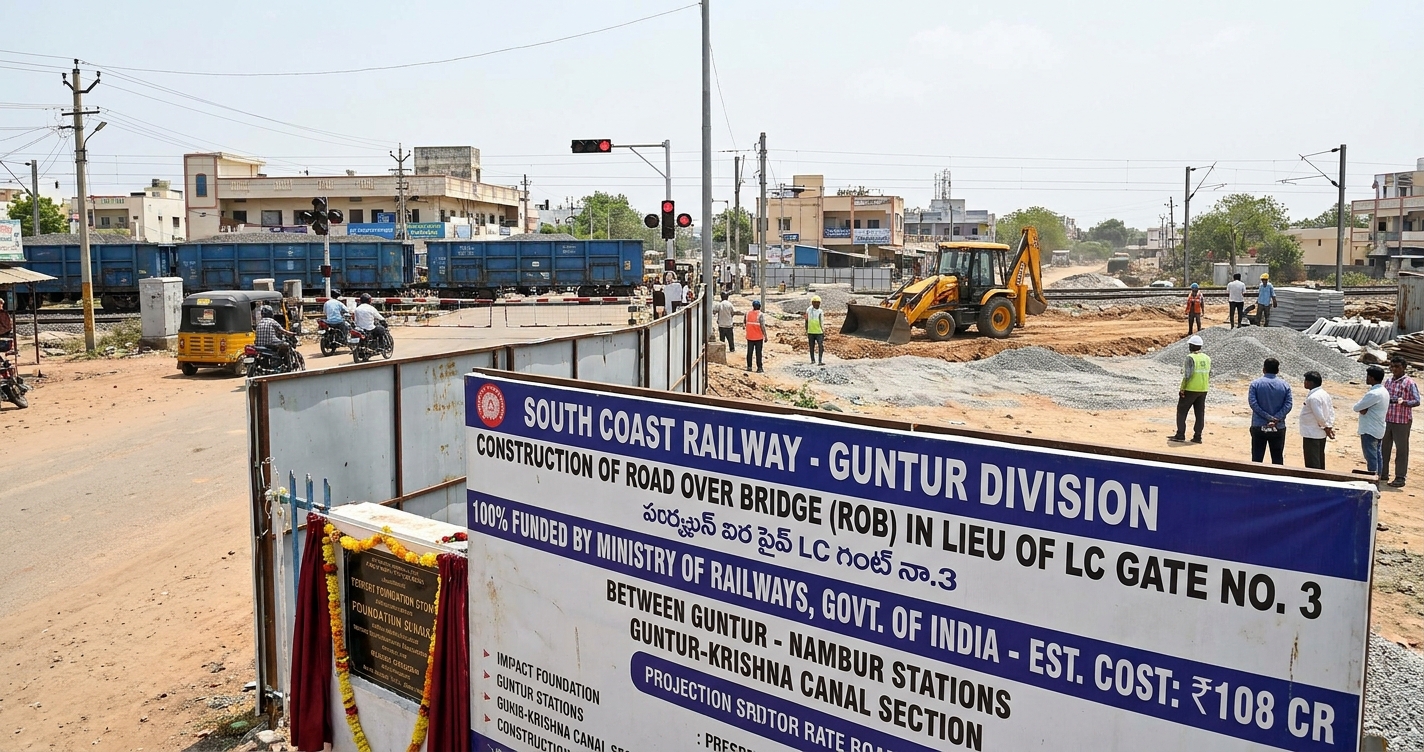
The Ministry of Railways will fully fund a ₹108 crore, 668-metre four-lane Road Over Bridge between Guntur and Nambur, replacing Level Crossing Gate N
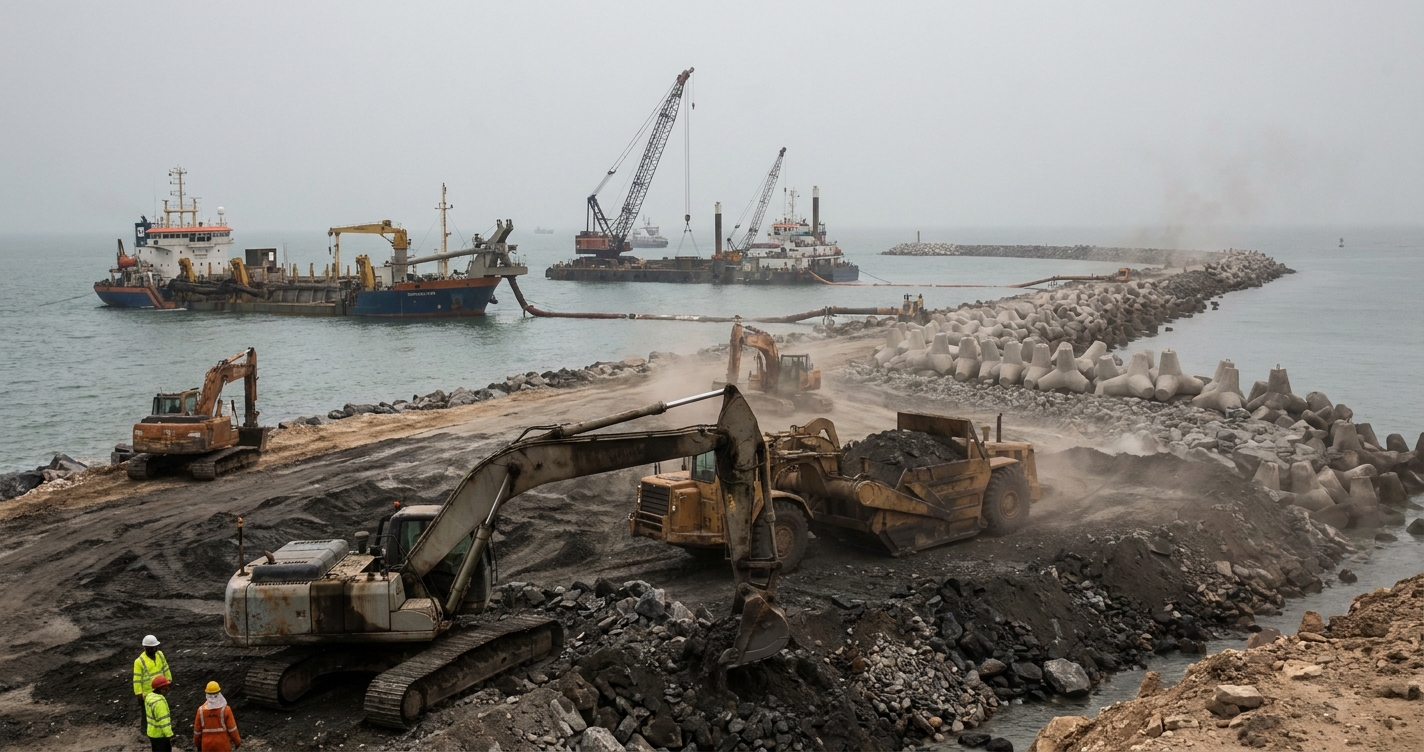
Four bidders, including Adani Ports and DP World, have entered the Rs 22,323-crore offshore package for Vadhvan Port - dredging and 1,207 hectares of


Powered by

© Tuskus 2025 - All Rights Reserved by Teamic Creative Lab Pvt. Ltd.
