The death of labourer Biram Mogiya under a Gadganga River bridge exposes how India's low-value municipal works orders - like the plank-installation jo


insghits
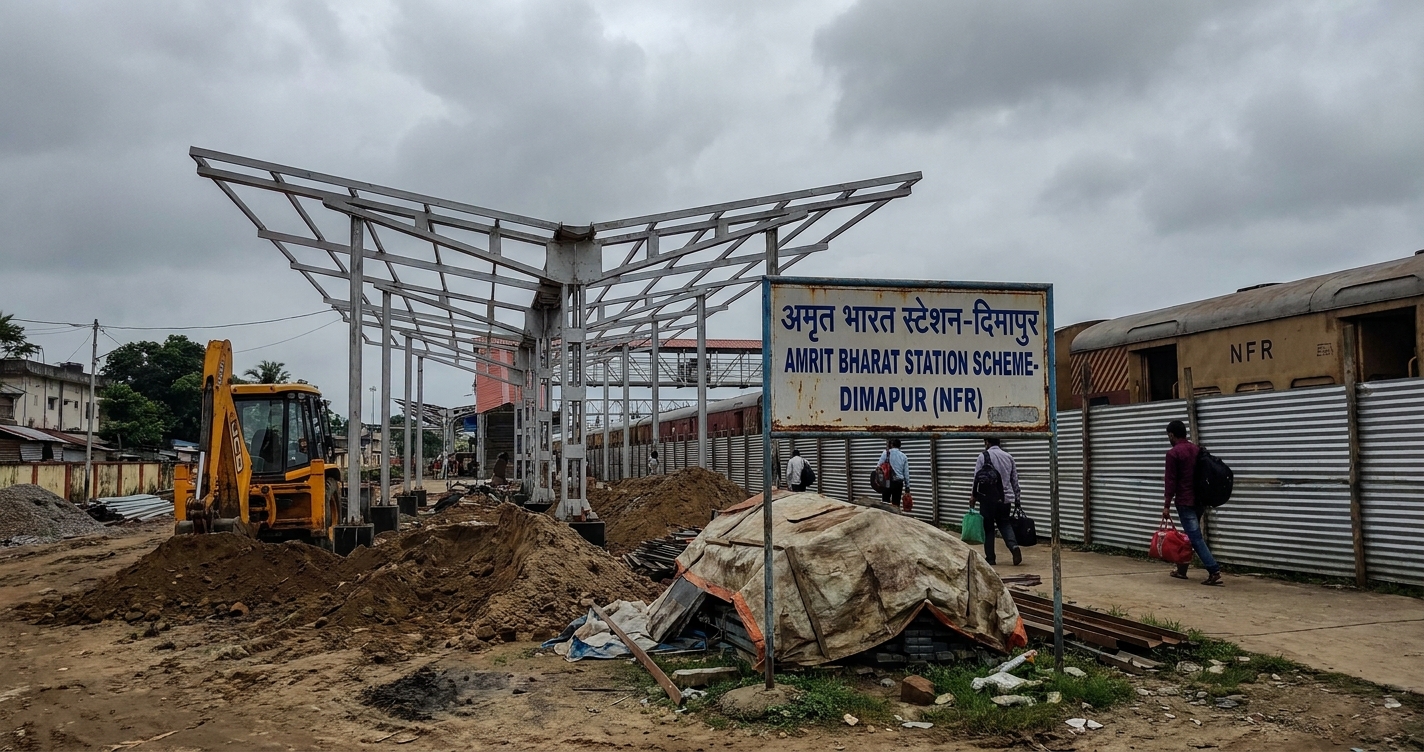
Dimapur railway station has served Nagaland since 1903, yet its ₹283-crore redevelopment under the Amrit Bharat Station Scheme has reached only 7.2% physical progress with two of three years elapsed.
The constraint is not contractor failure or a funding shortfall; it is land. Encroachments and unresolved compensation claims have throttled site availability.
The entity absorbing execution risk is Northeast Frontier Railway (NFR). NFR is the executing agency, but it depends on a land facilitation service only the Nagaland government can provide.
Encroachment clearance, claimant verification and compensation settlement are state functions. The ₹283-crore sanction carries no coercive tools to resolve them.
That is the structural flaw: capital is committed before site certainty is achieved.
The commercial lesson cuts deeper. Amrit Bharat Station Scheme packages are not contractually insulated from state-level land risk.
Sanctions fund design, civil works and amenities, but the construction window assumes ready land. When that assumption fails, the executing railway does not absorb delay indefinitely—it reallocates.
NFR's stated alternatives, Bokajan and Diphu in Assam, are not rhetorical. Zonal railways optimise around operational throughput and available land, and Assam has shown faster land facilitation on parallel Northeast railway projects.
If Dimapur stays locked, the strategic railhead function, ancillary facilities and operational employment migrate to a more cooperative geography. Nagaland absorbs the permanent cost: a century-old gateway degrades into a feeder station.
For contractors and suppliers, the signal is blunt. Bidding Amrit Bharat packages in the Northeast now requires land-clearance due diligence that tender documents rarely surface.
A ₹283-crore package is attractive on paper, but the mobilisable scope is only what the state releases on time. Margins must price three kinds of delay risk:
- Idle equipment
- Delayed handovers
- Remobilisation
The governance fix is clear. The Ministry of Railways should tie tranche releases to state-certified land-clearance milestones, not calendar dates.
The Nagaland government, led by Chief Minister Neiphiu Rio, must treat encroachment clearance as a delivery obligation with named timelines.
Dimapur is now a live test of whether station modernisation capex is a right or a privilege—a privilege earned through site readiness.
States that internalise this will capture the next wave of railway investment; those that do not will watch it reallocate to Bokajan, Diphu, or the next compliant geography.
Insights
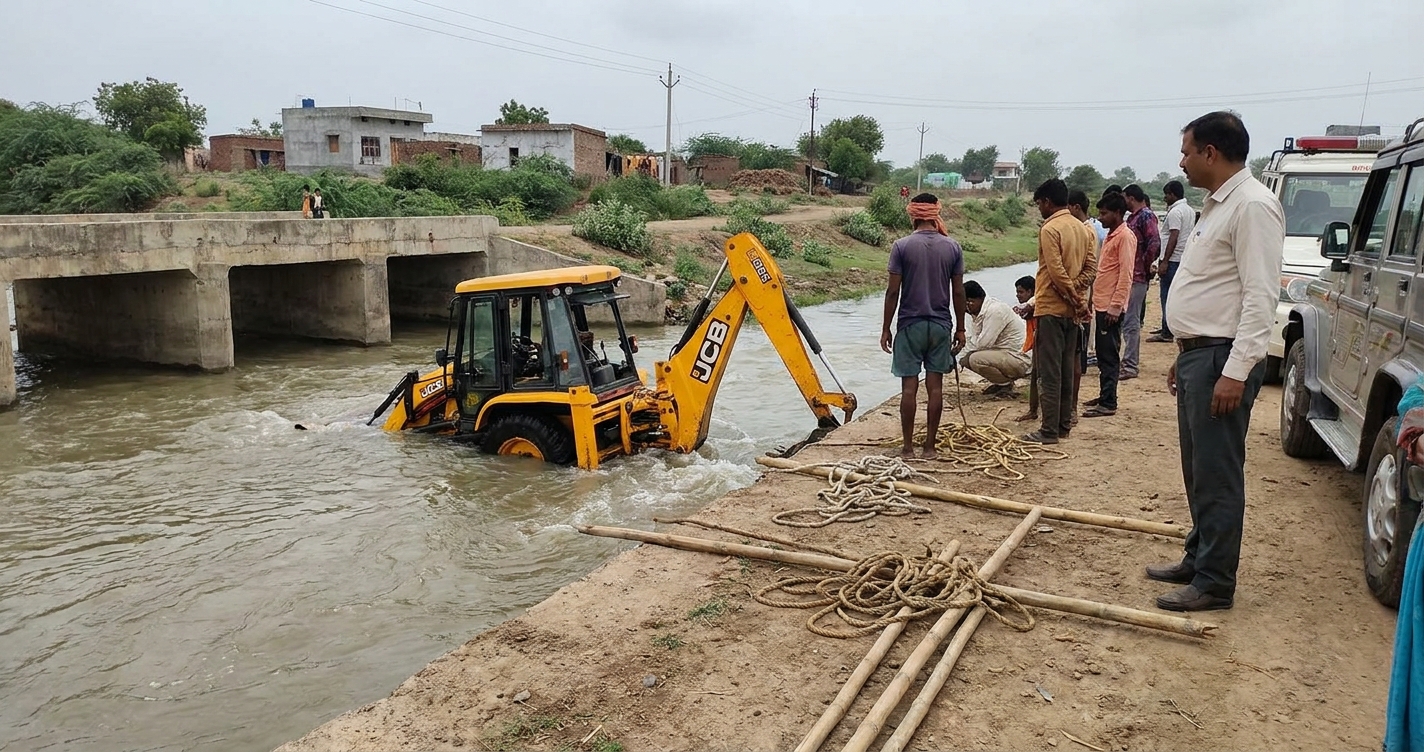
The death of labourer Biram Mogiya under a Gadganga River bridge exposes how India's low-value municipal works orders - like the plank-installation jo
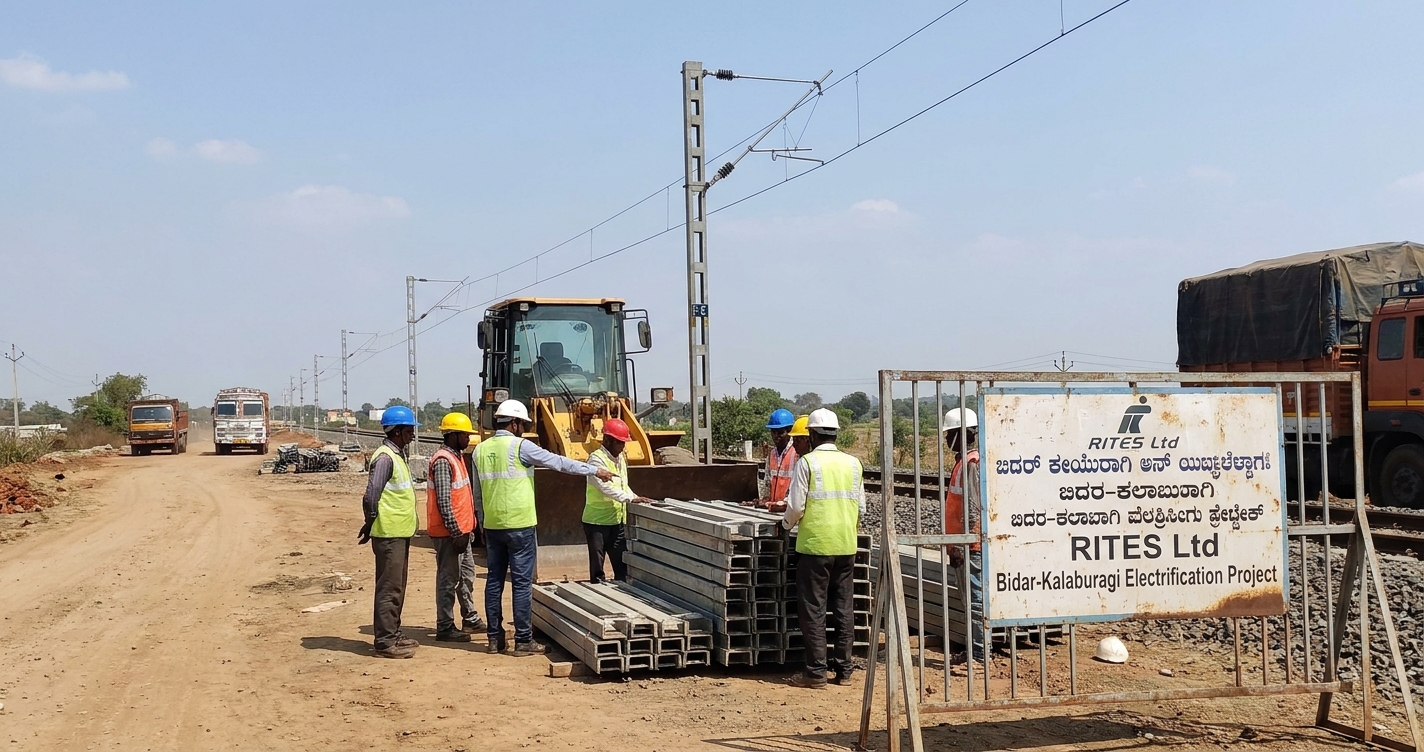
RITES' 58% repricing of the Bidar–Kalaburagi electrification mandate shows how cost-plus turnkey contracting shifts escalation risk from consultant to
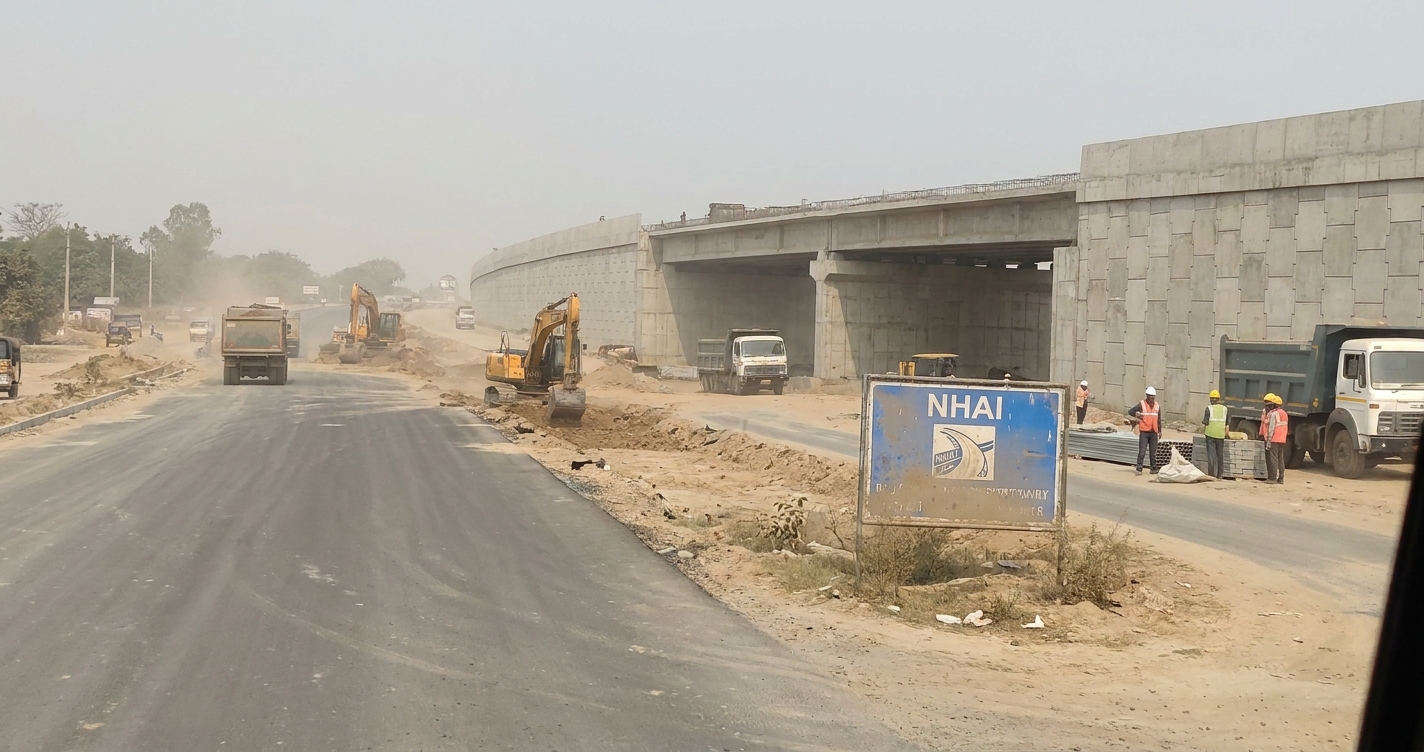
NHAI's 21 September 2026 design guidelines lock uniform 60-70m right-of-way and structure standards for 4-lane and 6-lane high-speed corridors, reshap


Powered by

© Tuskus 2025 - All Rights Reserved by Teamic Creative Lab Pvt. Ltd.
