The death of labourer Biram Mogiya under a Gadganga River bridge exposes how India's low-value municipal works orders - like the plank-installation jo


insghits
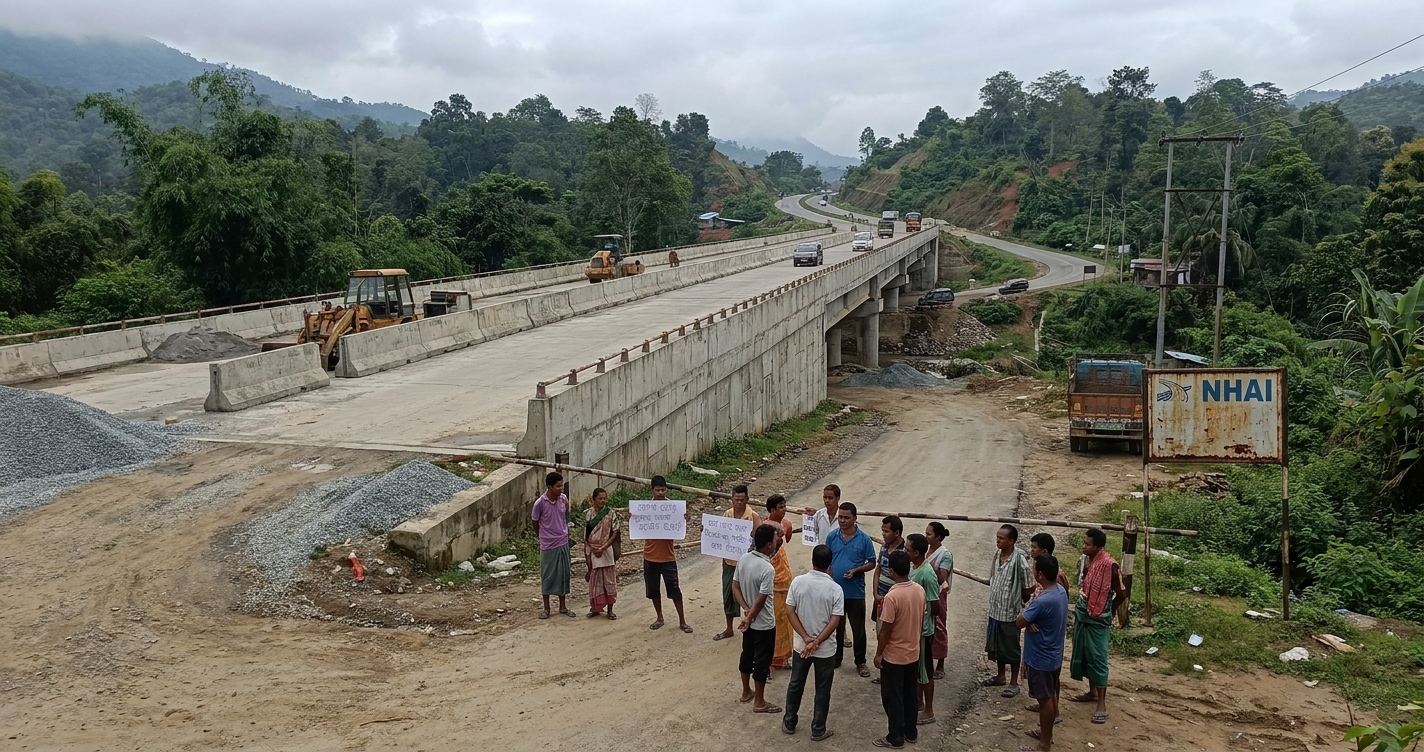
Work on the National Highways Authority of India’s (NHAI) Silchar–Saurashtra East-West Corridor has stopped again in Dima Hasao.
From 31 August, landowners in Dolaichunga indefinitely suspended construction on the roughly 25-km Jatinga–Harangajao stretch of NH-27 over unpaid compensation for acquired land.
The halt is not marginal. It has frozen a near-complete Dolaichunga flyover, where two of four lanes already carry traffic and the remaining two were slated to open by 5 September.
The trigger is narrow, but the exposure is structural. Residents say repeated assurances on compensation have not converted into payment.
Alongside cash dues, they have added two non-cash demands:
- Restoration of a village approach road damaged during construction
- A pedestrian footpath on the Dolaichunga Bridge
That converts a compensation dispute into a bundled community-infrastructure claim, widening NHAI’s obligation beyond the original land award.
Dima Hasao operates under Sixth Schedule customary land governance, so acquisition and disbursement depend on coordination between NHAI, the autonomous council and the district administration.
In such corridors, right-of-way clearance — not terrain or engineering — is the binding schedule constraint.
The Jatinga–Harangajao hill section is geologically difficult, yet the halting factor here is administrative, not physical.
The commercial weight lands on the EPC contractor, unnamed in the report but holding idling mobilisation, site overheads and completion risk.
On EPC terms, authority-side land delays are rarely a clean basis for time extension unless the contract expressly transfers right-of-way risk. The result is familiar corridor economics: a flyover nearing completion, but close-out and revenue recognition held hostage by a compensation file.
For NHAI and the Ministry of Road Transport and Highways, the signal is that community consent in the Northeast is being re-priced from cash compensation into bundled local infrastructure.
Approach roads and footpaths are becoming part of the effective right-of-way settlement.
Authorities that treat these as goodwill gestures rather than scoped, funded obligations will keep absorbing stoppages — and contractors will keep pricing that risk into future bids, or avoid hill packages entirely.
Insights
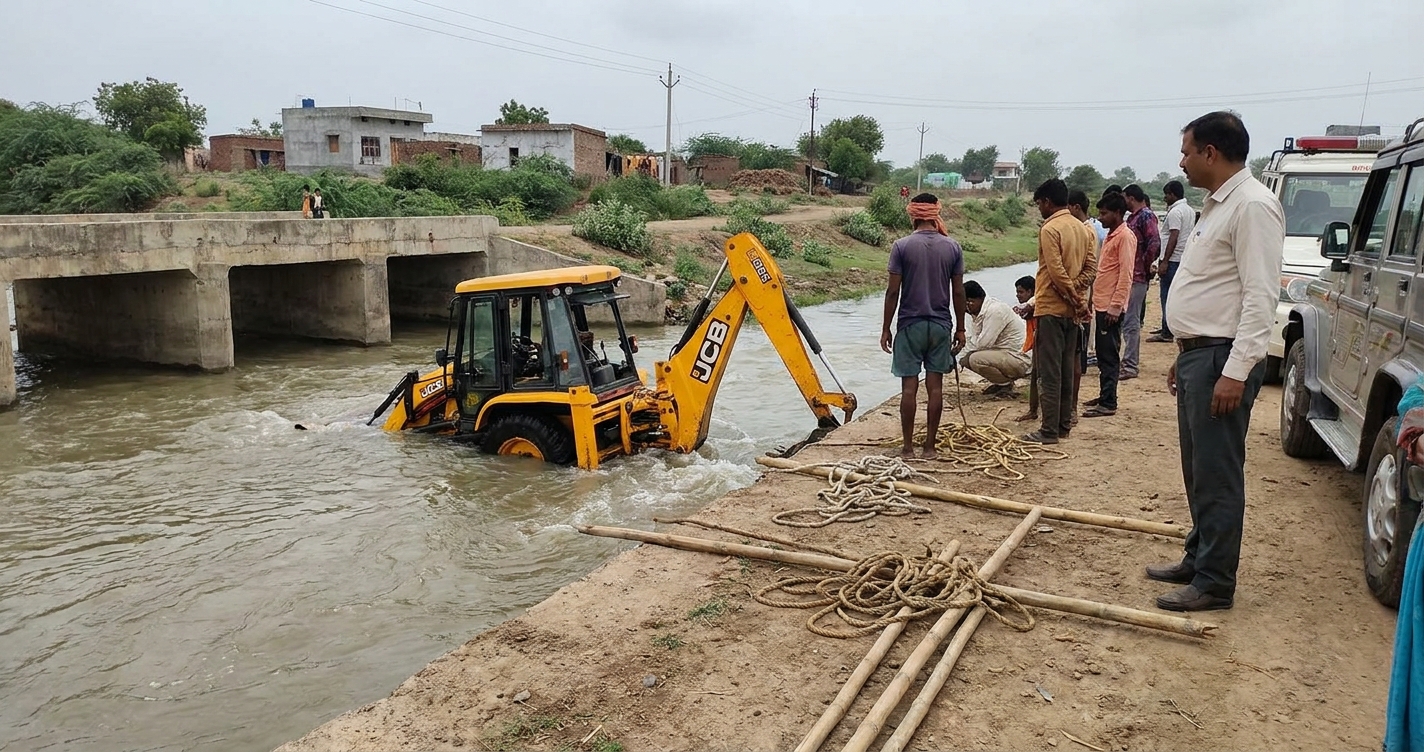
The death of labourer Biram Mogiya under a Gadganga River bridge exposes how India's low-value municipal works orders - like the plank-installation jo
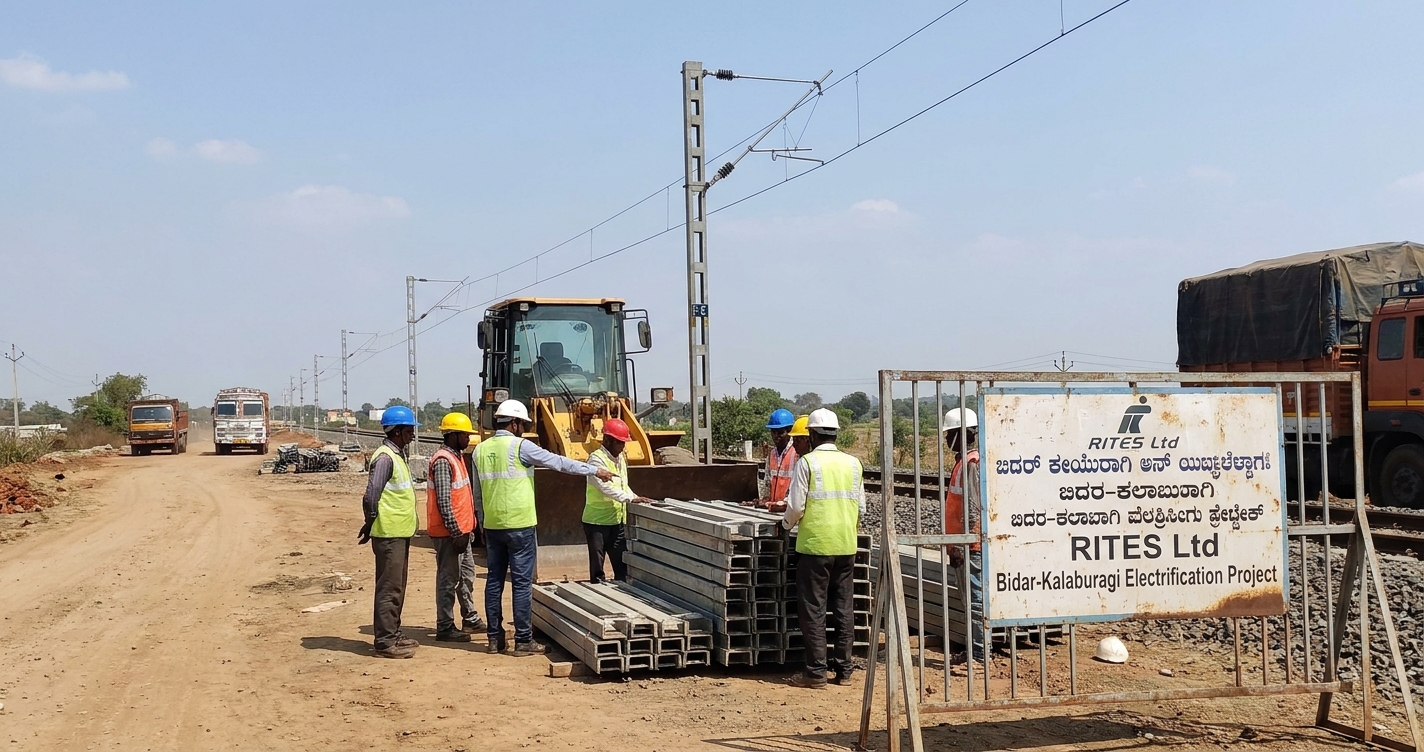
RITES' 58% repricing of the Bidar–Kalaburagi electrification mandate shows how cost-plus turnkey contracting shifts escalation risk from consultant to
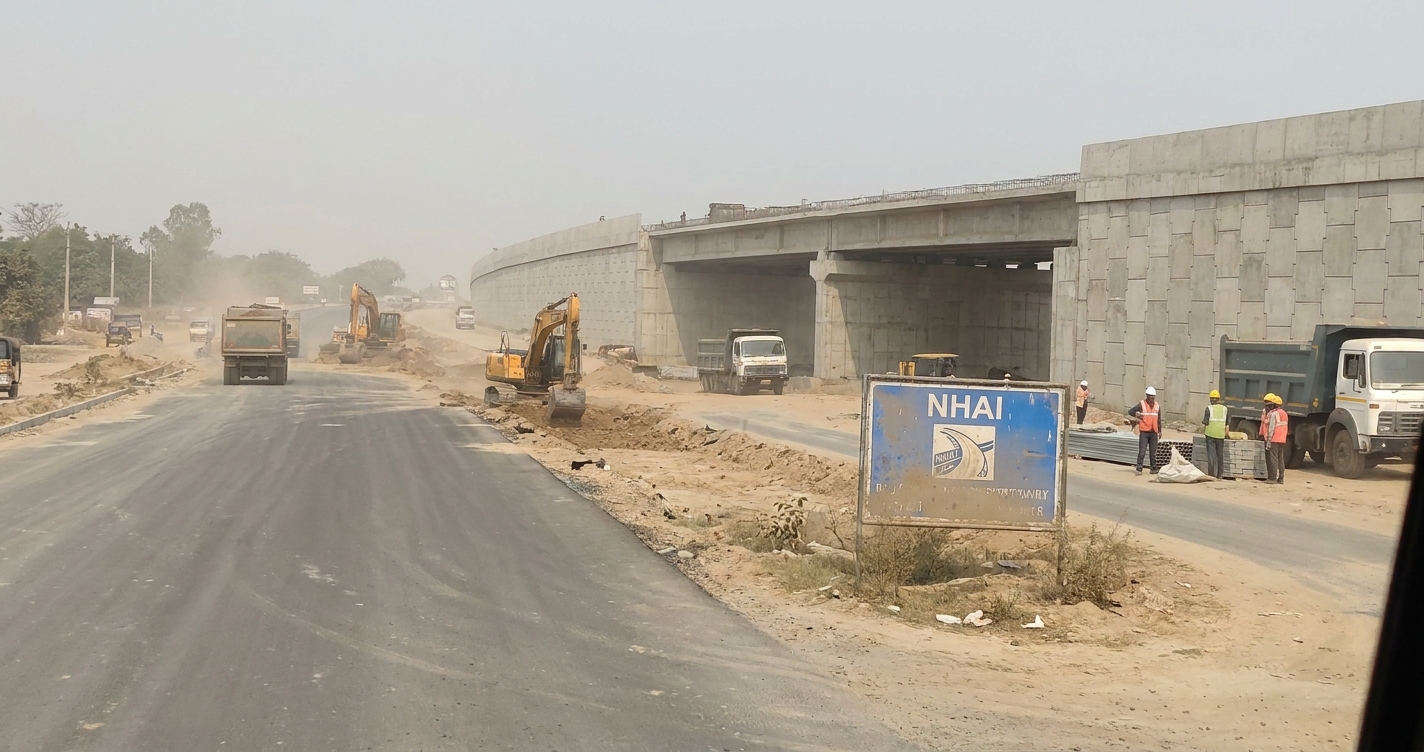
NHAI's 21 September 2026 design guidelines lock uniform 60-70m right-of-way and structure standards for 4-lane and 6-lane high-speed corridors, reshap


Powered by

© Tuskus 2025 - All Rights Reserved by Teamic Creative Lab Pvt. Ltd.
