Deputy Commissioner Poonch Ashok Kumar Sharma chaired a September 25 review of bottlenecks on National Highway-144A, the strategic Akhnoor–Poonch corr


insghits
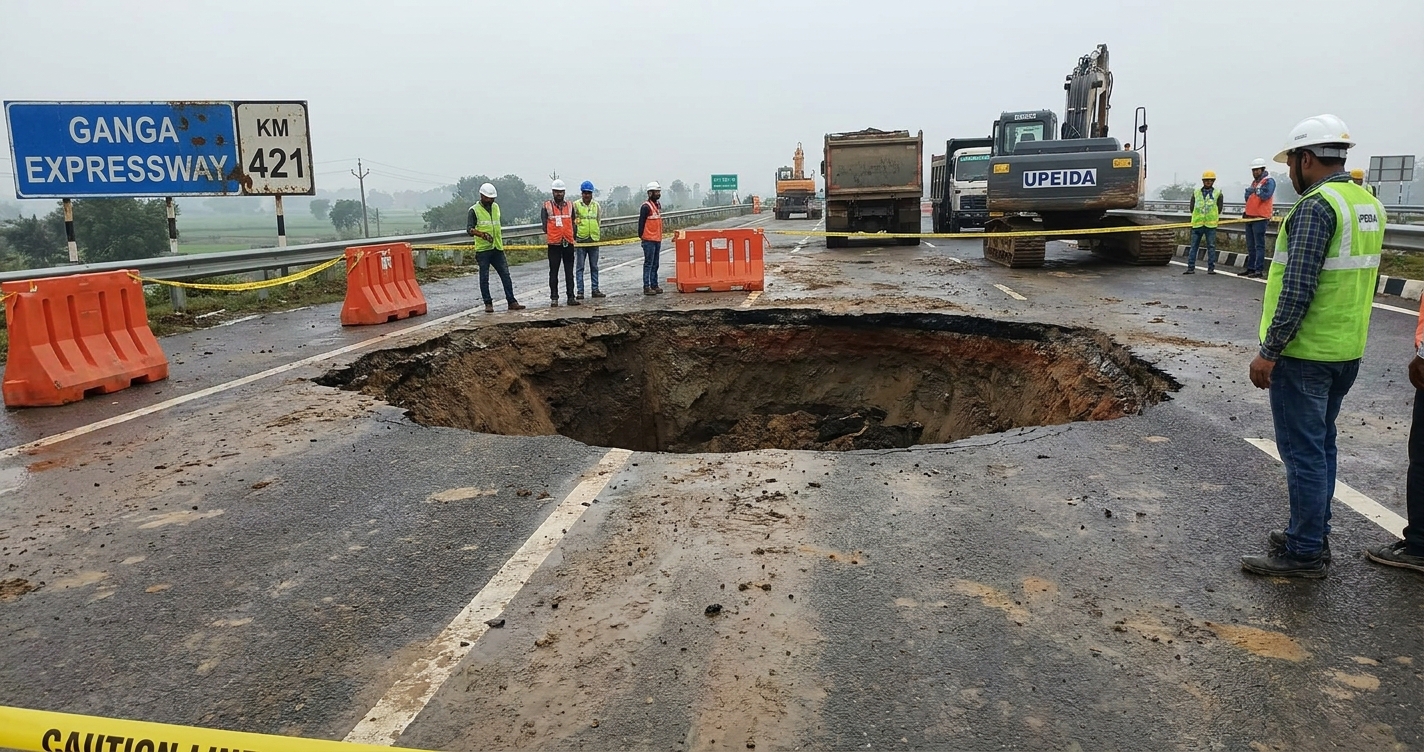
UPEIDA is now managing an early-life asset failure on the Ganga Expressway, and the commercial question has shifted from construction speed to defect-liability exposure.
A 10-metre-deep crater near kilometre 421 on the Meerut-Prayagraj carriageway — four months after Prime Minister Narendra Modi inaugurated the Rs 36,000-crore, 594-km corridor on April 29 — has pushed the Uttar Pradesh Expressways Industrial Development Authority into emergency repair mode while the cause remains undetermined.
This is the second rain-triggered failure in weeks. In July, a seven-metre approach road at the Sonic toll plaza in Unnao washed out, with embankment erosion and partial carriageway collapse.
Two failures in quick succession shift the debate from isolated defect to a systemic drainage and geotechnical design question across a 12-district alignment.
For UPEIDA, exposure is threefold:
- Reputationally: the authority is delivery steward for Uttar Pradesh's expressway buildout, including Purvanchal and Bundelkhand corridors.
- Contractually: under EPC terms, early-life failures inside the defect liability period push remediation cost back to the package contractor if a construction deficiency is proven.
- Operationally: unplanned repairs on an access-controlled tolled asset create traffic, safety and revenue-continuity risk.
The report does not name the EPC contractor for the affected package, but the commercial logic is package-specific. UPEIDA's multiple-package contracting structure means defect attribution will be localised.
If investigation finds inadequate embankment protection, poor drainage or substandard compaction, the authority can invoke performance security and recover repair costs. If the cause is classified as an extreme weather event beyond design thresholds, the liability calculus changes materially.
The wider signal is structural. India's greenfield expressway pipeline is being delivered at ribbon-cutting pace, but post-inauguration performance is becoming the real test of execution quality.
Drainage, slope protection and embankment stability — traditionally low-visibility scope items — are now the highest residual-risk line items in EPC bids. Contractors that priced these conservatively look prescient; those that treated them as soft scope carry DLP, reputational and balance-sheet risk.
UPEIDA's immediate task is diagnostic: establish whether kilometre 421 and the Unnao approach road share a common failure mode. That finding decides whether the response is a localised repair or a corridor-wide drainage and embankment audit.
The Ganga Expressway's first monsoon is rewriting the post-completion risk map for UP's expressway portfolio.
Insights
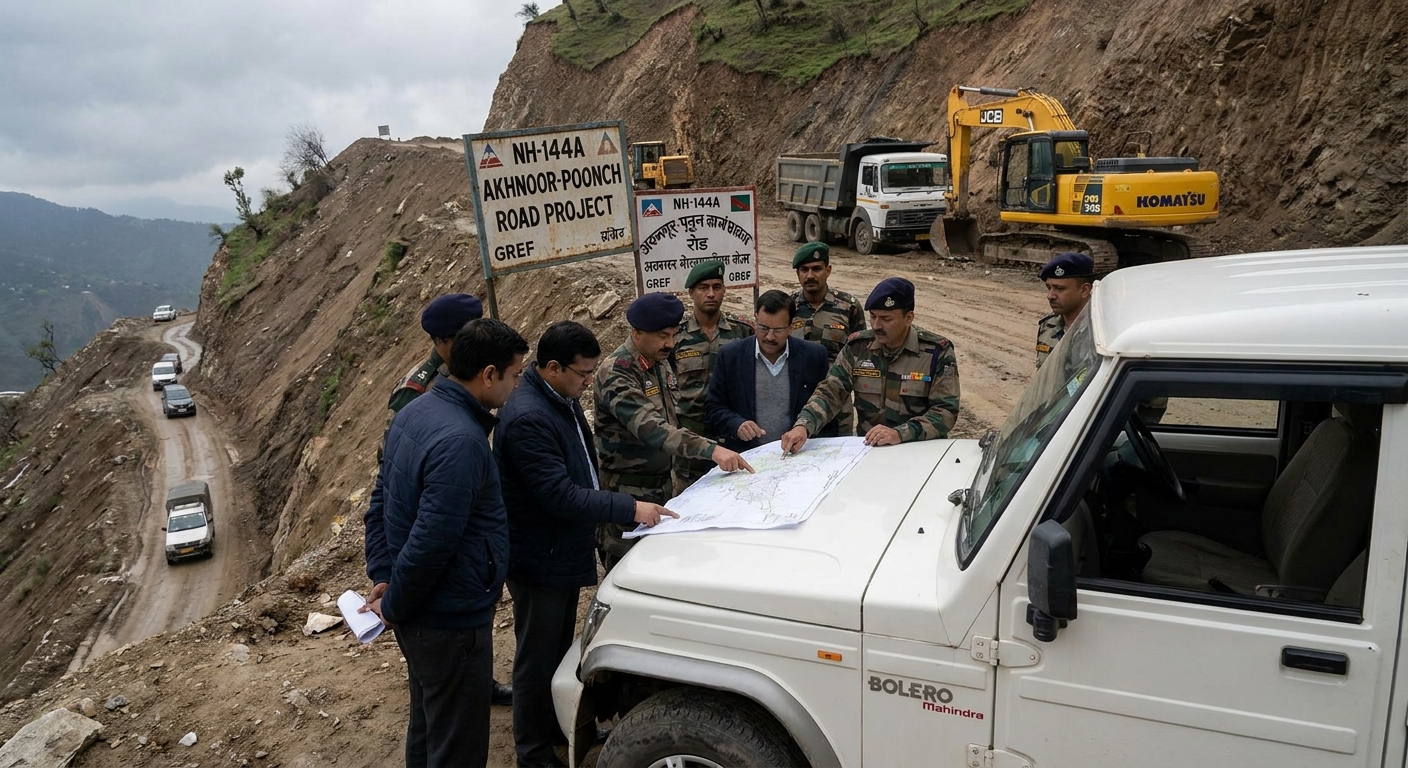
Deputy Commissioner Poonch Ashok Kumar Sharma chaired a September 25 review of bottlenecks on National Highway-144A, the strategic Akhnoor–Poonch corr
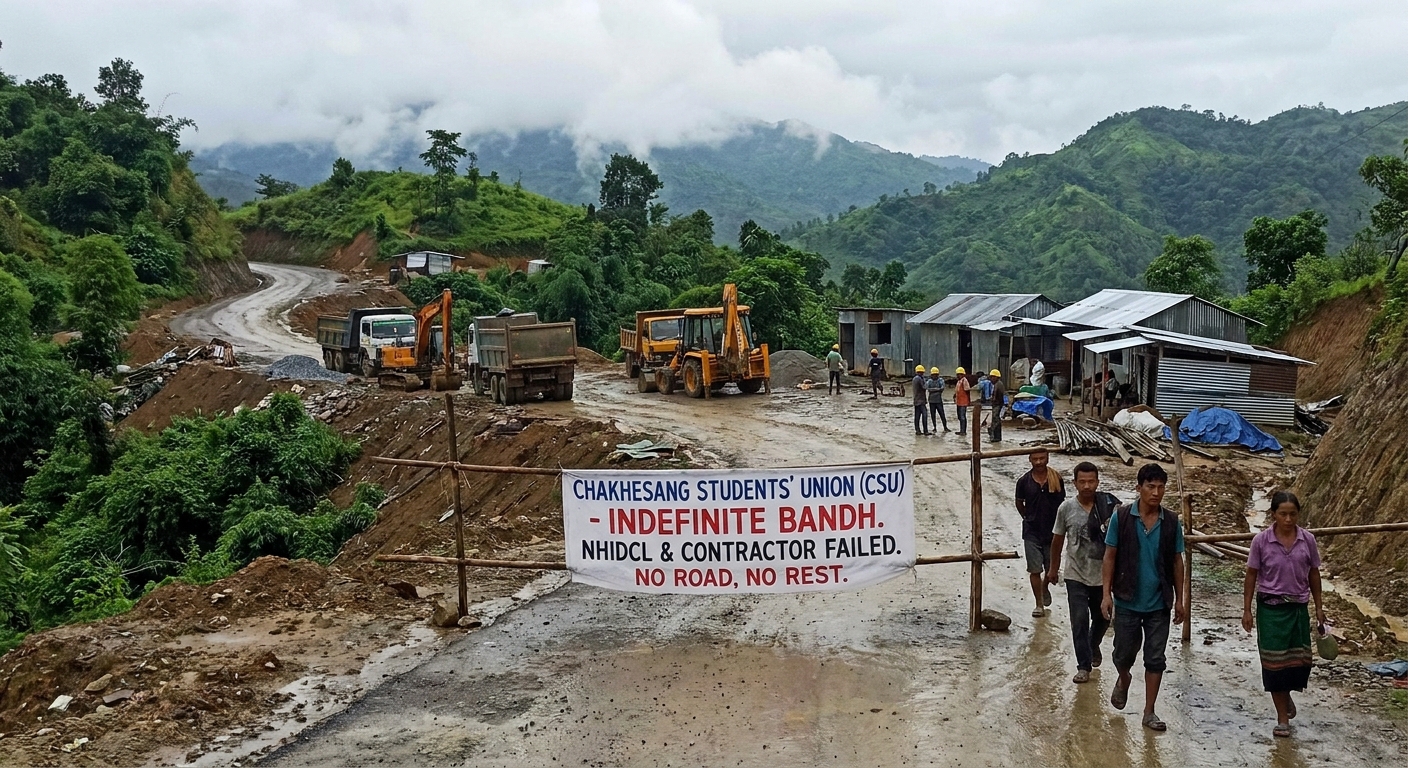
The Chakhesang Students Union has given NHIDCL 72 hours to terminate the contractor on the Chakhabama-Kikruma package of NH-29, with 44.30% physical p
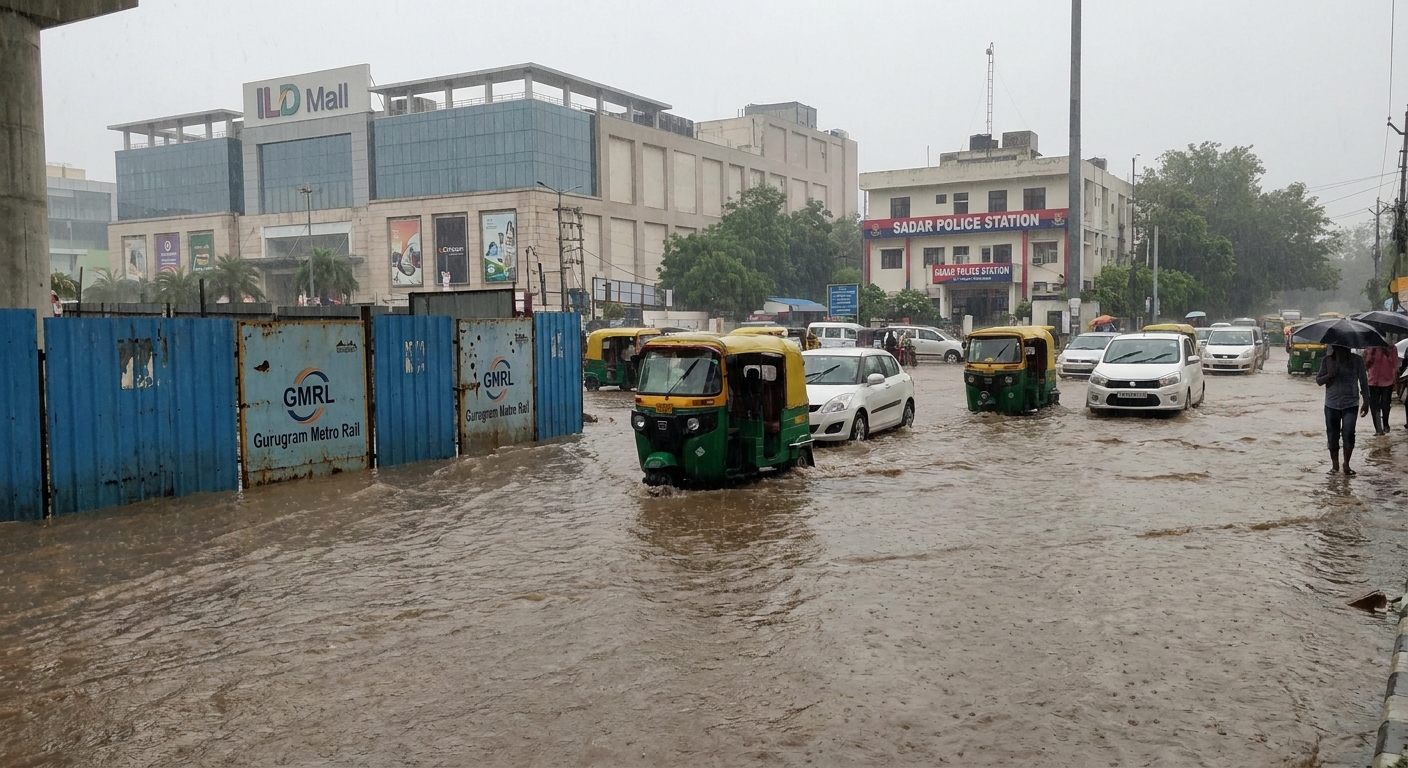
Gurugram Metro Rail Limited has locked the alignment and access gates for the Subhash Chowk Metro station, but both entrances sit in a stretch that fl


Powered by

© Tuskus 2025 - All Rights Reserved by Teamic Creative Lab Pvt. Ltd.
