The death of labourer Biram Mogiya under a Gadganga River bridge exposes how India's low-value municipal works orders - like the plank-installation jo


insghits
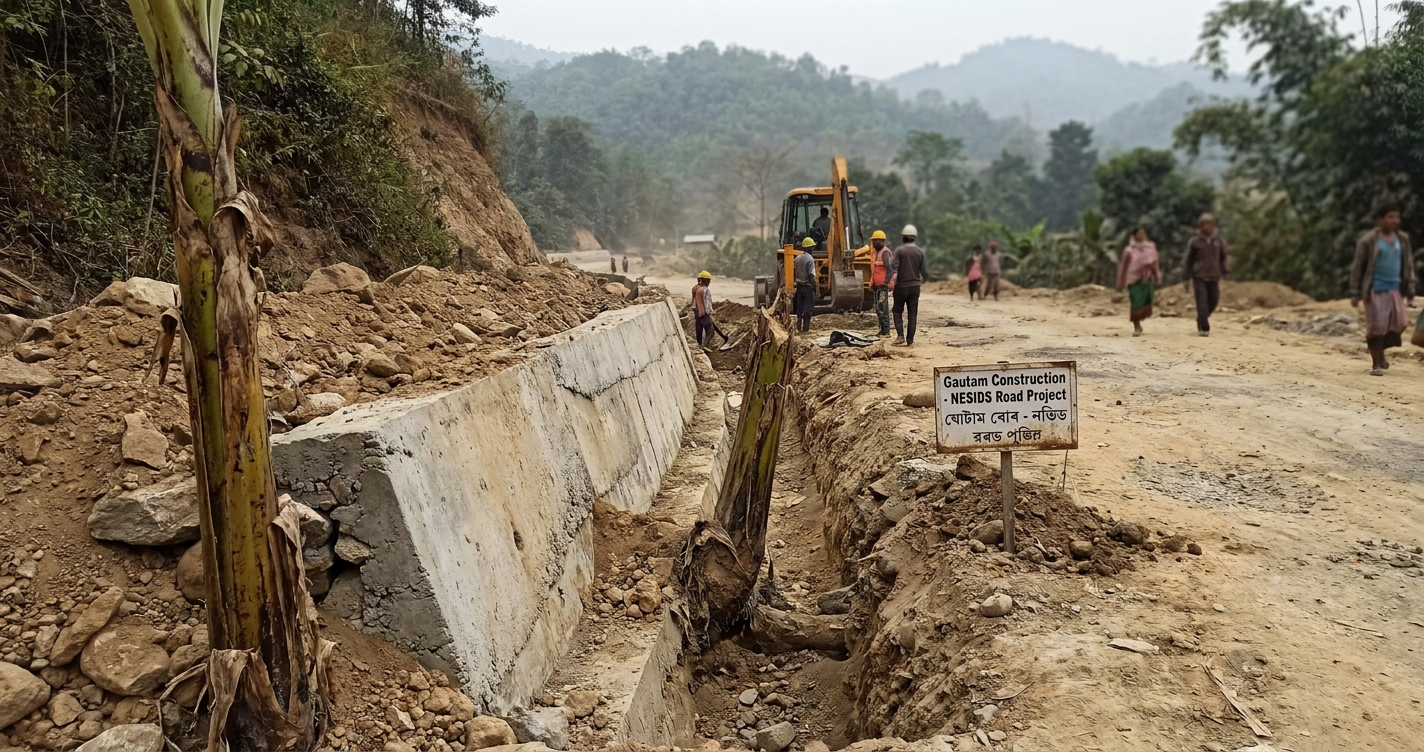
The Rs 206.42 crore Chokihola–Tarapung road project in Assam’s Karbi Anglong district has moved from execution risk to reputational risk, with resident allegations now framing the conversation around Gautam Construction’s delivery model.
Awarded under the Barpathar PWD Road Division of Assam’s Public Works Department, the 50-km corridor is funded through the Ministry of Development of North Eastern Region’s North East Special Infrastructure Development Scheme (NESIDS) — which makes the accountability question one of central scheme governance, not just state-level project management.
The most commercially significant allegation is the subcontracting structure.
Residents claim Gautam Construction retained roughly 50 percent of the work, while M.P. Agarwal took 30 percent and Manoj Parik took 20 percent.
If verified, this is not a minor execution detail; it is a de-risking and margin-preservation strategy that pushes delivery risk down a fragmented chain while the named awardee retains contractual responsibility.
For central schemes, this pattern matters because the awardee’s execution capacity — not its price — becomes the binding constraint on quality.
The material sourcing allegation cuts deeper. The Detailed Project Report (DPR) designated Bhutiyachang Quarry in Udalguri for aggregates, but residents allege extraction from the Kaliyani River near the alignment, including artificial blocking of a river section.
This points to a supply chain that was never locked to the DPR, creating both quality and environmental exposure.
Technical deviations suggest the third-party monitor, New Sun Consulting Firm of Guwahati, was either not testing at the right frequency or not testing at all.
The reported deviations include:
- A claimed road thickness of around 160 mm against a DPR specification of 390 mm
- Banana tree trunks substituted for PVC drainage pipes
- Unreinforced side drains
- A retaining wall that reportedly collapsed within two months
For contractors, consultants, and lenders watching Northeast India, the signal is clear.
The capacity gap between award and execution in NESIDS corridors is being bridged through informal subcontracting and material arbitrage, and third-party quality assurance is not yet strong enough to catch it.
The pending PWD and contractor response will determine whether this becomes a project-level correction or a scheme-level governance reset.
Insights
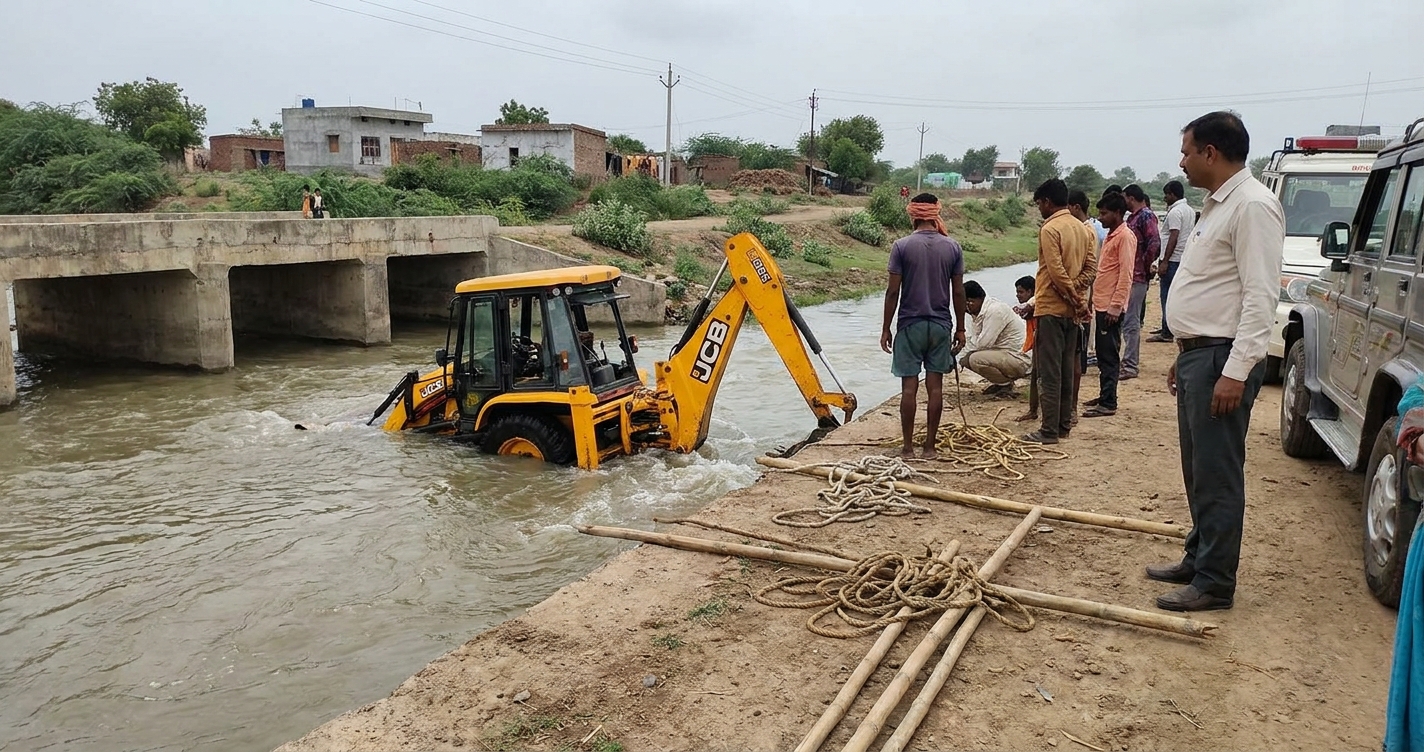
The death of labourer Biram Mogiya under a Gadganga River bridge exposes how India's low-value municipal works orders - like the plank-installation jo
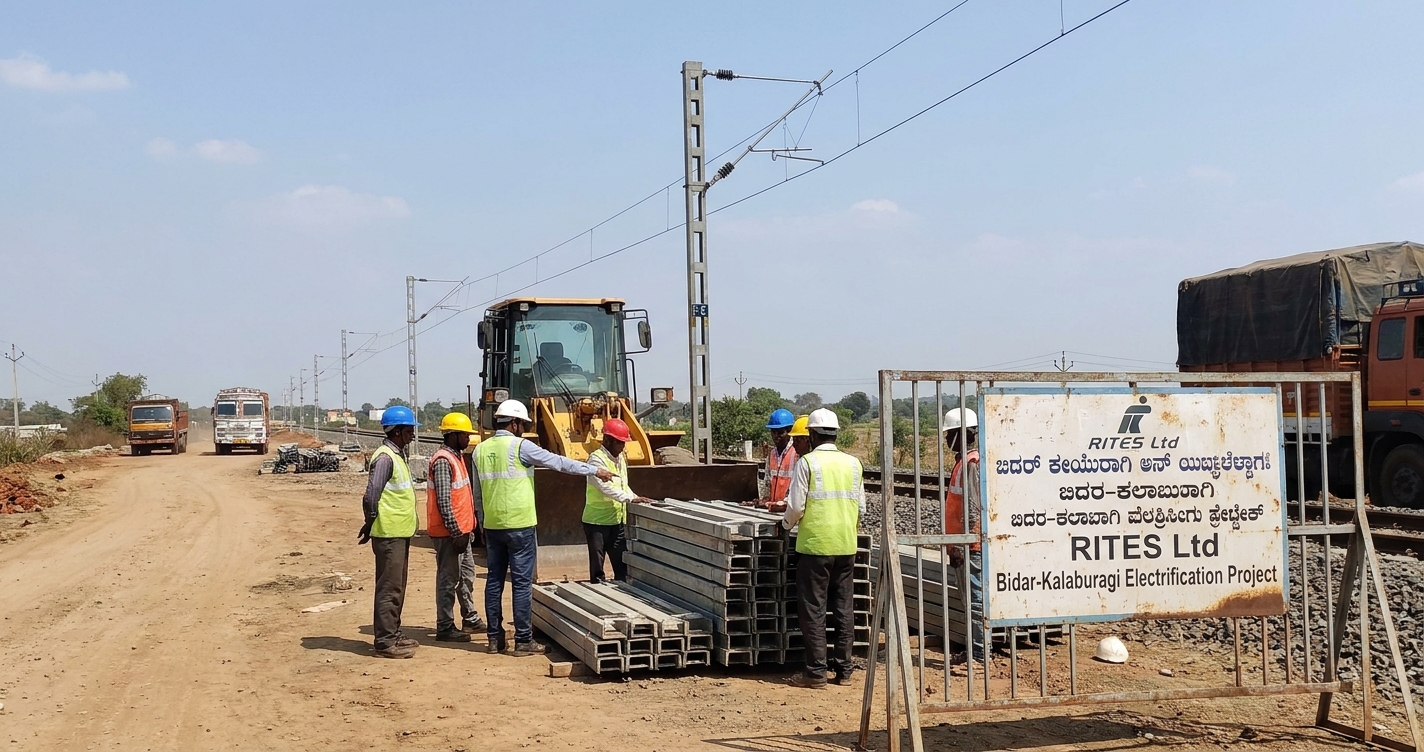
RITES' 58% repricing of the Bidar–Kalaburagi electrification mandate shows how cost-plus turnkey contracting shifts escalation risk from consultant to
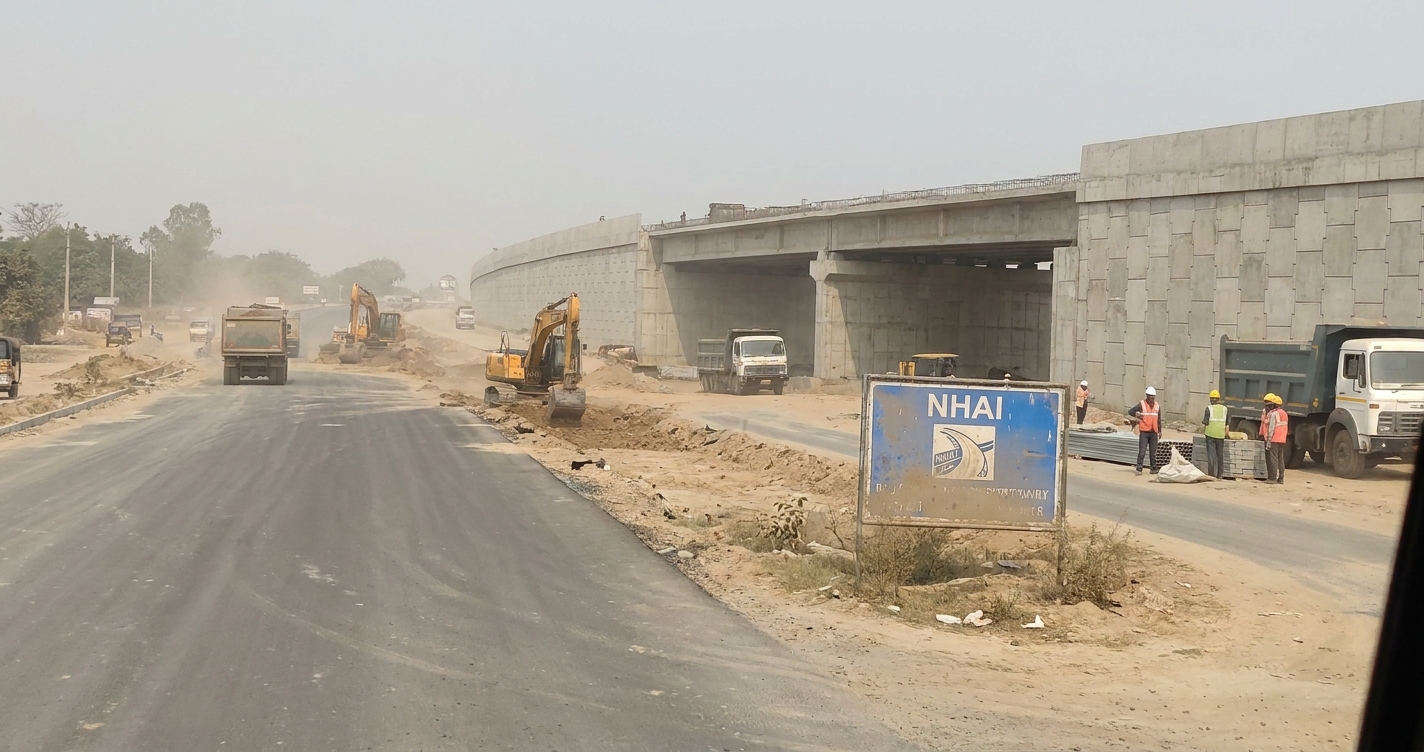
NHAI's 21 September 2026 design guidelines lock uniform 60-70m right-of-way and structure standards for 4-lane and 6-lane high-speed corridors, reshap


Powered by

© Tuskus 2025 - All Rights Reserved by Teamic Creative Lab Pvt. Ltd.
