PWD-BTC has tendered a ₹47.58 lakh road package in Baksa District under a 2019-20 technical reference, with a 180-day clock and an EMD that squeezes s


insghits
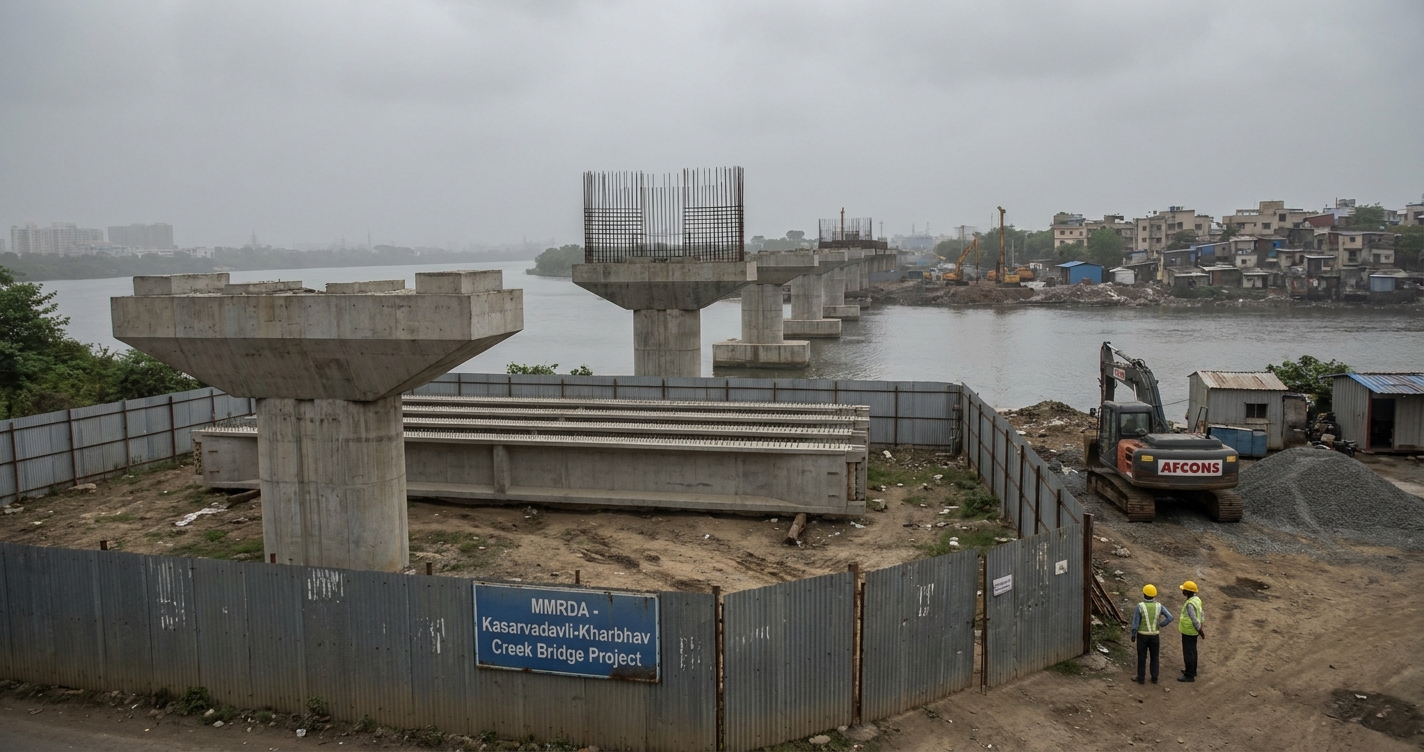
The Kasarvadavli-Kharbhav Creek Bridge — a 3.93-kilometre, 3+3 lane crossing — is facing a severe land acquisition logjam at both ends of its alignment. While construction over the creek has begun, the approaches remain stuck.
The project is being implemented by the Mumbai Metropolitan Region Development Authority (MMRDA) and executed by Afcons Infrastructure. The delay could stretch to a year, and no revised completion date has been specified.
On the Kasarvadavli side, MMRDA is acquiring land through the Transfer of Development Rights (TDR) mechanism. Property owners surrender their land in exchange for development potential elsewhere.
On the Kharbhav side, district authorities are handling acquisition directly. The result is a coordination challenge spread across multiple agencies, each operating on different timelines and with different incentives.
The TDR mechanism, while financially efficient for MMRDA — it avoids upfront cash compensation — introduces market-linked negotiation timelines. Private owners can hold out for better terms, and TDR valuation requires regulatory processing. The bifurcated model means neither track can accelerate the other.
The project’s headline numbers tell an optimistic story:
- 23 percent physical progress
- 21 percent financial progress
- Stage-I forest clearance secured
- Joint Measurement Survey for Payegaon completed in early April
However, progress has been concentrated on the creek span — the portion requiring no private land. The approaches, two interchanges covering an additional 8.538 kilometres, and connections to State Highway 48, the Multimodal Corridor, and the Thane Coastal Road all depend on land not yet in MMRDA’s possession.
For Afcons Infrastructure, a Shapoorji Pallonji Group company that went public in 2024, the delay creates an uncomfortable dynamic. The contractor has mobilised resources and commenced work, but the critical path has shifted entirely beyond its control.
Afcons can build over water; it cannot build interchanges or tie into the road network without land.
Prolonged uncertainty means extended site overheads, potential resource idling, and working capital locked in a project whose completion timeline remains undefined.
This is not an isolated case. MMRDA’s practice of awarding EPC contracts once 80–90 percent of land is available is standard across Indian infrastructure authorities.
The remaining land consistently sits at project-critical nodes: approach roads, interchange locations, and tie-in points. Contractors absorb the downstream impact, bearing costs and delays that are entirely outside their control.
Once completed, the bridge will slash travel time between Kasarvadavli and Kharbhav from over an hour to approximately five to seven minutes. It will link Thane’s Ghodbunder Road corridor with the industrial and logistics hubs around Bhiwandi, easing pressure on National Highway 3 and Old Agra Road.
But that outcome now depends not on Afcons’ construction capability — it depends on MMRDA’s ability to close land deals at both ends. The real test is one of bureaucratic coordination, not engineering execution.
Insights
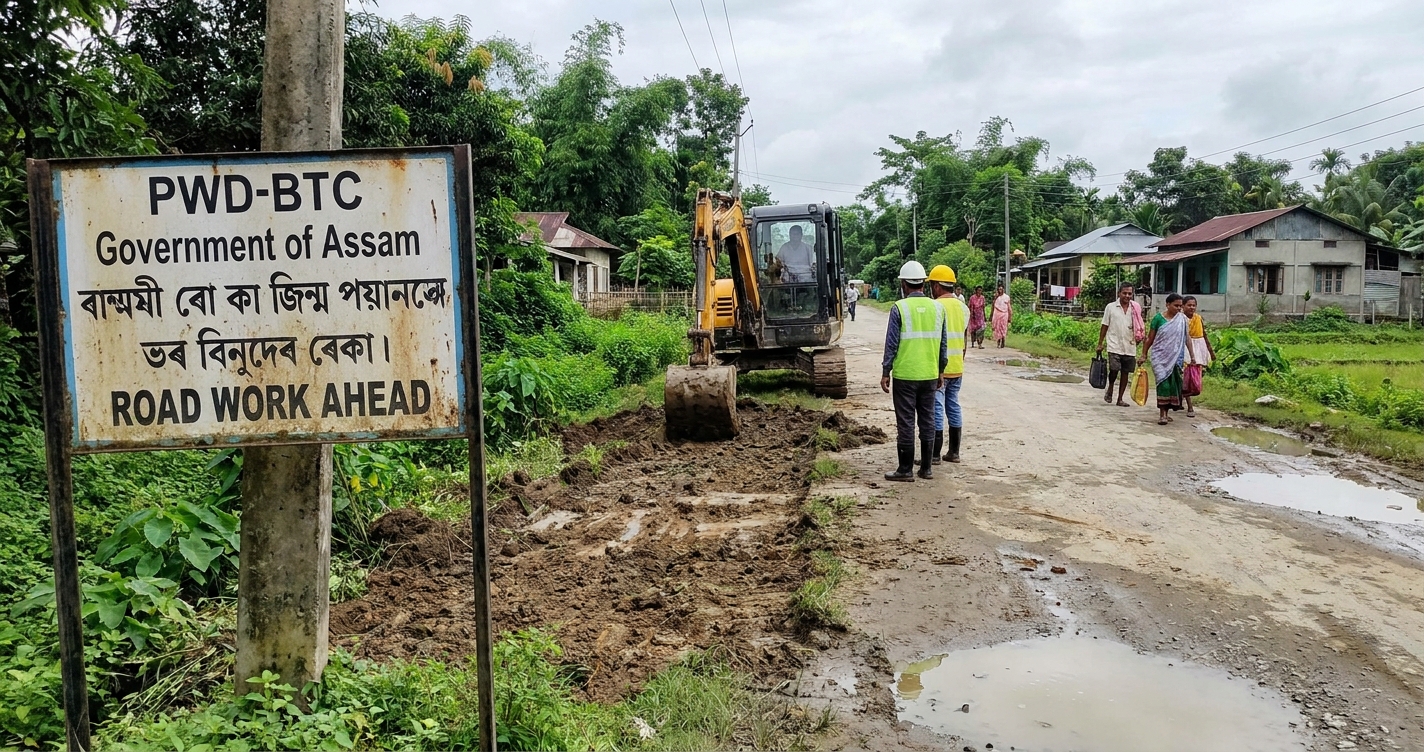
PWD-BTC has tendered a ₹47.58 lakh road package in Baksa District under a 2019-20 technical reference, with a 180-day clock and an EMD that squeezes s
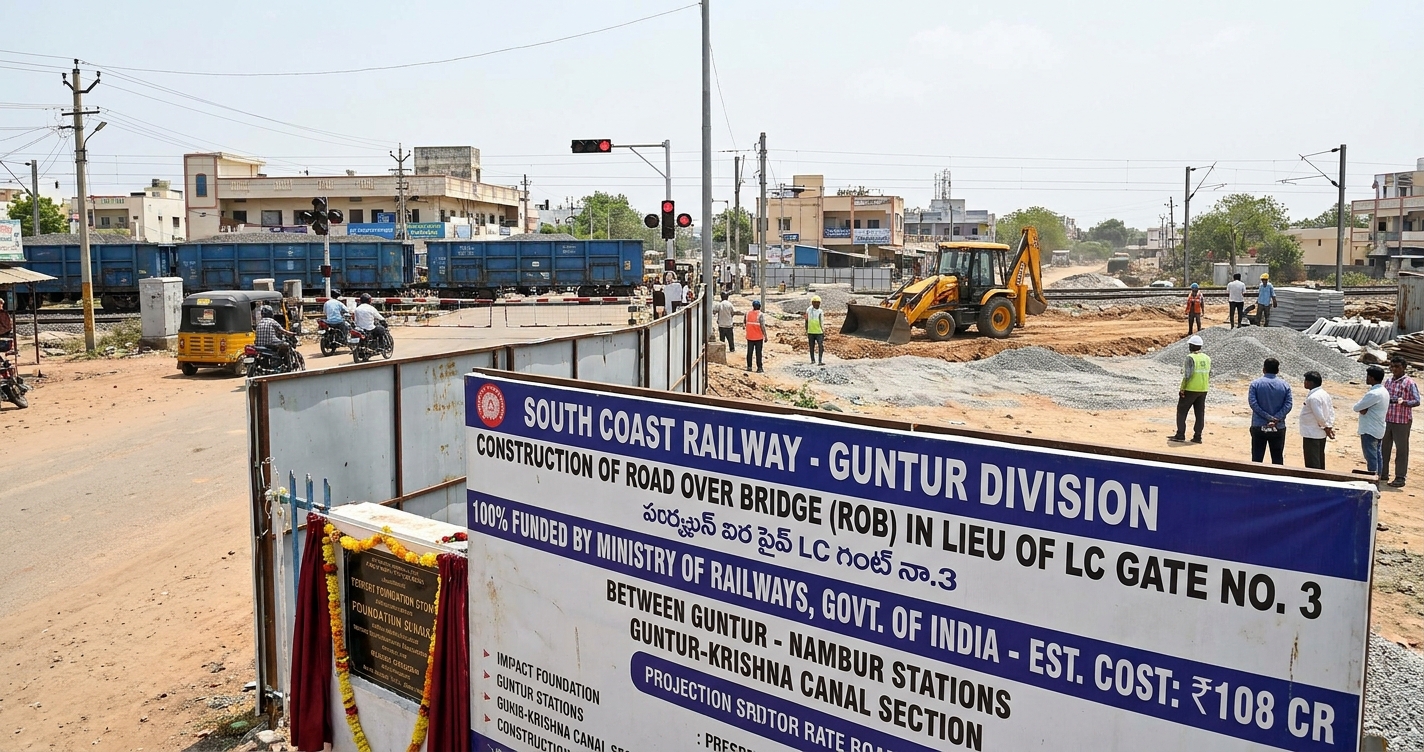
The Ministry of Railways will fully fund a ₹108 crore, 668-metre four-lane Road Over Bridge between Guntur and Nambur, replacing Level Crossing Gate N
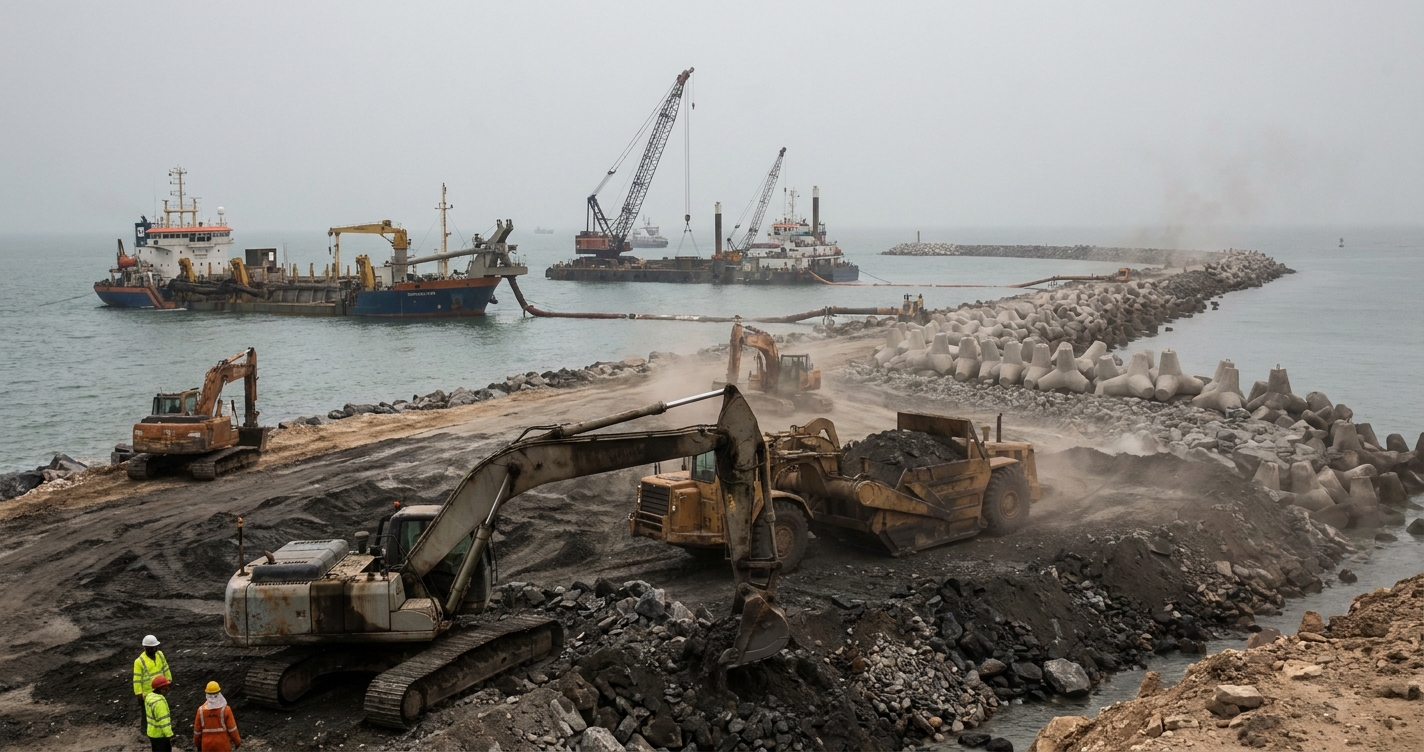
Four bidders, including Adani Ports and DP World, have entered the Rs 22,323-crore offshore package for Vadhvan Port - dredging and 1,207 hectares of


Powered by

© Tuskus 2025 - All Rights Reserved by Teamic Creative Lab Pvt. Ltd.
