The death of labourer Biram Mogiya under a Gadganga River bridge exposes how India's low-value municipal works orders - like the plank-installation jo


insghits
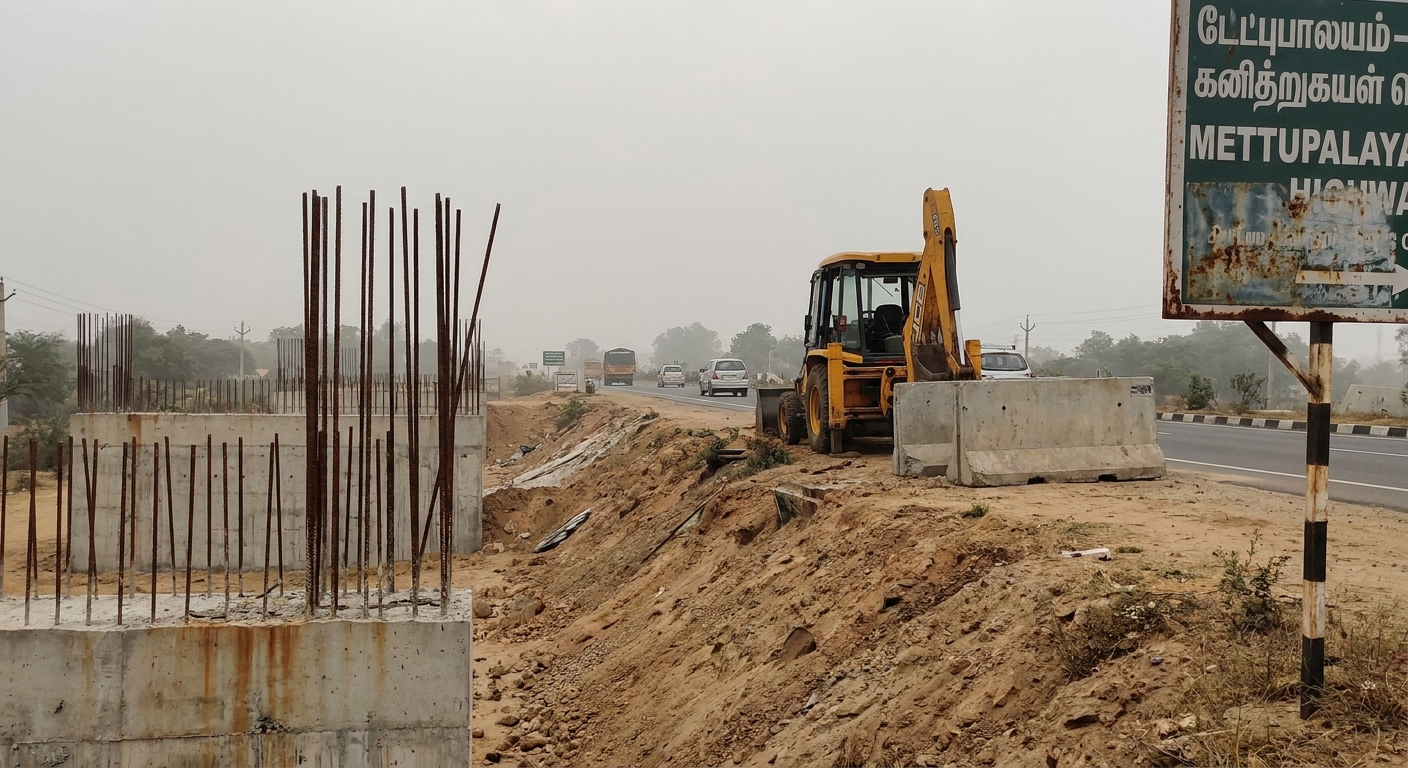
The Tamil Nadu State Highways Department has moved from observation to enforcement on the Mettupalayam–Avinashi widening, serving a notice on the contractor after bridge and road works along the 38-km two-lane to four-lane corridor sat idle for nearly two months.
The Coimbatore Division's line — that "the contractor has been working slowly" — masks a structural complication. The department itself concedes migrant labourers returned to their hometowns and are expected back only next week.
That admission matters for contract administration: a notice predicated on slow progress becomes difficult to press into liquidated damages when the executing authority acknowledges a labour-supply disruption it cannot fully control.
The project is split into two packages.
- Package one — from Avinashi to the Naal Road junction near Annur: above 90% complete
- Package two — from Naal Road to Mettupalayam Town: near 72% complete
The gap between the two is where execution risk concentrates. The stalled interfaces — the Nadoor bridge and Annur Road junction near the Government Arts College — are also where exposed reinforcement rods have now weathered two months of exposure, adding deterioration and rework liability that will outlast the delay itself.
Around ten houses at Nadoor were already vacated and demolished to clear the alignment. Demolition without follow-on activity is a double cost: the state has incurred displacement and lost goodwill, while the contractor earns no value from a cleared but idle site.
Residents are now pressing the district administration and the Highways Department to restart work.
The December 2026 completion target remains live, but land acquisition is still pending. That is the binding schedule risk.
A contractor can remobilise labour next week; it cannot build through parcels the state has not yet acquired. The notice signals accountability, but the true constraint is right-of-way, not workforce.
The signal for infrastructure professionals is narrower than the headline. State highway widening in Tier-2 corridors is increasingly exposed to transient labour, fragmented package contracting, and late land acquisition — with enforcement now issued against a backdrop the owner itself acknowledges.
The commercial outcome will turn less on the notice than on whether residual land clears fast enough for a remobilised contractor to convert package two's remaining 28% into billable work before December.
Insights
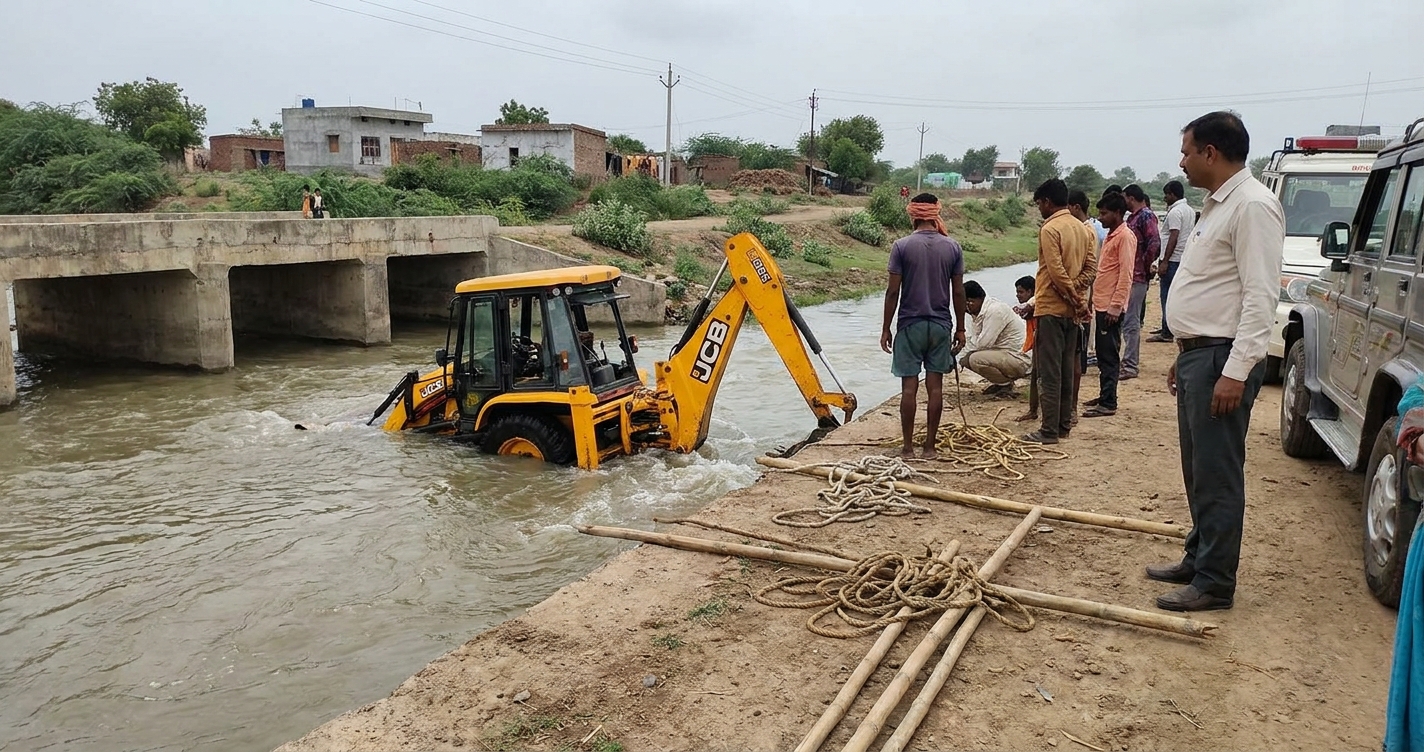
The death of labourer Biram Mogiya under a Gadganga River bridge exposes how India's low-value municipal works orders - like the plank-installation jo
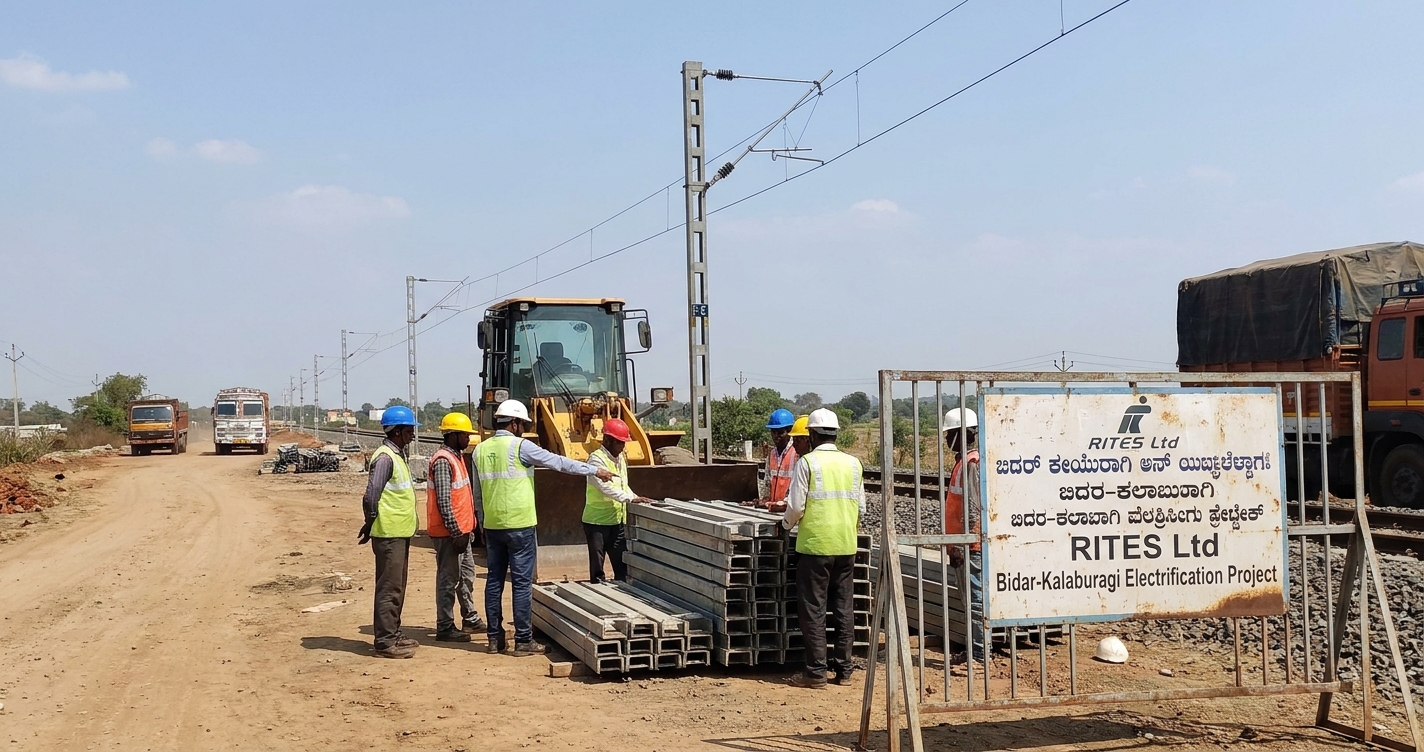
RITES' 58% repricing of the Bidar–Kalaburagi electrification mandate shows how cost-plus turnkey contracting shifts escalation risk from consultant to
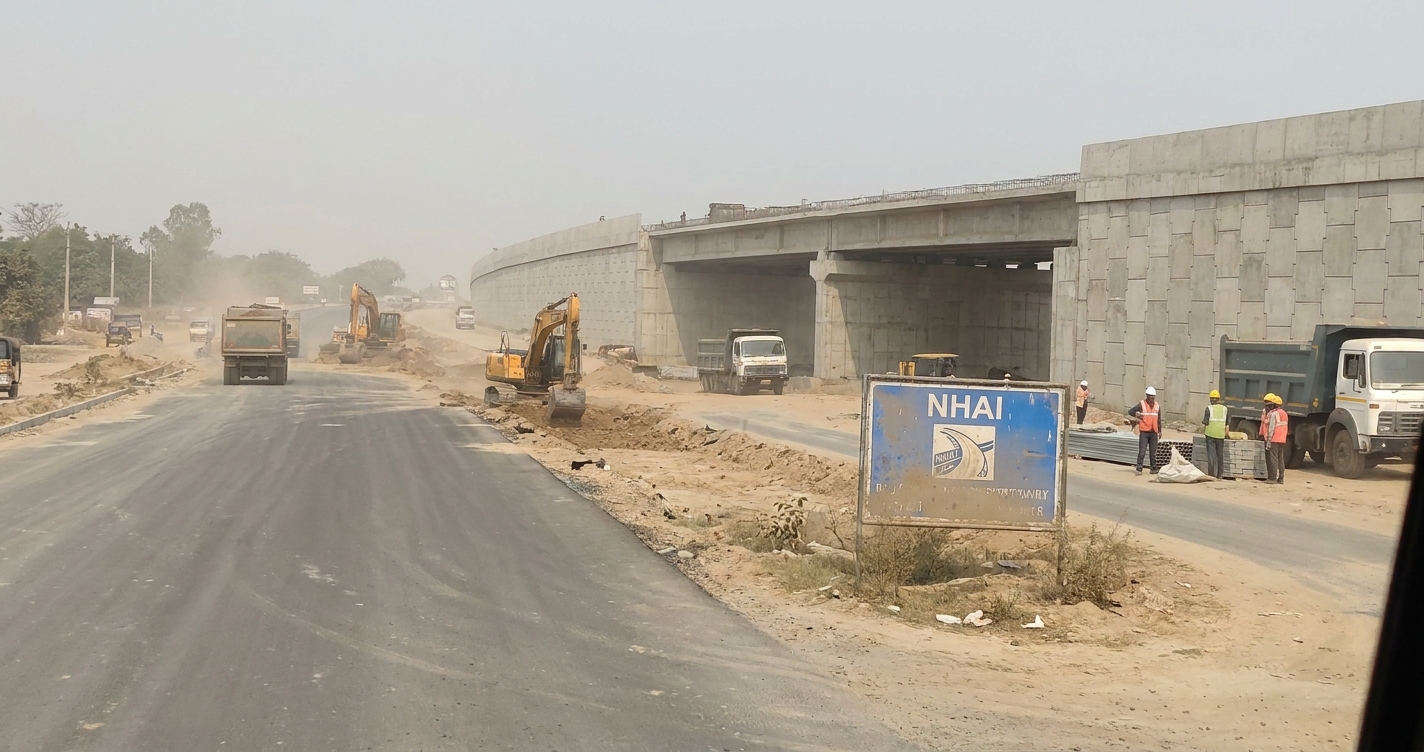
NHAI's 21 September 2026 design guidelines lock uniform 60-70m right-of-way and structure standards for 4-lane and 6-lane high-speed corridors, reshap


Powered by

© Tuskus 2025 - All Rights Reserved by Teamic Creative Lab Pvt. Ltd.
