The death of labourer Biram Mogiya under a Gadganga River bridge exposes how India's low-value municipal works orders - like the plank-installation jo


insghits
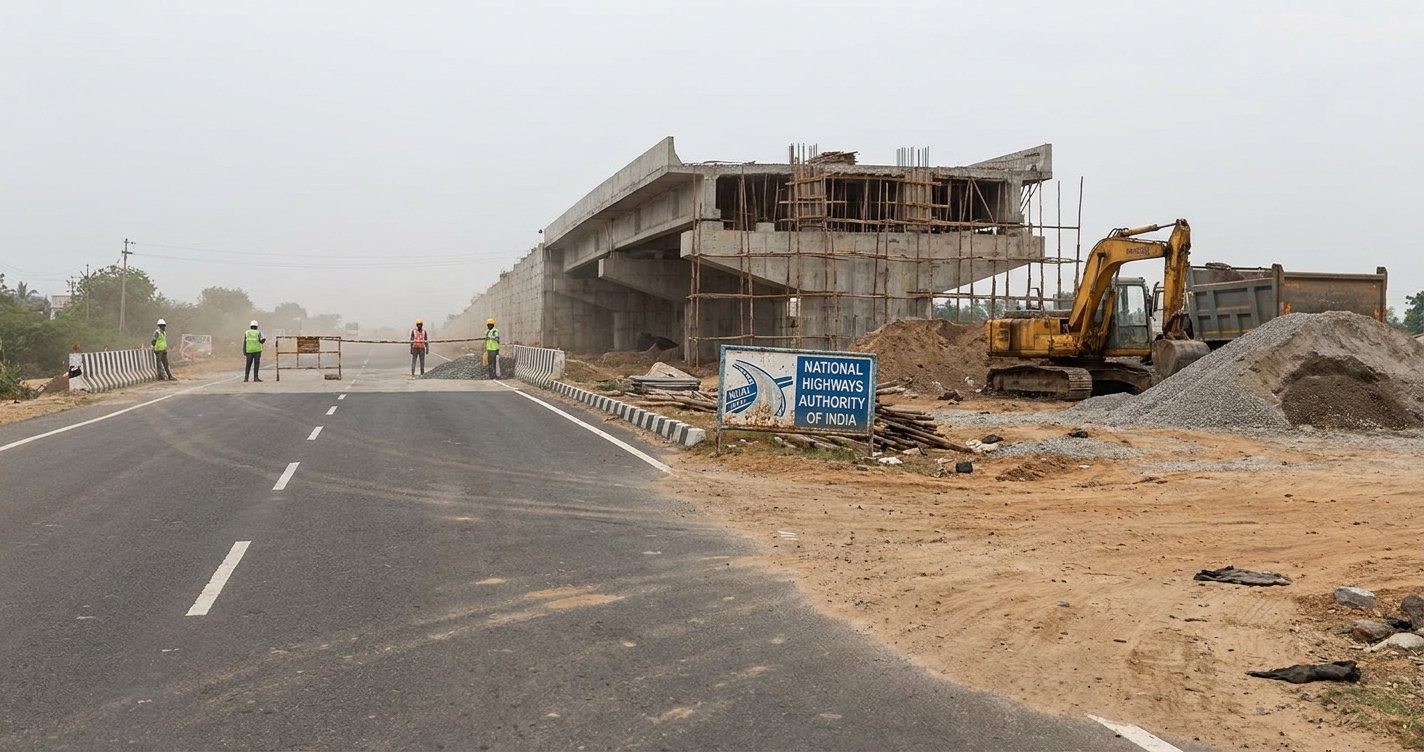
The National Highways Authority of India (NHAI) has moved to decouple corridor completion from a failed private concession, floating a fresh ₹633.12 crore EPC tender for the stalled 25.5-km Arakkonam-Kancheepuram stretch of the Bengaluru-Chennai Expressway.
The re-tender covers Km 204.500 near Arakkonam to Km 230 in Kancheepuram district, with an 18-month build window and five-year maintenance obligation.
The package is not a routine residual contract. Original concessionaire DB Jain stopped work in May 2025 citing financial constraints after reaching only 53% physical progress.
NHAI issued a notice of intention to terminate in November 2025. The Madras High Court, after ordering status quo in January 2026, disposed of the case on August 20, 2026, holding DB Jain eligible for fly ash free of cost, including transportation.
The concessionaire's reimbursement claim, including ₹180.17 crore, now sits with the Dispute Resolution Board or arbitral tribunal.
The fly ash finding is the commercial hinge. Fly ash is a mandatory embankment and concrete input near thermal plants, and a free-supply-with-transportation ruling shifts material logistics cost back onto the owner — a line item likely linked to the concessionaire's distress.
For the incoming EPC contractor, the balance scope is structure-heavy:
- Nine major bridges
- One railway overbridge
- Two grade separators
- Two minor bridges
- 18 underpasses
- 44 box culverts
- A Southern Railway crossing at Km 223+761
Strategically, the tender reallocates risk. NHAI is converting a defaulted concession into a government-funded EPC package, absorbing traffic and financing risk while pushing construction and maintenance risk to the new contractor.
With Karnataka complete and Andhra Pradesh at 93–99%, this package is the last hard bottleneck on the corridor.
The 18-month timeline is aggressive for a bridge-dense, partially completed alignment, and bidders will price interface risk and the unresolved claims ledger.
For EPC players, this is an entry into a strategic corridor without revenue risk.
For NHAI, the reset loads the schedule and legacy claims onto its own balance sheet — a pattern fast becoming the standard remedy for stranded highway concessions.
Insights
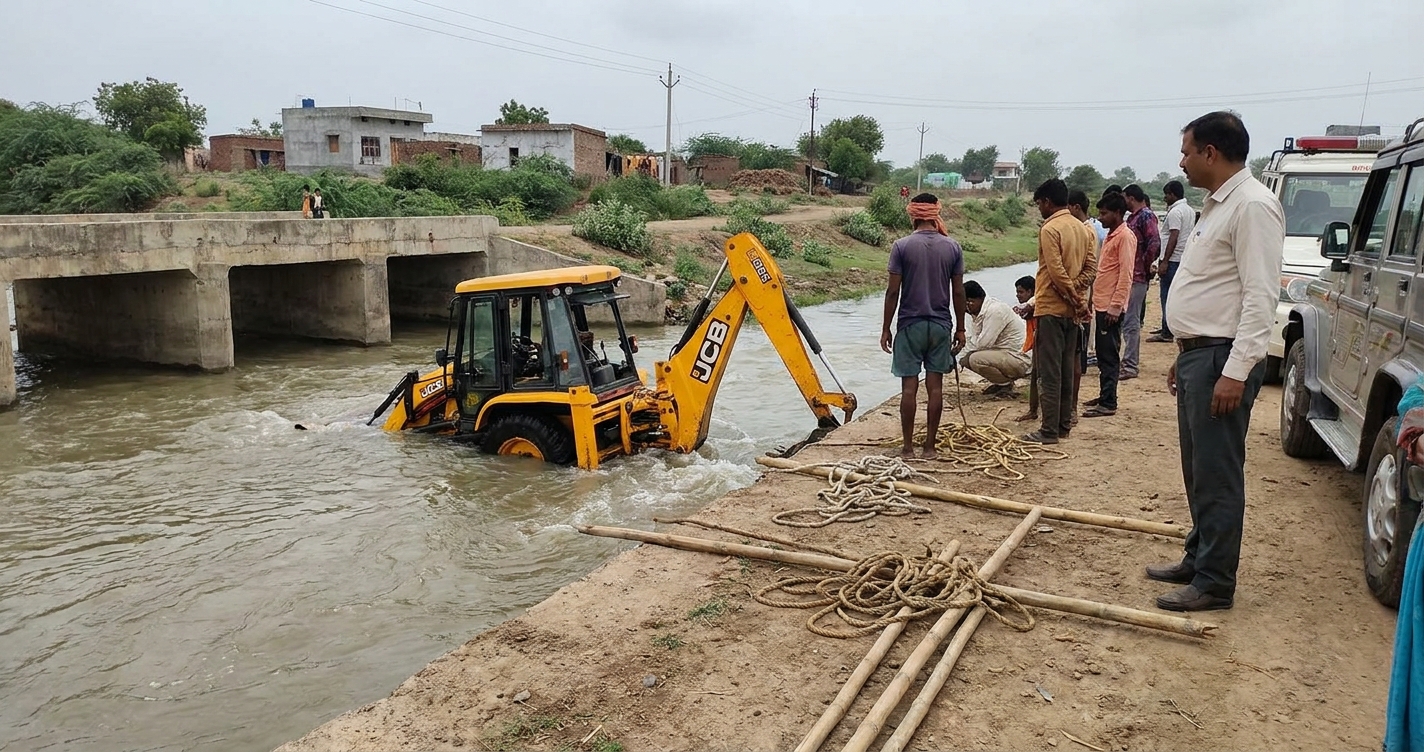
The death of labourer Biram Mogiya under a Gadganga River bridge exposes how India's low-value municipal works orders - like the plank-installation jo
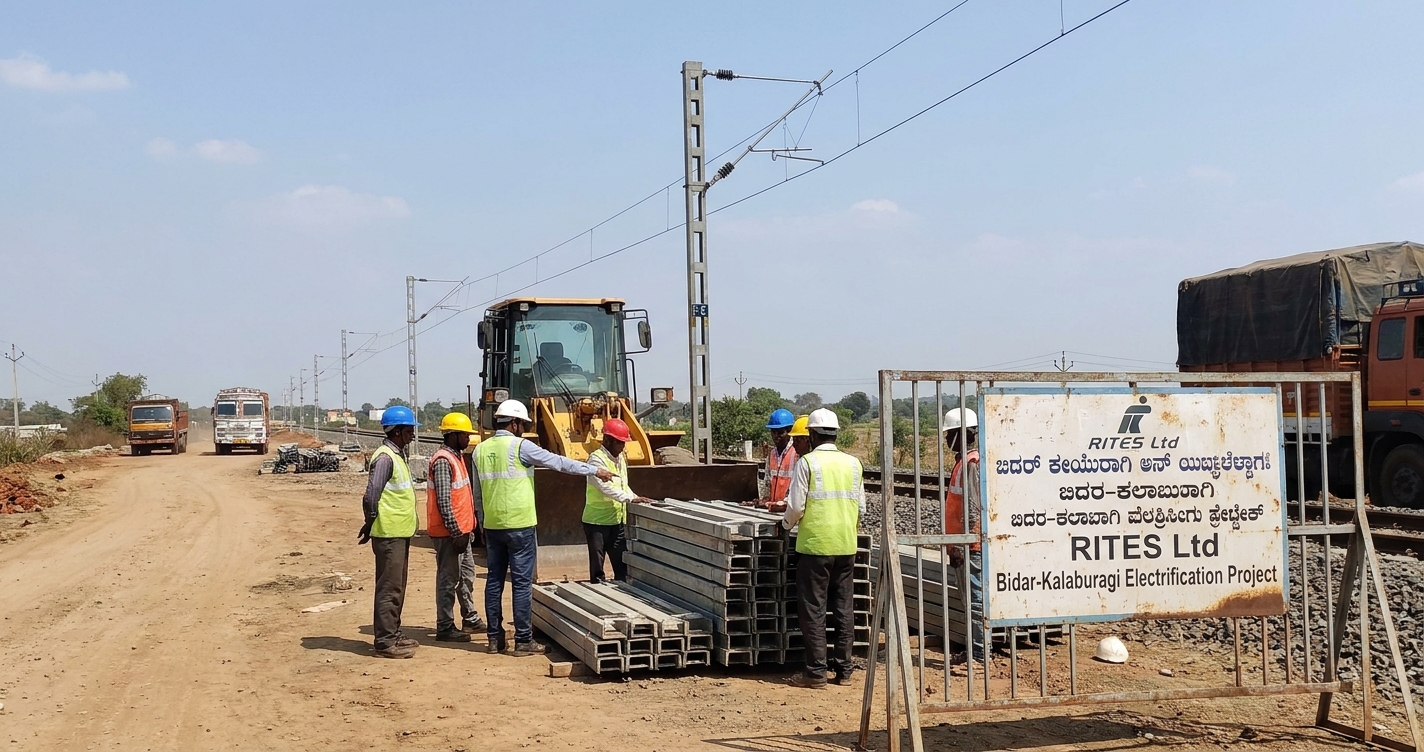
RITES' 58% repricing of the Bidar–Kalaburagi electrification mandate shows how cost-plus turnkey contracting shifts escalation risk from consultant to
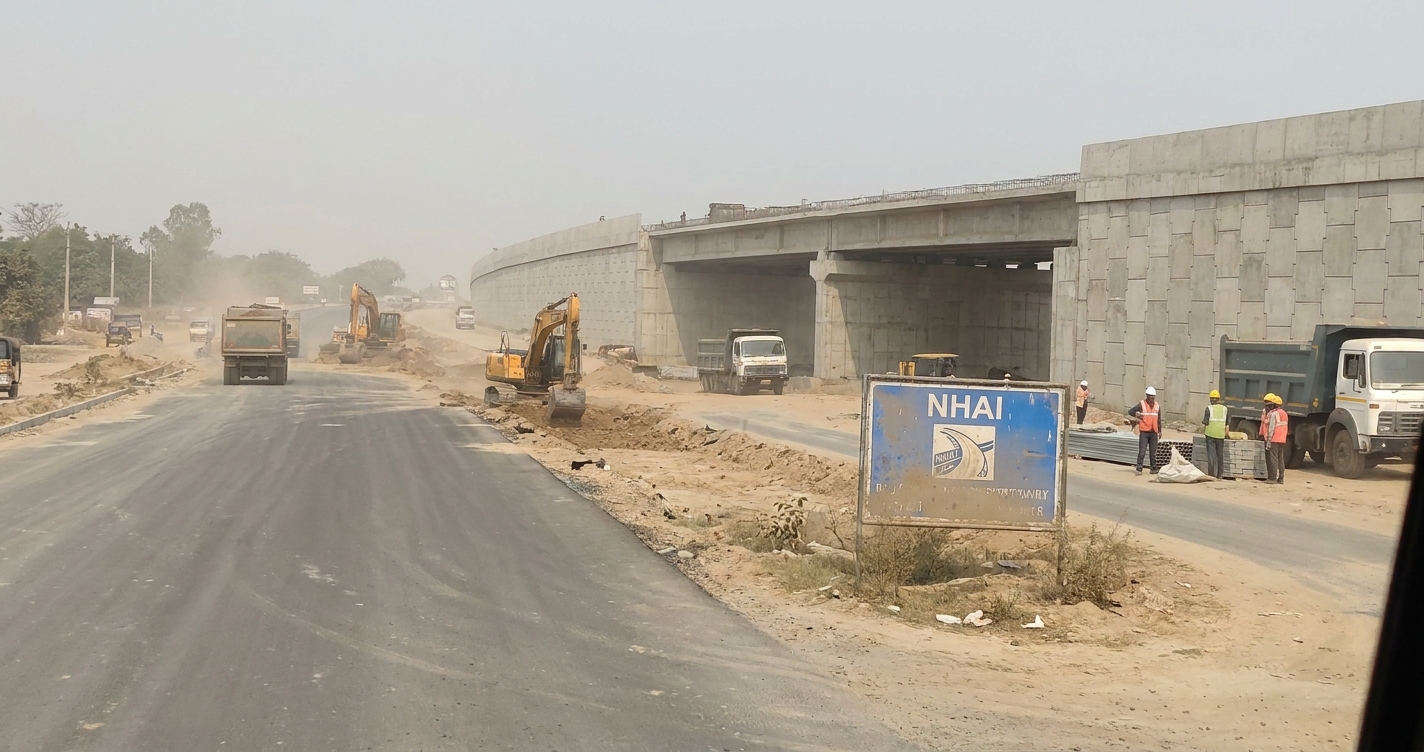
NHAI's 21 September 2026 design guidelines lock uniform 60-70m right-of-way and structure standards for 4-lane and 6-lane high-speed corridors, reshap


Powered by

© Tuskus 2025 - All Rights Reserved by Teamic Creative Lab Pvt. Ltd.
