The death of labourer Biram Mogiya under a Gadganga River bridge exposes how India's low-value municipal works orders - like the plank-installation jo


insghits
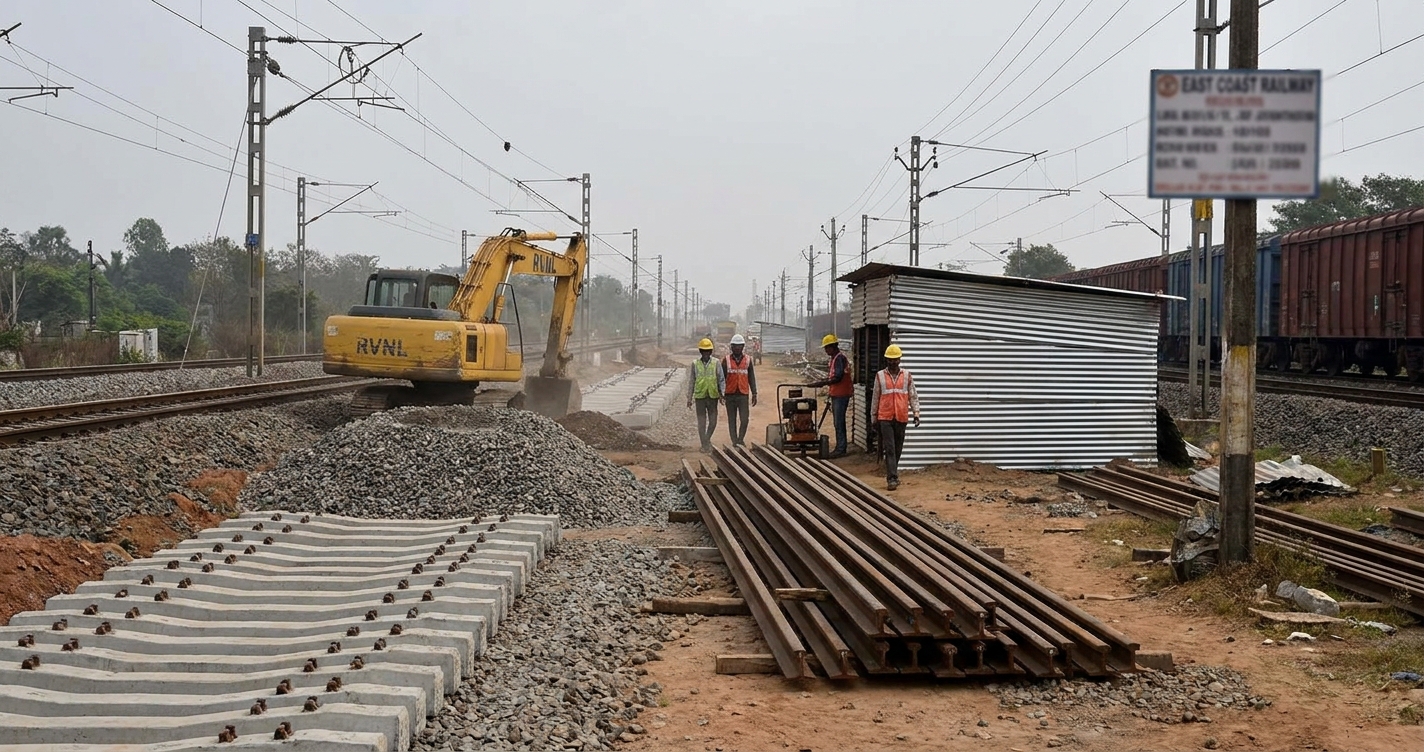
Rail Vikas Nigam Limited (RVNL) has emerged as the L1 bidder for a ₹404.88 crore East Coast Railway EPC package between Khurda Road and Gangadharpur in Odisha.
The 30-month mandate folds civil, track, signalling and power scope into a single contract — a consequential test of how Indian Railways is compressing interfaces on congested freight corridors.
The package sits inside the 385-km Bhadrak–Vizianagaram third-line programme, spanning a 22 km Nergundi–Barang stretch and a 363 km Khurda Road–Vizianagaram stretch.
For East Coast Railway, this is freight-driven capacity creation: the corridor moves mineral and port-bound traffic, and a stalled third line directly constrains throughput.
Tender EPC-CECONIIB BS2025048 is not a passenger-priority project; it is a port-connectivity and supply-chain intervention.
The contracting signal is the scope.
Roadbed, bridges, road-under-bridges, ballast and permanent-way linking are conventional.
What matters is that signalling and telecom utility shifting and electrification — including high-tension and low-tension line modification — are bundled into the same EPC envelope.
Historically split across departments, this consolidation transfers interface risk and coordination burden to RVNL while giving East Coast Railway a single point of accountability.
Commercially, the filing is an L1 disclosure, not a letter of award.
RVNL, a Navratna PSU under the Ministry of Railways, has been stacking similar wins — including a ₹602 crore order and a ₹358.97 crore doubling package — supporting revenue visibility but concentrating execution load.
A 30-month completion under General Contract Conditions is aggressive for multi-disciplinary work on a live corridor, where traffic blocks, signalling cutovers and HT line shifts will govern the critical path.
The stakeholder map is simple but consequential.
- The Ministry of Railways funds and controls outcomes through East Coast Railway
- RVNL executes and carries delivery risk
- Domestic suppliers of track, overhead electrification and signalling materials capture procurement upside
The state-backed balance sheet ultimately absorbs overruns, so the efficiency case rests on RVNL's ability to manage interfaces it has not historically owned.
The real industry signal: Indian Railways is consolidating civil, S&T and electrification scope into unified EPC packages to accelerate capacity works.
That is efficient on paper, but it re-allocates interface risk to a single state-owned contractor.
For RVNL, the strategic question is no longer winning orders — it is whether its delivery model can absorb integrated scope at this pace without margin erosion.
Insights
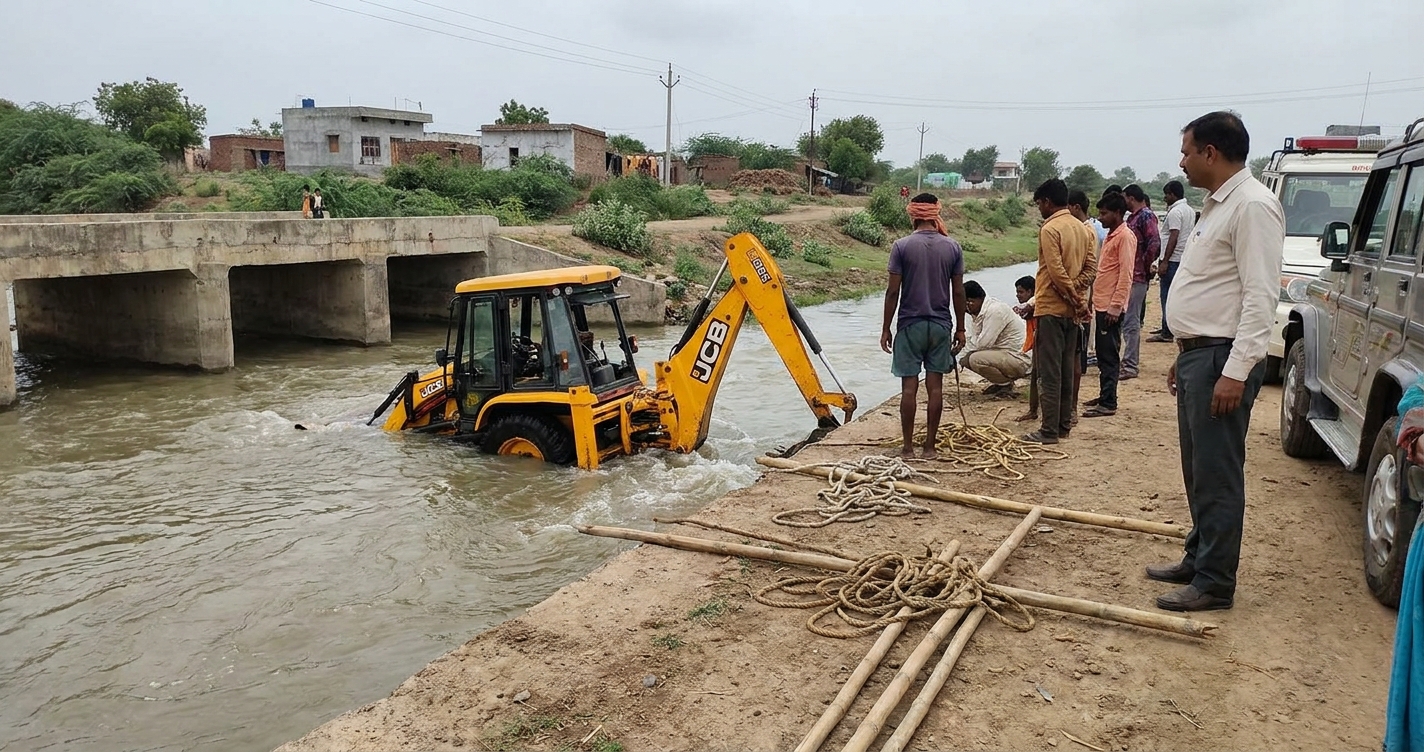
The death of labourer Biram Mogiya under a Gadganga River bridge exposes how India's low-value municipal works orders - like the plank-installation jo
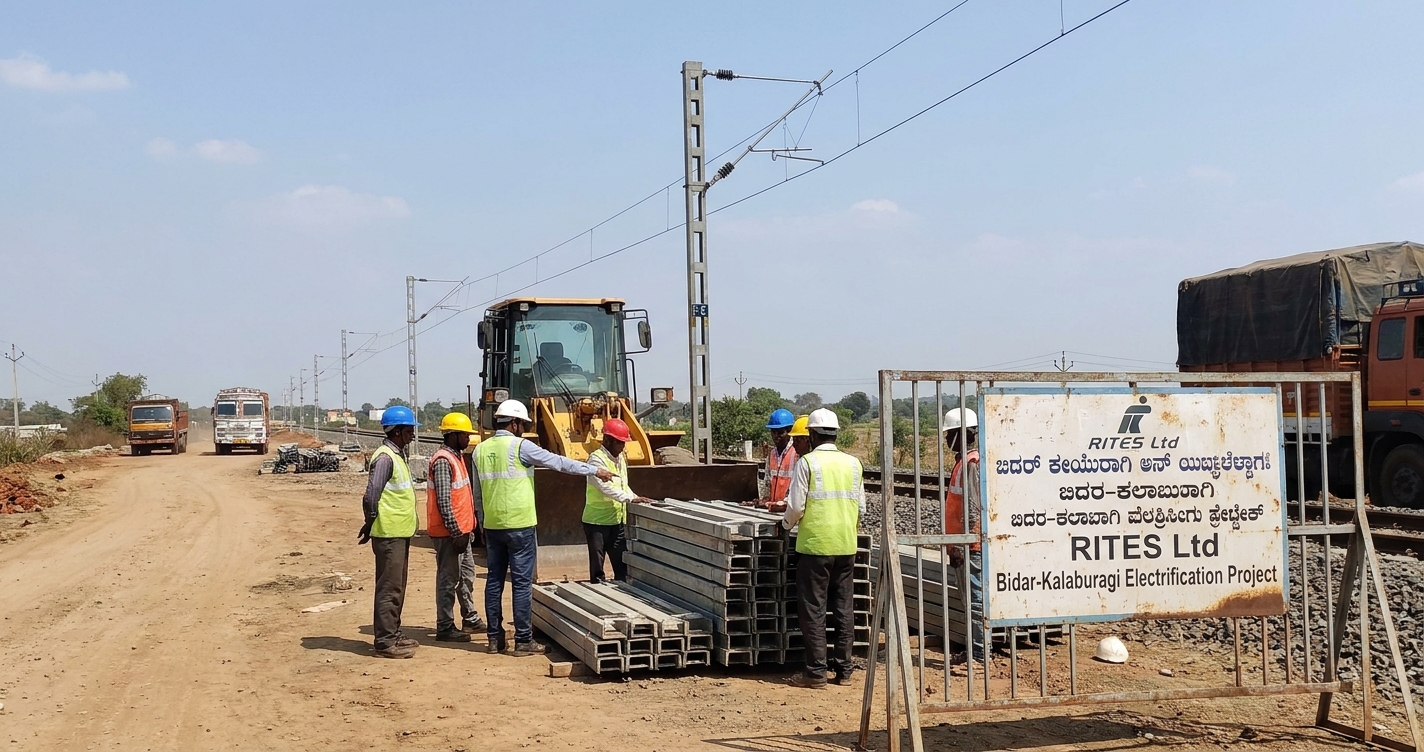
RITES' 58% repricing of the Bidar–Kalaburagi electrification mandate shows how cost-plus turnkey contracting shifts escalation risk from consultant to
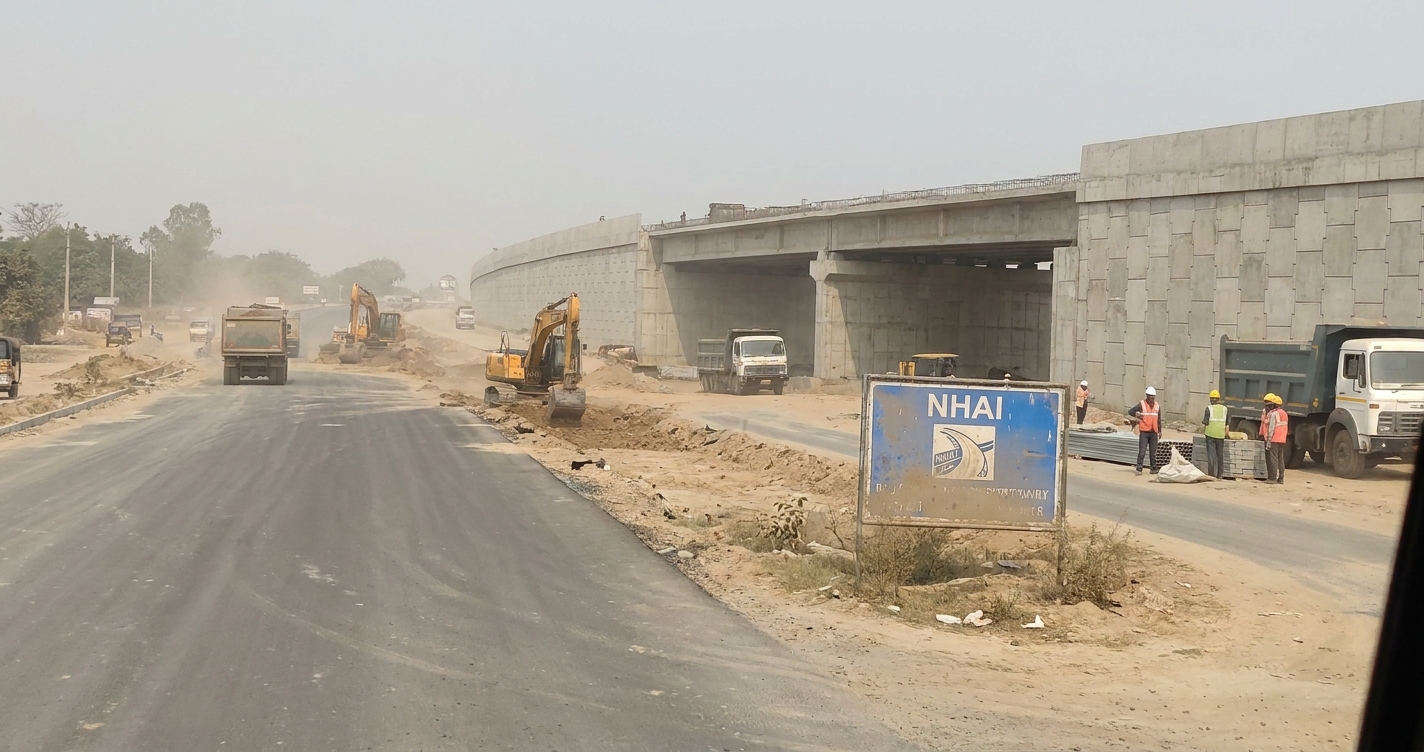
NHAI's 21 September 2026 design guidelines lock uniform 60-70m right-of-way and structure standards for 4-lane and 6-lane high-speed corridors, reshap


Powered by

© Tuskus 2025 - All Rights Reserved by Teamic Creative Lab Pvt. Ltd.
