NHAI's 21 September 2026 design guidelines lock uniform 60-70m right-of-way and structure standards for 4-lane and 6-lane high-speed corridors, reshap


insghits
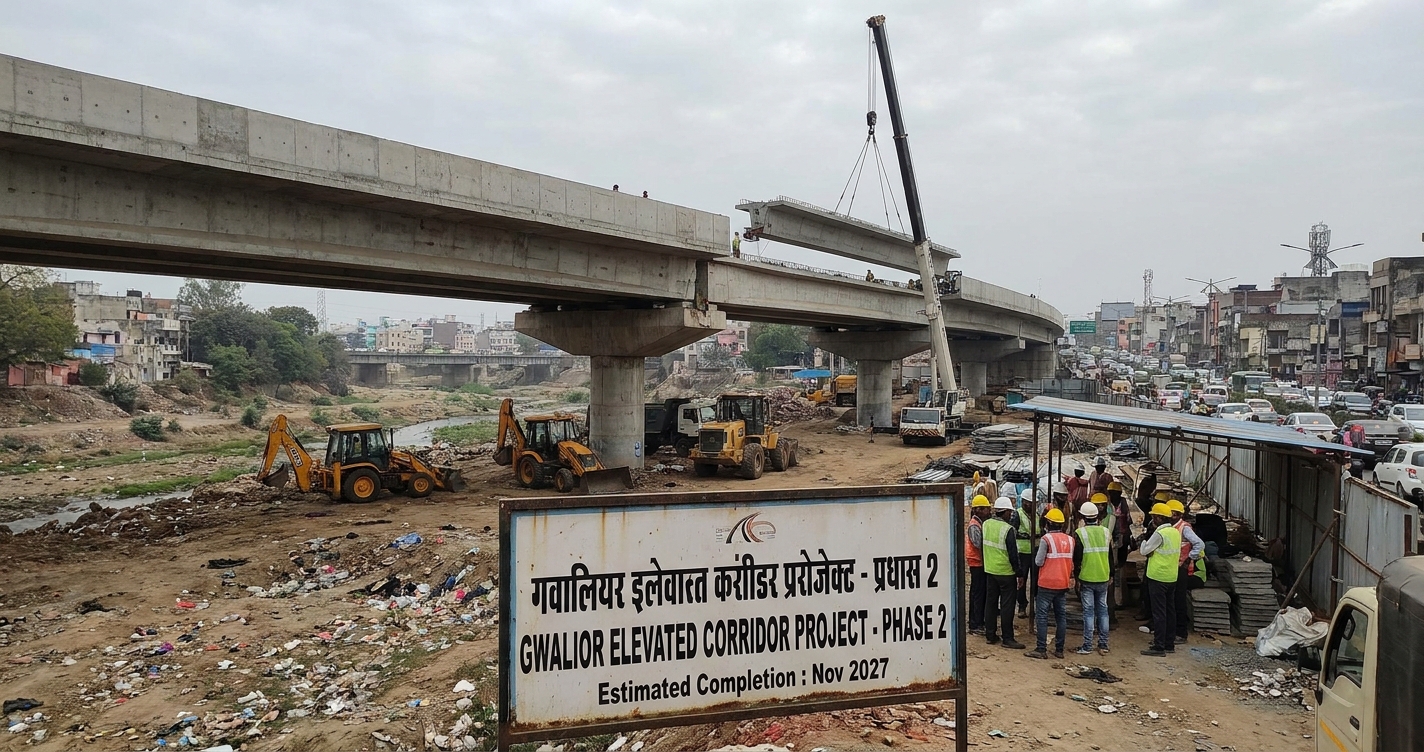
Gwalior's Rs 800-crore elevated corridor has just produced a clearer signal than any project update: a Union Minister publicly normalising a schedule overrun in the name of durability.
Union Minister Jyotiraditya Scindia inspected Phase-2 works on September 21, on the four-lane flyover over the Swarna Rekha river linking the Rani Laxmibai statue junction to Girwai Police Chowki on AB Road (NH-46).
Phase-2 spans 7.5 km with six entry and six exit loops within a 13 km package. With the 10 km Phase-1, Gwalior gets about 23 km of elevated carriageway.
Scindia framed the corridor as a "gift" from Prime Minister Narendra Modi and Road Transport Minister Nitin Gadkari, anchoring it in the 2020 BJP government formation and the DPR that followed.
The framing matters: capital deployment here is as political as it is technical, concentrated on the Guna-Gwalior belt Scindia represents.
The commercially relevant detail is the timeline. The target is November 2027, but Scindia has already conceded a three-to-four-month extension is likely, citing monsoon restrictions, sewer-line conflicts and soil excavation.
For the unnamed construction agency executing the works, that is a rare public EOT signal — an acknowledgement that utility shifting and geotechnical conditions, not contractor productivity, are the binding constraints.
Urban elevated corridors compress risk into buried utilities and seasonal windows. Sewer-line interfaces on NH-46 will dictate the critical path more than the structural spans.
The minister's "200-year asset" framing signals a shift from deadline-driven messaging to quality tolerance — the owner will absorb schedule slippage before it absorbs defects.
Responsibility splits across three parties:
- MoRTH/NHAI owns the corridor and the delivery outcome.
- The Madhya Pradesh government and municipal administration carry the utility-shifting burden.
- The contractor carries geotechnical and monsoon risk, now with political cover for a defensible time claim.
Scindia captures the political upside, while the contractor absorbs margin exposure that extra months only partially offset.
India's highway owners are starting to price in constructability reality over political deadlines.
When a senior minister says "even if it takes three or four months longer" on camera, that tolerance becomes contract-adjacent policy.
Contractors should read it as a template for defensible EOT claims on utility-dense urban corridors.
Insights
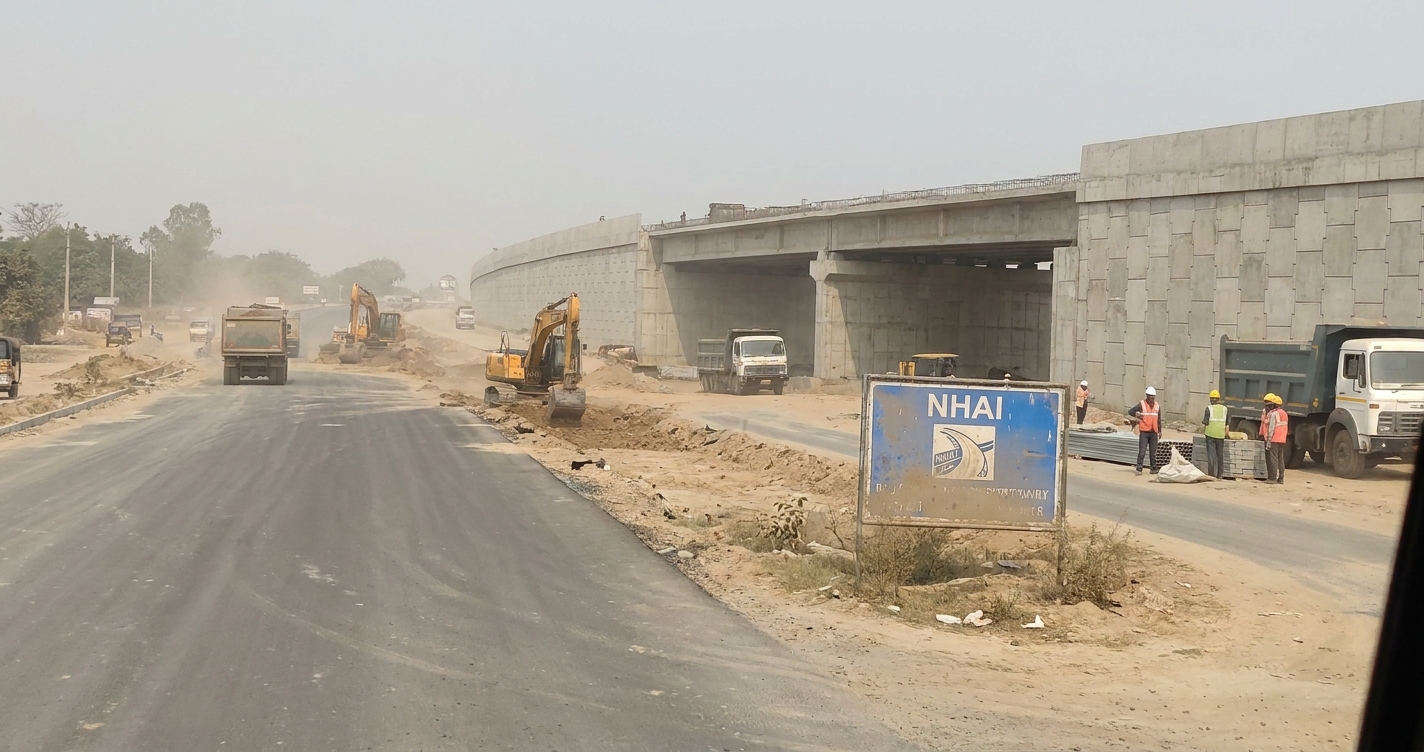
NHAI's 21 September 2026 design guidelines lock uniform 60-70m right-of-way and structure standards for 4-lane and 6-lane high-speed corridors, reshap
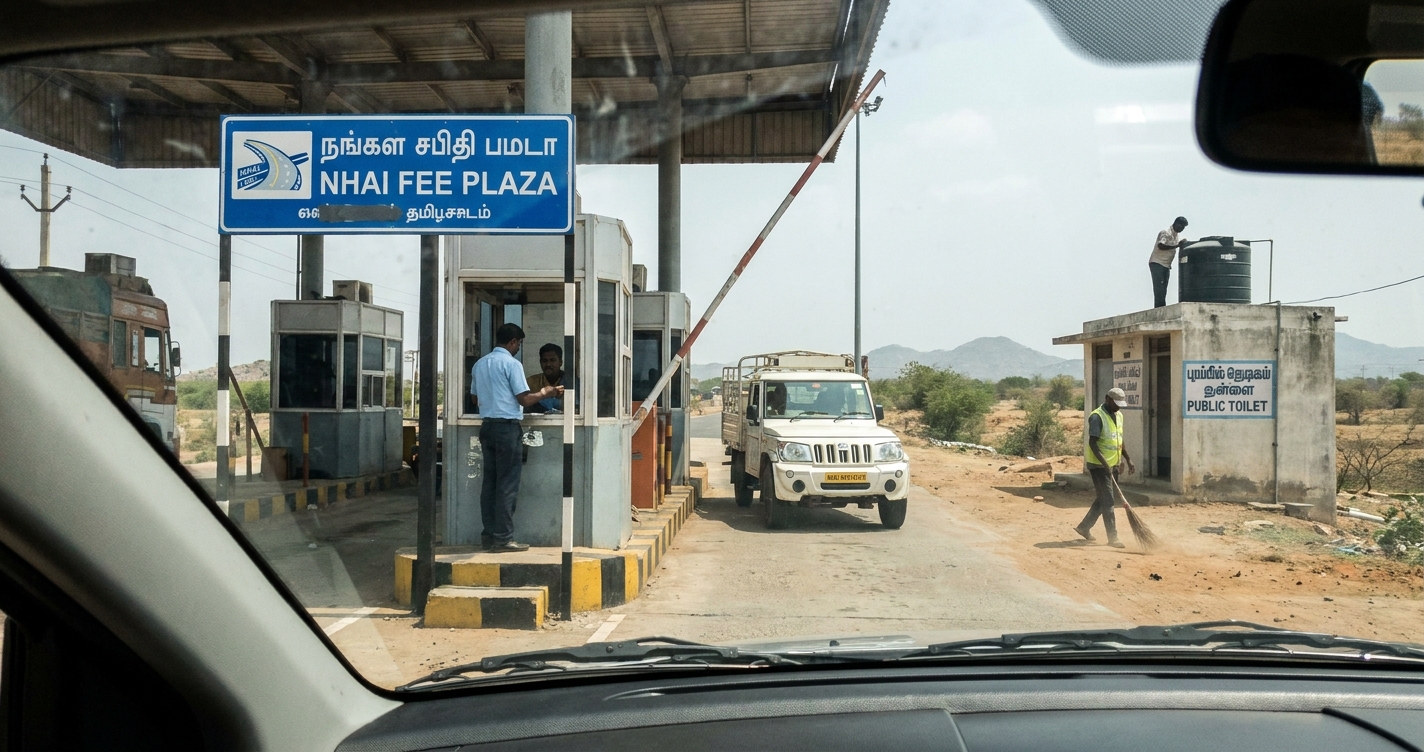
Hazoor Multi Projects' Rs 200-crore NHAI award in Tamil Nadu is a user fee collection and maintenance mandate, not a construction order — and that dis
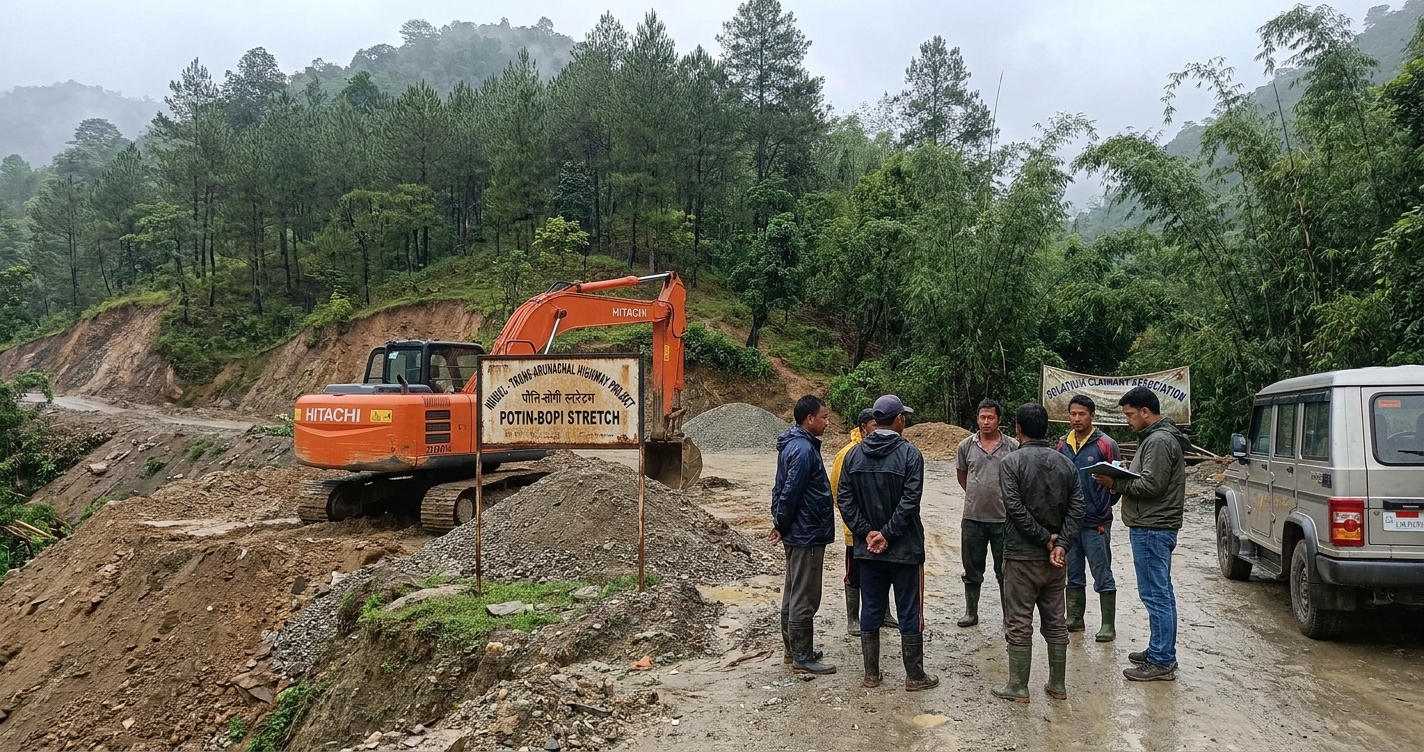
A March 2022 Gauhati High Court order to pay solatium on the Trans-Arunachal Highway remains unpaid, exposing NHIDCL's execution schedule to compensat


Powered by

© Tuskus 2025 - All Rights Reserved by Teamic Creative Lab Pvt. Ltd.
