The Chakhesang Students Union has given NHIDCL 72 hours to terminate the contractor on the Chakhabama-Kikruma package of NH-29, with 44.30% physical p


insghits
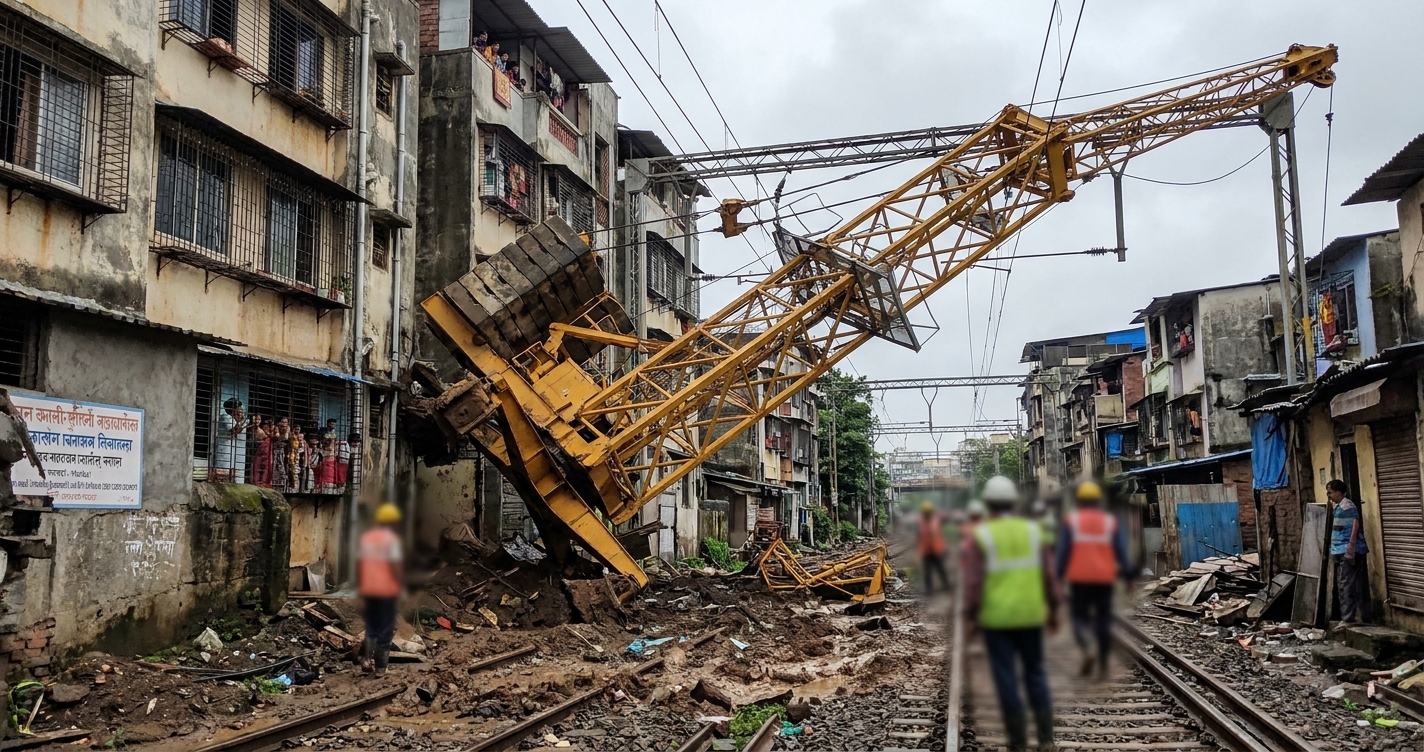
A crane being positioned for demolition at Bhandari Metallurgy in Kurla tilted and fell into adjacent structures in the early hours of Friday, injuring more than 10 people and striking the overhead electric equipment (OHE) on Central Railway's Kurla–Trombay goods line.
The Mumbai Metropolitan Region Development Authority (MMRDA) attributed the failure, prima facie, to soft and muddy ground at the site.
The most consequential detail is timing: the crane had not begun demolition. It failed during positioning.
That moves this from an operational accident to a staging and ground-engineering breakdown — the exact phase where mobilisation cost pressure and site-level shortcuts converge in urban redevelopment.
MMRDA's statement owns the explanation, but the execution chain is now under scrutiny.
The authority controls the site and issued the response; the demolition contractor — not disclosed in MMRDA's statement — carries the execution and liability risk.
Leaving the contractor unnamed keeps insurance, delay, and compensation exposure unresolved.
For delivery teams, the engineering lesson is unambiguous.
A crane placed on soft, muddy ground without verified bearing capacity, crane mats, or load-spread plates will fail regardless of operator skill.
In densely built Qureshi Nagar, where debris landed on residential structures, the third-party casualty exposure was foreseeable and preventable.
The railway interface compounds it. Even with passenger services unaffected, OHE contact on a goods corridor turns a site incident into an asset-protection and regulatory matter.
Demolition packages near rail assets now carry a higher premium for:
- Interface permits
- Isolation planning
- Crane envelope control
The structural signal is this: as MMRDA accelerates demolition and redevelopment across Mumbai, ground investigation and engineered crane staging must be priced as non-negotiable contract line items — not left to site discretion.
Kurla is the clearest warning yet that mobilisation-phase risk, not demolition-phase risk, is where urban redevelopment contracts will be won or lost.
Insights
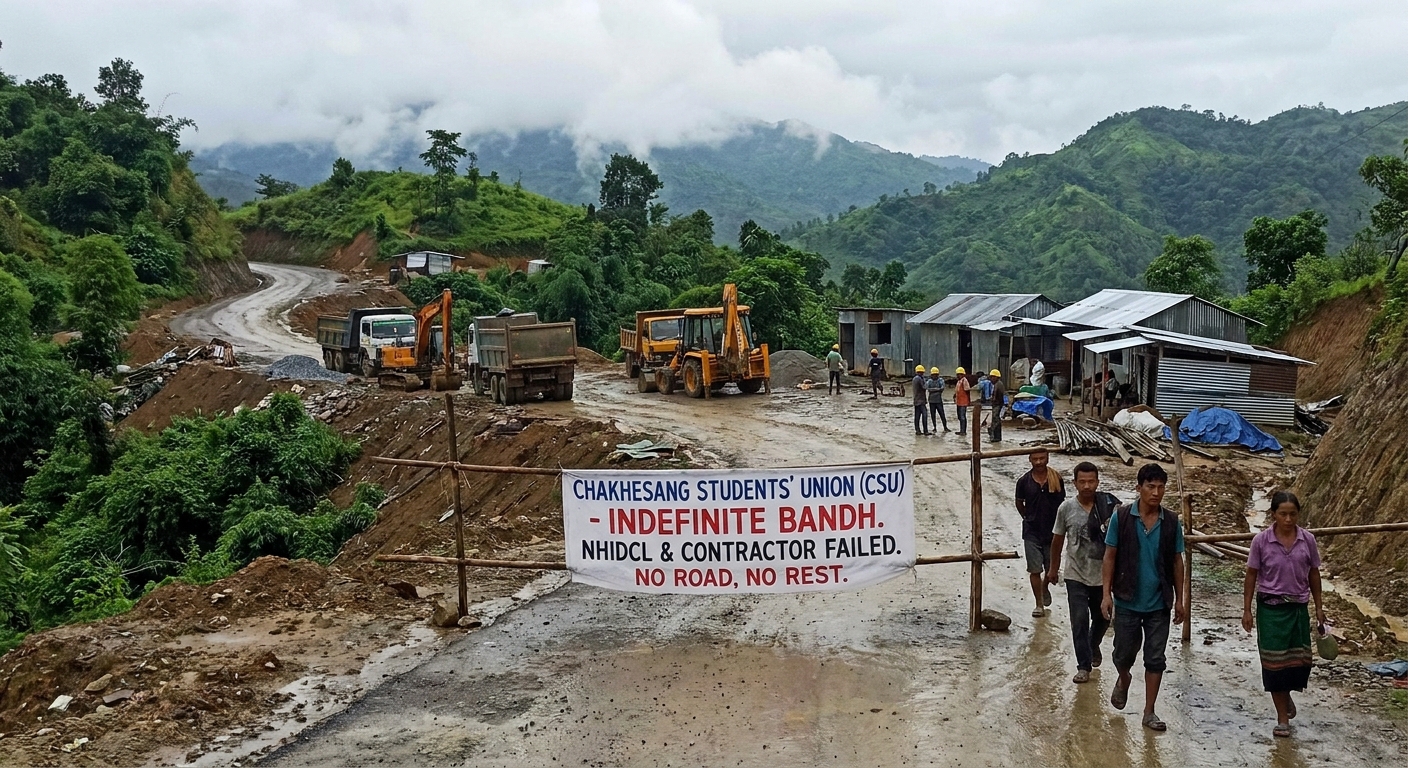
The Chakhesang Students Union has given NHIDCL 72 hours to terminate the contractor on the Chakhabama-Kikruma package of NH-29, with 44.30% physical p
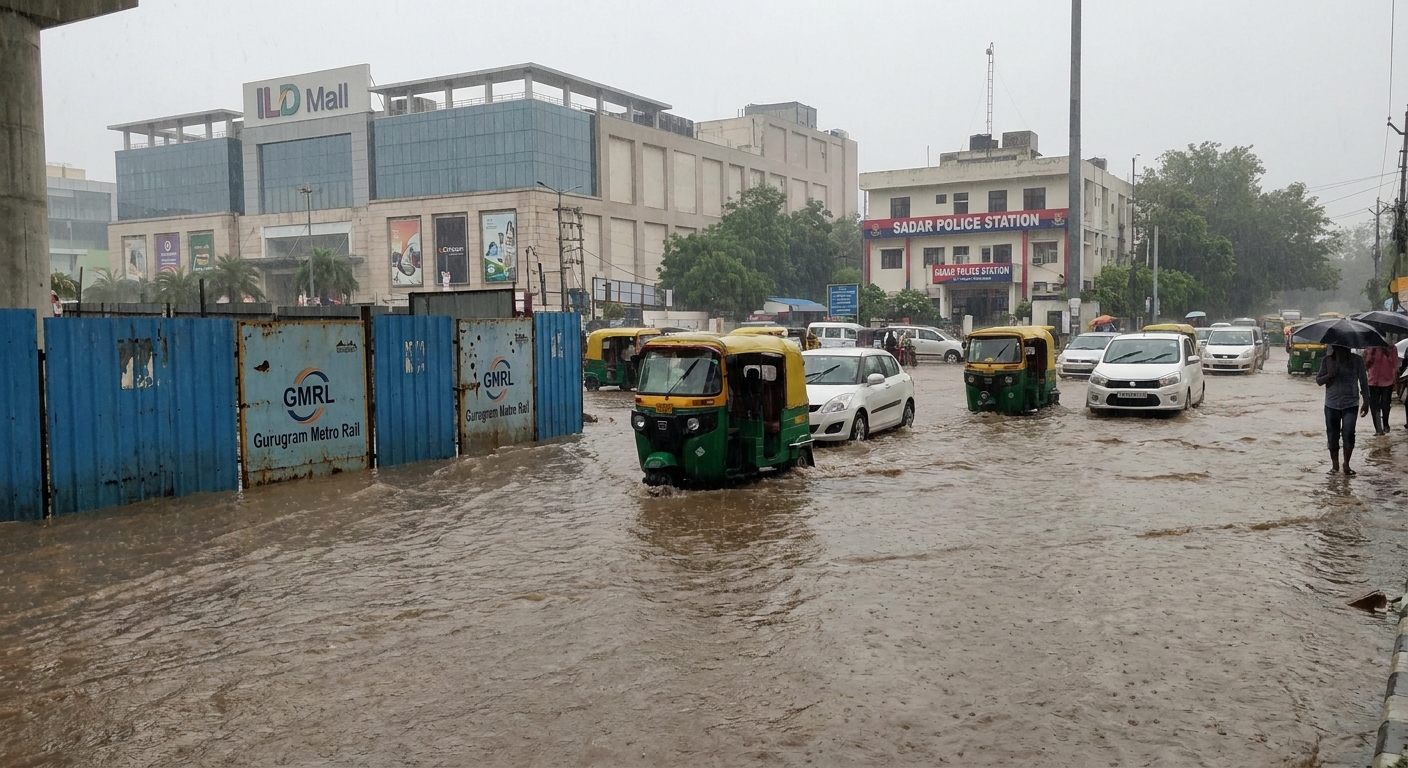
Gurugram Metro Rail Limited has locked the alignment and access gates for the Subhash Chowk Metro station, but both entrances sit in a stretch that fl
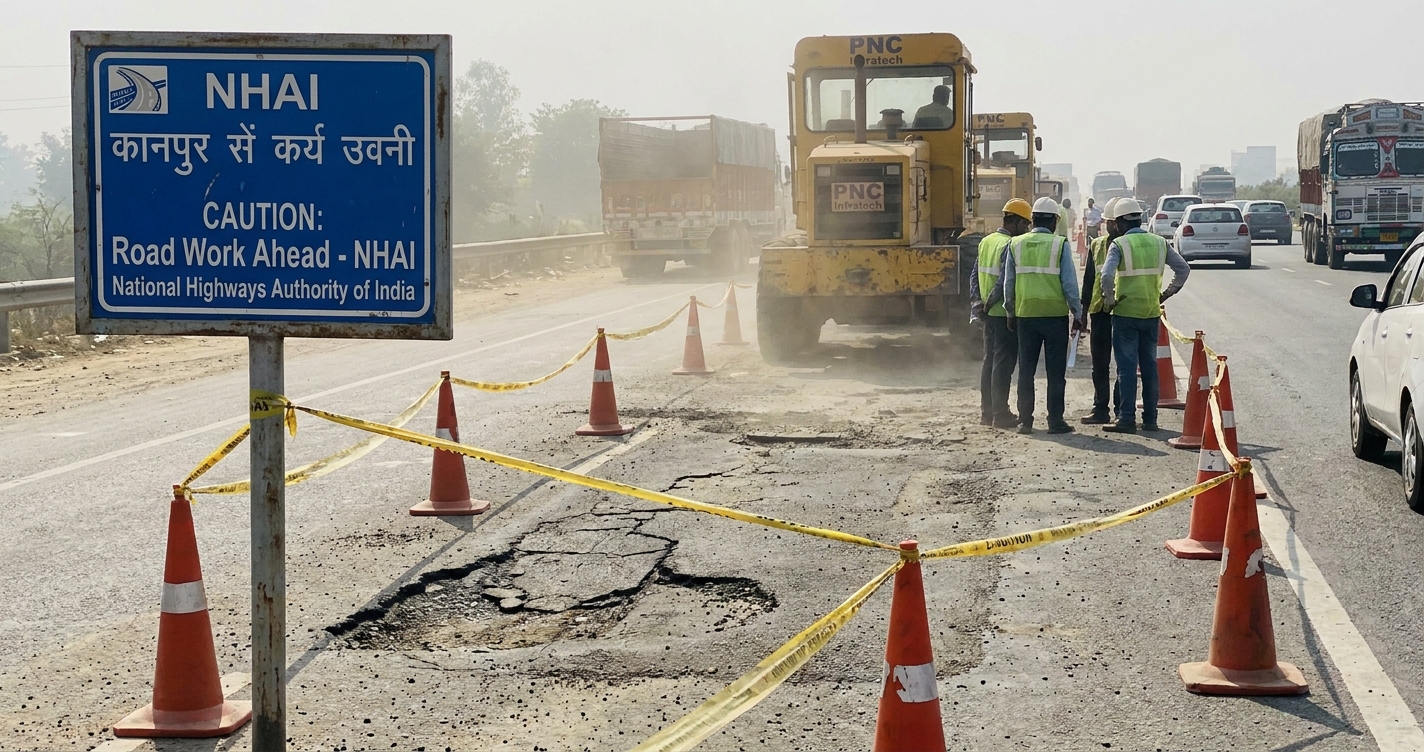
NHAI has debarred PNC Infratech from its tenders for three years and, critically, extended the penalty upward from the Awadh Expressway concessionaire


Powered by

© Tuskus 2025 - All Rights Reserved by Teamic Creative Lab Pvt. Ltd.
