The Chakhesang Students Union has given NHIDCL 72 hours to terminate the contractor on the Chakhabama-Kikruma package of NH-29, with 44.30% physical p


insghits
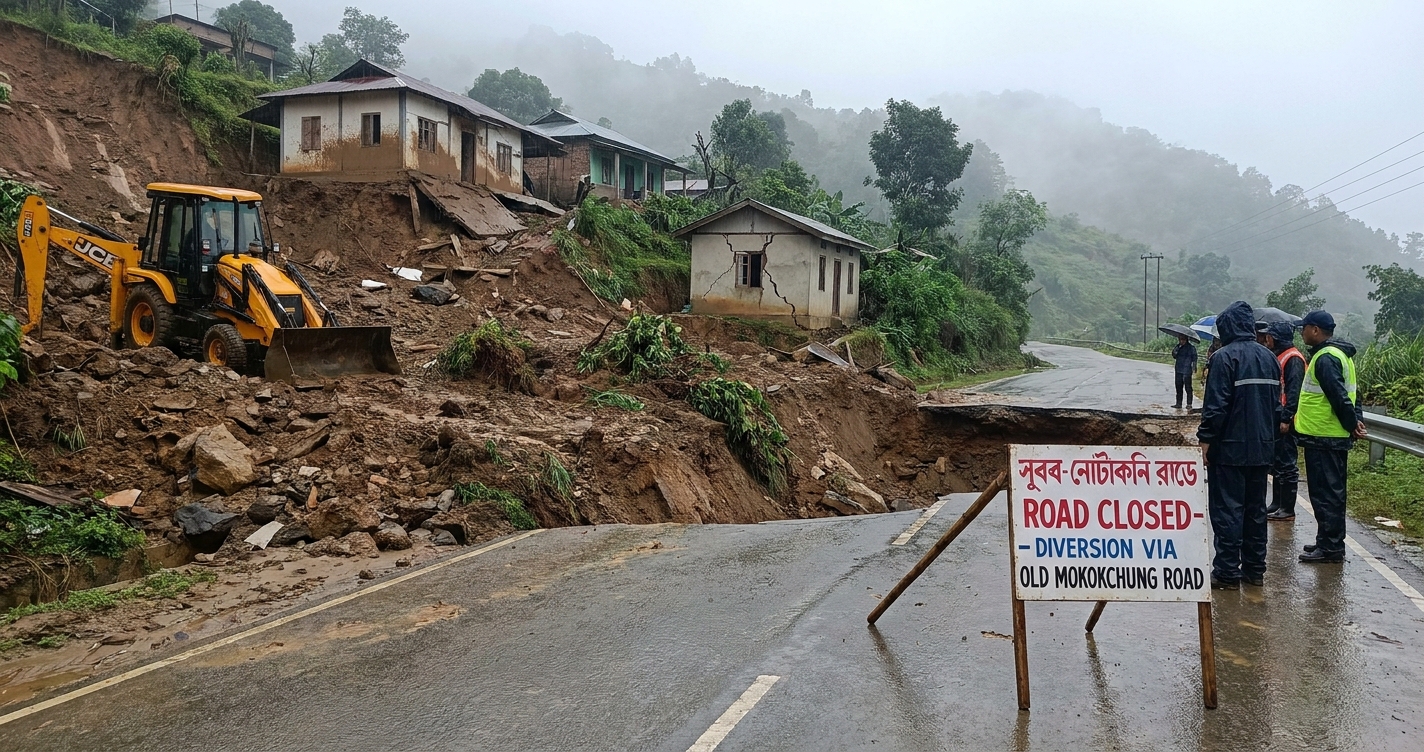
The landslide that severed NH-702A at New Colony in Zunheboto town is not a routine monsoon incident. It is a near-miss on a national highway corridor that underscores how slope stability, drainage and right-of-way management — not just pavement condition — now define execution risk on Northeast hill alignments.
Three houses were evacuated before the slope failed, which is precisely why no lives were lost.
That sequence matters. It shows the district administration under Deputy Commissioner Zunheboto Dharam Raj had usable early-warning judgement on the ground; the buildings were cleared ahead of the slide and later fully destroyed.
A fourth structure has developed visible cracks, and the DC has since closed the Zunheboto–Mokokchung road along NH-702A, diverting heavy and commercial vehicles through the Old Mokokchung Road/Check Post Road while Indian Red Cross Society-backed relief is distributed to affected families.
The operational question for the sector is what sits upstream of this evacuation.
NH-702A is a national highway in Nagaland, part of the Northeast corridor network where NHIDCL, under the Ministry of Road Transport and Highways, anchors delivery.
The report does not name the corridor custodian or any EPC contractor, but the failure pattern — a substantial volume of earth and debris reaching the carriageway, with adjacent structures compromised — points to slope cut-and-fill instability and insufficient surface and sub-surface drainage, the recurring geotechnical failure mode on widened hill roads.
The commercial signal is direct across three stakeholder groups.
- For execution teams, a single-point corridor with no redundant alignment forces emergency diversions, disrupts material and fuel movement between Zunheboto and Mokokchung, and converts a geotechnical event into a supply-chain event.
- For contractors bidding hill highway packages, slope stabilisation, retaining structures, toe drains and slope instrumentation are no longer optional scope; they are the priced risk that determines delay claims, rework and margin.
- For owners and insurers, repeated post-monsoon emergency works and relief payouts are a sign that geotechnical due diligence must move earlier in the project lifecycle.
The industry signal is structural: monsoon resilience on Northeast national highways will increasingly be evaluated as a geotechnical and drainage capability, not a civil works add-on.
Agencies that treat slope risk as an engineered, instrumented and priced discipline will capture the next phase of hill-corridor capital deployment; those that do not will keep paying for it in closures, claims and crisis response.
Insights
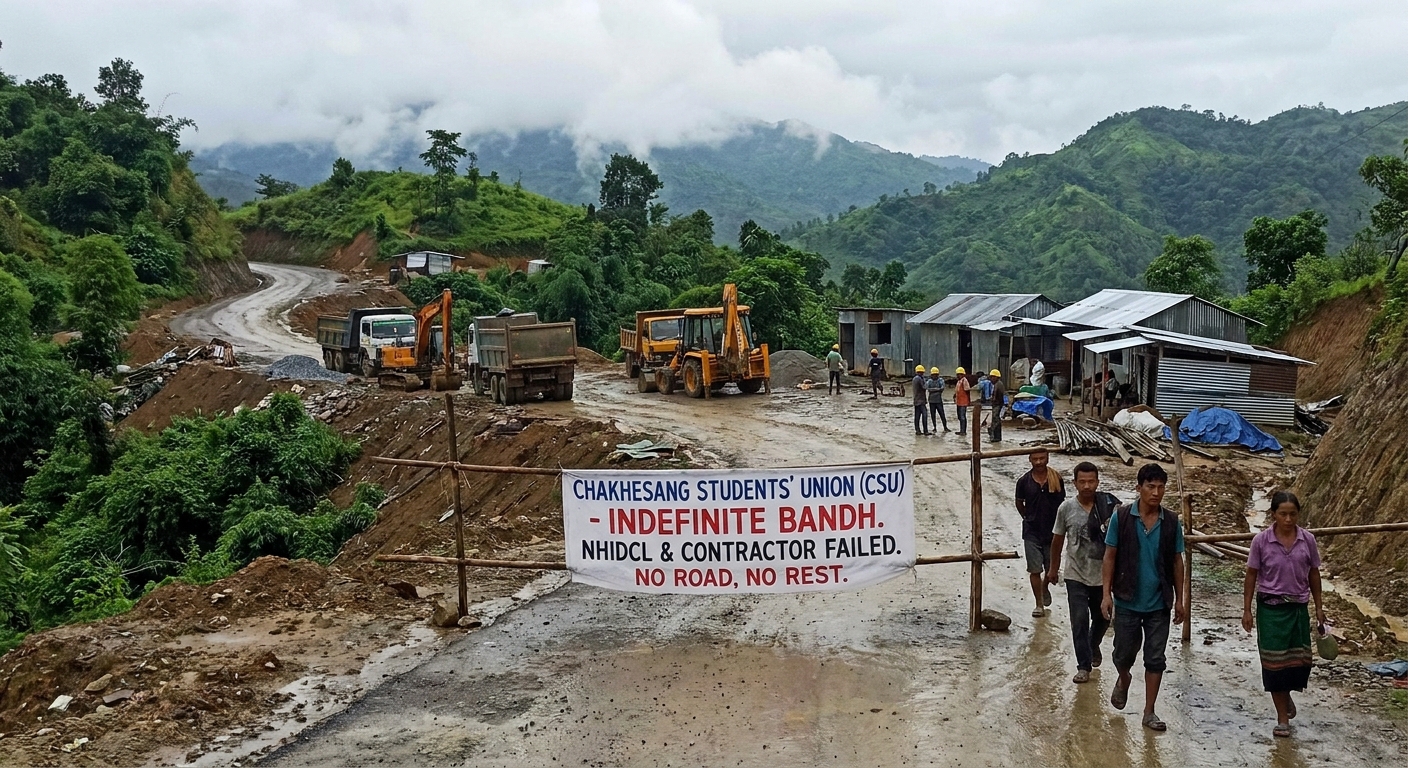
The Chakhesang Students Union has given NHIDCL 72 hours to terminate the contractor on the Chakhabama-Kikruma package of NH-29, with 44.30% physical p
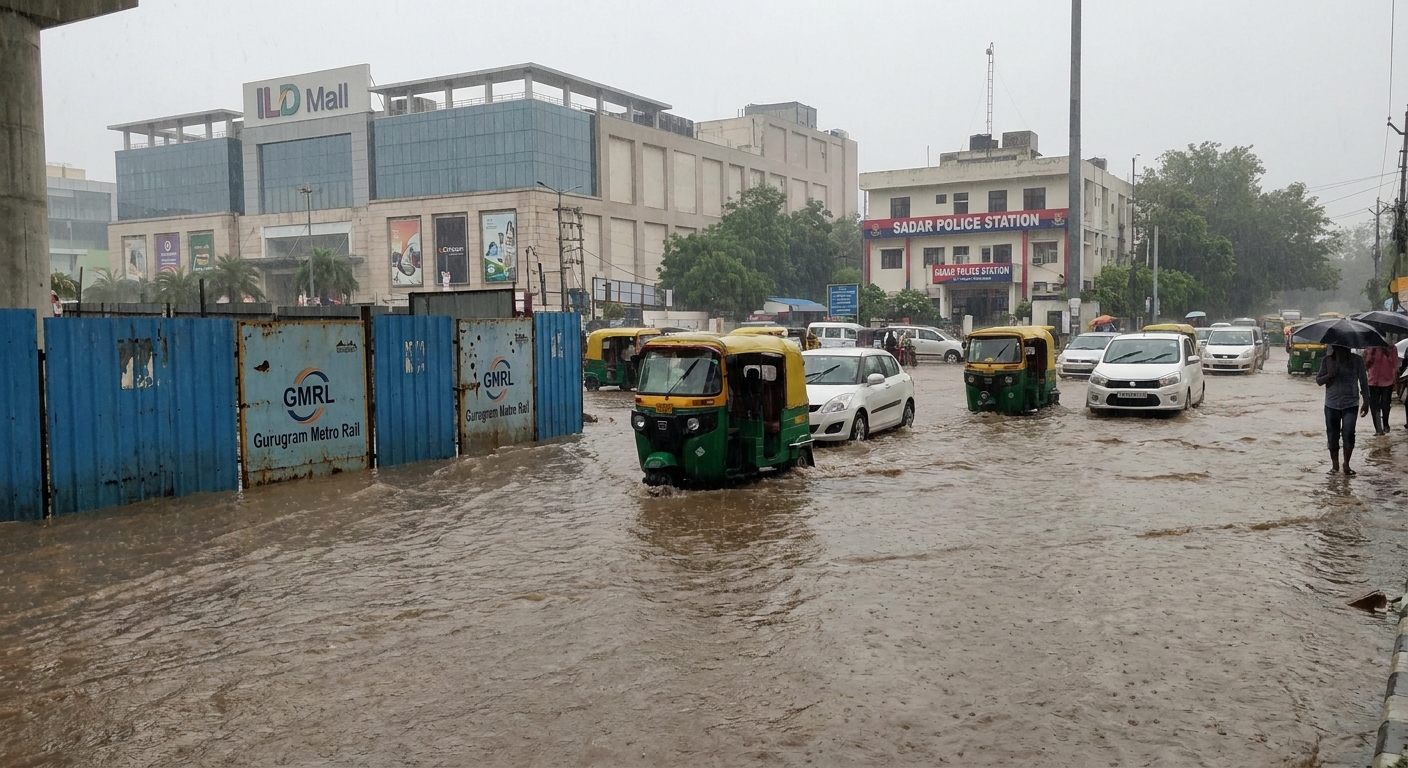
Gurugram Metro Rail Limited has locked the alignment and access gates for the Subhash Chowk Metro station, but both entrances sit in a stretch that fl
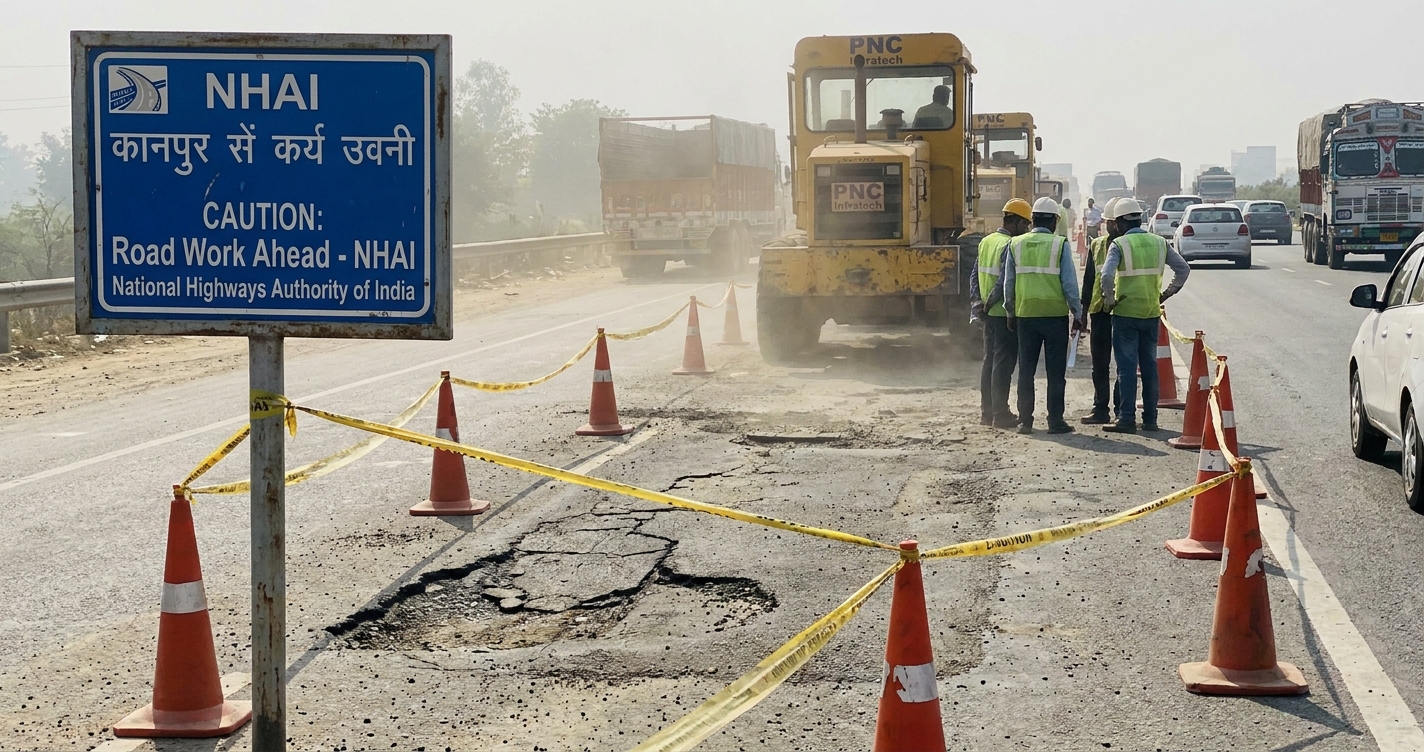
NHAI has debarred PNC Infratech from its tenders for three years and, critically, extended the penalty upward from the Awadh Expressway concessionaire


Powered by

© Tuskus 2025 - All Rights Reserved by Teamic Creative Lab Pvt. Ltd.
